


Imo State Revenue Improvement Attributed to Federal Economic Reforms
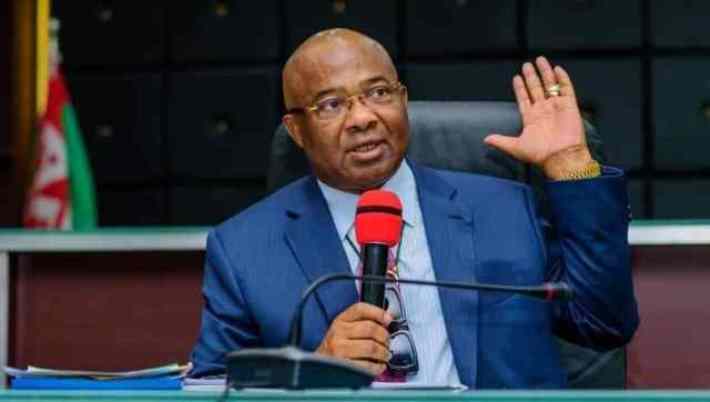
Imo State Governor Hope Uzodimma has credited the recent surge in state revenue to President Bola Tinubu’s economic reforms. He noted that monthly allocations from the Federal Accounts Allocation Commission (FAAC) have skyrocketed from approximately ₦100 million in 2020—after salary deductions—to over ₦10.7 billion following the removal of the fuel subsidy.
Significant Increase in Internal Revenue and Debt Reduction
Additionally, Uzodimma highlighted a strong uptick in the state’s internally generated revenue (IGR), which surged from less than ₦400 million to nearly ₦6 billion per month. Concurrently, he reported a significant decrease in the state’s debt profile, which fell from ₦287 billion in 2020 to under ₦90 billion.
Infrastructure Projects Showcase State’s Progress
Uzodimma made these remarks at the Government House in Owerri while hosting members of the media team from Ambassadors of Renewal Hope, who were inspecting various infrastructure projects throughout the state. He urged Nigerians to exhibit patience with the Tinubu administration, drawing parallels between Nigeria’s current reform efforts and the biblical journey of the Israelites from Egypt.
Governance Committed to Effective Reforms
According to Uzodimma, President Bola Ahmed Tinubu assumed office with a keen understanding of the necessary reforms to reposition Nigeria’s economy. He remarked on his own experiences after taking office in January 2020, stating that following payroll obligations, the state’s financial resources were nearly depleted.
Transformation of State’s Financial Landscape
Recalling his initial days in office, Uzodimma emphasized the drastic improvement in the state’s financial landscape. “When I was sworn in on January 15, 2020, our FAAC meeting yielded only ₦100 million after salaries,” he said. He expressed disbelief at the substantial increase to ₦10.7 billion by May 29, 2023, attributing this to the indispensable removal of subsidies. “Whatever measures were implemented to enhance our financial access have proven beneficial, allowing us to channel these resources into meaningful programs and projects,” he added.
Investment in Infrastructure and Quality of Life
With the influx of additional revenue, Uzodimma noted that the state has markedly improved its infrastructure, particularly in transportation and power supply. “Traveling across Imo State now takes less than 45 minutes, down from an average of two to three hours in 2020. We are also generating and distributing electricity to areas within Owerri and beyond,” he stated, indicating plans for further expansion in the energy sector by year-end.
Governance Prioritized over Political Campaigning
Uzodimma opined that effective governance and visible infrastructure projects provide a stronger framework for political support than traditional campaigning. “From May 29, 2023, President Tinubu has been promoting his vision for a second term. Investing in quality roads and essential services should take precedence over social media campaigns costing billions,” he remarked. He reiterated that the ongoing projects in Imo State are a direct result of the Federal Government’s economic reforms, aligning with President Tinubu’s New Hope Agenda for development.
Impact of Federal and State Projects
Addressing the media delegation, Sunday Dare, Special Assistant to the President on Media and Public Communications, emphasized the significance of the projects undertaken under the New Hope Agenda. The team observed various initiatives encompassing aviation, transportation, healthcare, education, energy, and digital economy across several states including Imo. Dare underscored Imo Digital City as a showcase of strategic foresight essential for addressing 21st-century challenges, reinforcing its place within President Tinubu’s vision for a digital economy.
