


Malawian Nationals Seek Refuge Amid Rising Anti-Immigrant Tensions in South Africa
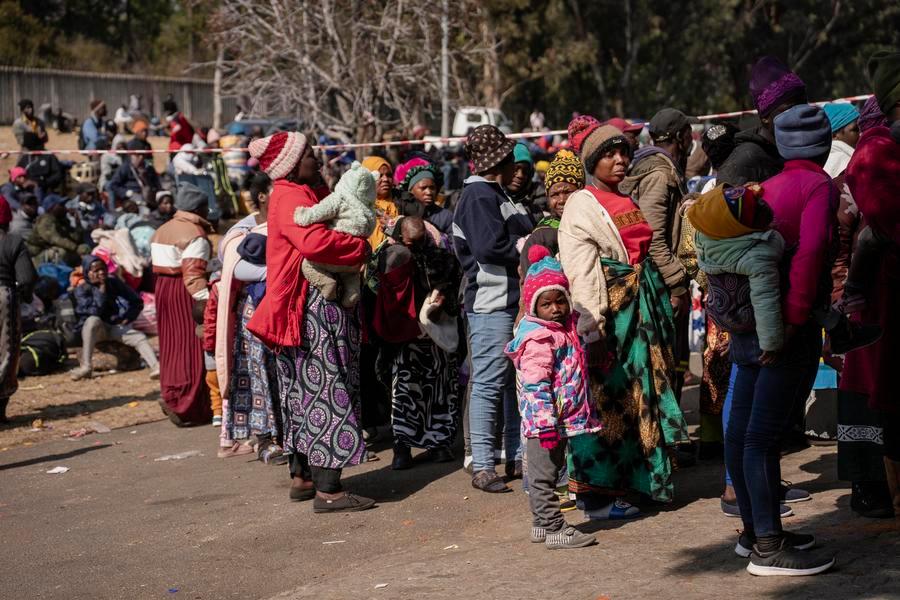
In the chilling cold of Johannesburg’s winter, hundreds of Malawian nationals have found themselves camping outside their country’s consulate, hoping for a bus to take them home. Approximately 1,000 individuals have fled their homes due to escalating anti-immigrant sentiments in South Africa, as noted by Dumisani Nureya, director of the Zimbabwe Phoenix Foundation. His organization is currently assisting at the consulate by distributing essential supplies to these vulnerable citizens.
Nureya highlighted the dire circumstances of the migrants, many of whom have been enduring days outside the consulate without access to proper sanitation facilities. Some South Africans have visited the site, questioning why undocument migrants remain in the country despite an ultimatum calling for their departure by June 30.
Protests Highlight Underlying Economic Concerns
Anti-immigration protests have intensified, particularly in Johannesburg’s central business district, where groups continue to mobilize against undocumented immigrants. The ongoing demonstrations have now become a fixture every Thursday since nationwide protests commenced on June 30. In addition to street protests, vigilante groups have taken more extreme measures, conducting “door-to-door” visits to identify foreign nationals and report them to authorities.
One protest leader, Sandile Dube from March and March, expressed their determination to see all undocumented immigrants removed from South Africa. He emphasized a desire for comprehensive changes to immigration laws and urged the government to classify illegal immigration as a national crisis, positioning it as a key issue affecting the local economy.
Government Response and Repatriation Efforts
In light of the protests, the South African government has announced plans to tighten immigration controls and facilitate the voluntary return of foreign nationals. Maba Scott, chief director of cluster communications at the Government Communications Information System, confirmed that the government is assisting migrants from various African countries—including Malawi, Mozambique, Ghana, Nigeria, Uganda, and Kenya—who wish to go back home.
Recent statistics indicate a significant increase in the number of foreign nationals processed for deportation or voluntary repatriation. As of July 11, 53,449 individuals had been processed, a sharp rise from 15,162 just weeks prior. Notably, with over 80% of those affected being Malawians, the spike emphasizes the urgency of the situation.
Challenges and Solutions in the Repatriation Process
Despite logistical challenges, Scott reported that the repatriation process is advancing, with many arriving at designated collection points. The South African government is conducting background checks on those preparing to leave to ensure they have not committed any crimes. Scott outlined the nation’s commitment to curbing illegal immigration by fortifying its borders and employing advanced technology, such as drones and body cameras.
While the government acknowledges public concerns surrounding immigration, Scott stressed the importance of upholding the law. He reaffirmed that only authorized immigration officials should verify an individual’s immigration status during these times of unrest.
Underlying Causes of Tension Revealed by Experts
As the unrest unfolds, experts are increasingly linking the rising anti-immigrant sentiment to deeper socio-economic issues facing South Africa. Joe Veery, an associate professor at the Center for African Migration and Society at the University of the Witwatersrand, pointed out that immigrants are unfairly scapegoated for ongoing challenges such as inequality and unemployment. She argued that blaming immigrants for these systemic issues is fundamentally erroneous.
Veery further cautioned that violence against immigrant-owned businesses could jeopardize South Africa’s economy, as the closure of spaza shops may lead to rising food prices. Disruptions could extend to local economies, regional trade, and investment, potentially damaging the country’s reputation. This alarming trend calls for immediate attention, reinforcing the need for constructive discourse around immigration and social integration.
