


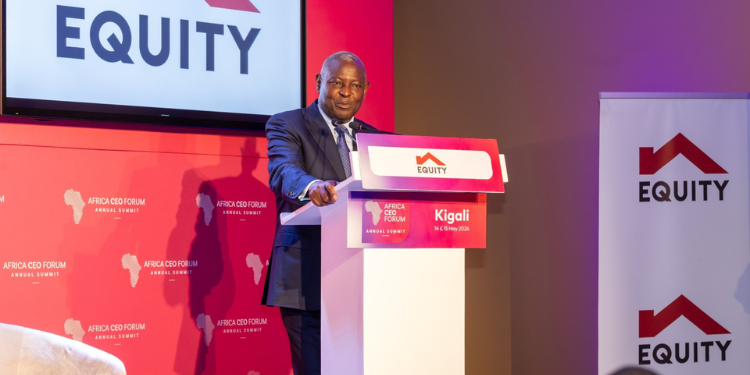
Equity Group Managing Director and CEO James Mwangi emphasized the critical role of digital systems in fostering cross-border business and economic development across Africa. He advocated for enhanced technology adoption to boost trade throughout the continent.
Mwangi shared his insights during a technology breakfast organized by Equity Group, held in conjunction with the Africa CEO Forum 2026 in Kigali, Rwanda. This event gathered influential figures from government, finance, and technology sectors to deliberate on Africa’s digital evolution.
He noted that Africa’s potential for economic growth and the enhancement of intra-African trade hinges on the effective integration of technology and financial services to support businesses and tap into new markets.
We must harness the intersection of technology and finance, Mwangi articulated. Our goal is to create a platform that facilitates intercontinental trade, empowering businesses and entrepreneurs to scale their operations.
Expansion of Africa’s Digital Economy Essential
The forum, themed ‘From FinTech to FutureTech: Expanding Africa’s digital economy’, dedicated itself to reinforcing digital infrastructure and encouraging synergistic partnerships between public and private sectors to drive sustainable economic growth.
Mwangi further stressed that the growth of Africa’s digital economy demands ongoing investment in innovative solutions that enhance financial inclusion, particularly for small and medium-sized enterprises (SMEs) and young entrepreneurs, who often encounter obstacles in securing capital and accessing markets.
He highlighted the significant opportunity presented by Africa’s youthful population, suggesting that with the appropriate tools, resources, and platforms, the continent can build a vibrant digital economy that nurtures enterprise development and facilitates participation in regional trade.
Mwangi also pointed out the necessity for institutions to collaborate in creating the shared infrastructure that supports cross-border trade and enhances efficiency across African markets.
Innovation and Digital Infrastructure at the Forefront
Participants at the forum explored the impact of emerging technologies such as blockchain, digital assets, and decentralized systems in enhancing transparency, lowering transaction costs, and broadening access to financial services across the continent.
The discussions revealed how these technologies can overcome persistent challenges in cross-border payments, trade finance, and regulatory coordination that have impeded intra-African trade.
Rwanda’s Minister of ICT and Innovation, Paula Ingabire, underscored the necessity for African nations to adopt a intentional strategy in shaping their digital transformation, prioritizing investments in systems that deliver tangible benefits for local economies and communities.
She stressed the importance of defining how technology can empower societies and create opportunities for employment, asserting that each technological advancement has promised inclusivity in the past, and now is the time to deliberately embrace these innovations.
Ingabire highlighted the growing significance of digital infrastructure, including cross-border banking systems, digital identity frameworks, and data governance structures, noting that data is becoming an increasingly valuable economic asset.
She called for collaboration among African nations to develop cohesive policies, standards, and systems that not only encourage innovation but also facilitate inclusive growth and equitable access to digital opportunities.
The forum comes at a pivotal time when governments and businesses across the continent seek to enhance regional integration, viewing digital connectivity as a crucial enabler of trade under frameworks like the African Continental Free Trade Area (AfCFTA).
