


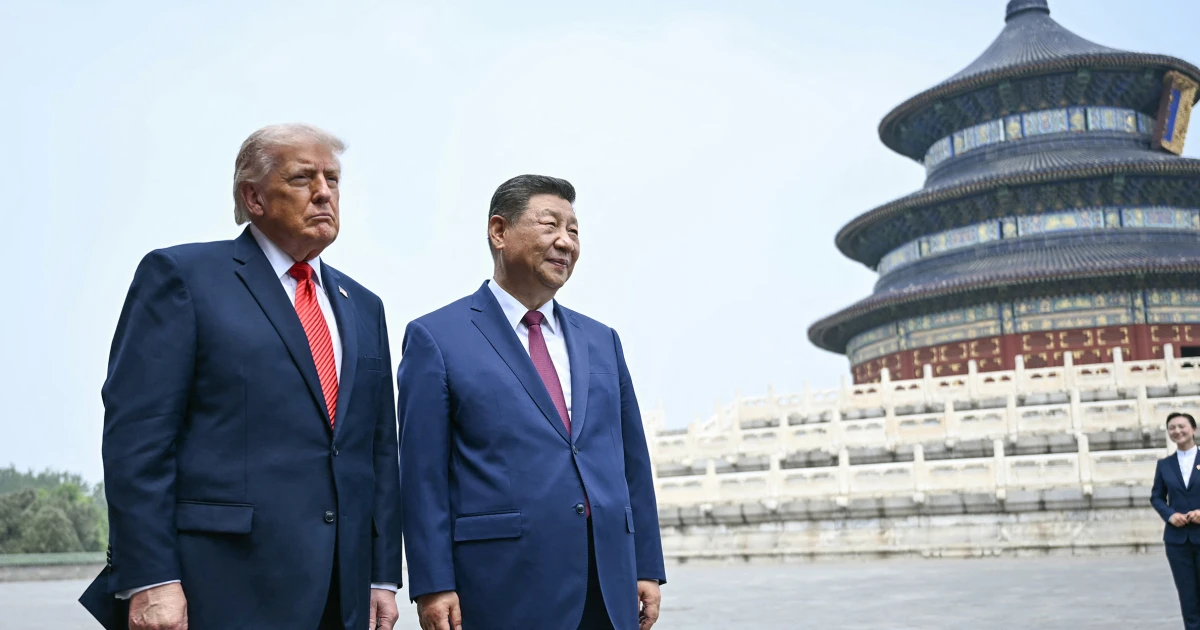
Limited Outcomes from U.S.-China Summit Amidst Ongoing Tensions
In a recent summit in Beijing, U.S. President Donald Trump reported that he and Chinese President Xi Jinping had “discussed just about everything.” However, the meeting failed to yield any substantial agreements, primarily resulting in a series of compliments exchanged between the two leaders rather than concrete actions. The summit underscored the difficulty both nations face in addressing pressing issues, indicating a preference for stabilizing relations over decisive resolutions.
Key Issues Remain Unresolved
According to Craig Singleton, senior director at the Foundation for Defense of Democracies, “Neither side moved on the most important issues.” Critical topics such as technology, Taiwan, Iran, rare earth minerals, and supply chain dependence remain contentious and unresolved. While the summit may have temporarily alleviated tensions, the core issues persist, leaving underlying conflicts unaddressed.
Taiwan’s Sensitivity Intensifies
The Taiwan situation continues to pose a significant strain in U.S.-China relations. President Xi expressed that neglecting the issue could lead to “conflict,” emphasizing its gravity in the context of bilateral discussions. This caution reflects China’s heightened sensitivity around Taiwan, which Xi labeled as the most critical challenge in the relationship, according to a Chinese account of the summit.
Mixed Signals on Arms Sales
Despite the lack of clear announcements regarding Taiwan, Trump claimed that he engaged in “detailed” discussions about arms sales to Taiwan with Xi and anticipated making a decision soon regarding a long-anticipated $14 billion package. This dialogue has raised concerns among Taiwanese supporters, suggesting a potential departure from long-standing U.S. policy against public negotiations over arms sales.
Economic Concerns Dominate Discussions
The summit also highlighted China’s broader economic challenges, such as high youth unemployment and weak consumer demand, leading to apprehensions about its stability amidst a potential energy crisis stemming from the ongoing war in Iran. An anonymous former Trump administration official noted that China is now trying to navigate a U.S. trade policy that it sees as likely to remain unchanged for the foreseeable future. Their goal appears to be forging an agreement that mitigates significant economic hardships.
Implications of the Iran Conflict
The discussions also touched upon the critical issue of Iran, with Trump hinting at possible moves to ease sanctions on Chinese oil companies purchasing Iranian oil. However, he refrained from directly asking Xi for concessions, illustrating an approach that seeks to maintain diplomatic relations while emphasizing shared concerns about the conflict.
Future Dialogues on Power Dynamics
Both leaders agreed to meet again three more times within the year, focusing on how to manage the evolving power dynamics between the U.S. and China. As recent discussions have suggested, the interdependence between these two nations has become far more complex, challenging the traditional power structures. Trump’s acknowledgment of Xi’s reflection on America’s perceived decline aptly illustrates the gravity of today’s geopolitical climate.
