


Economic Concerns Take Precedence for Young Latino Voters
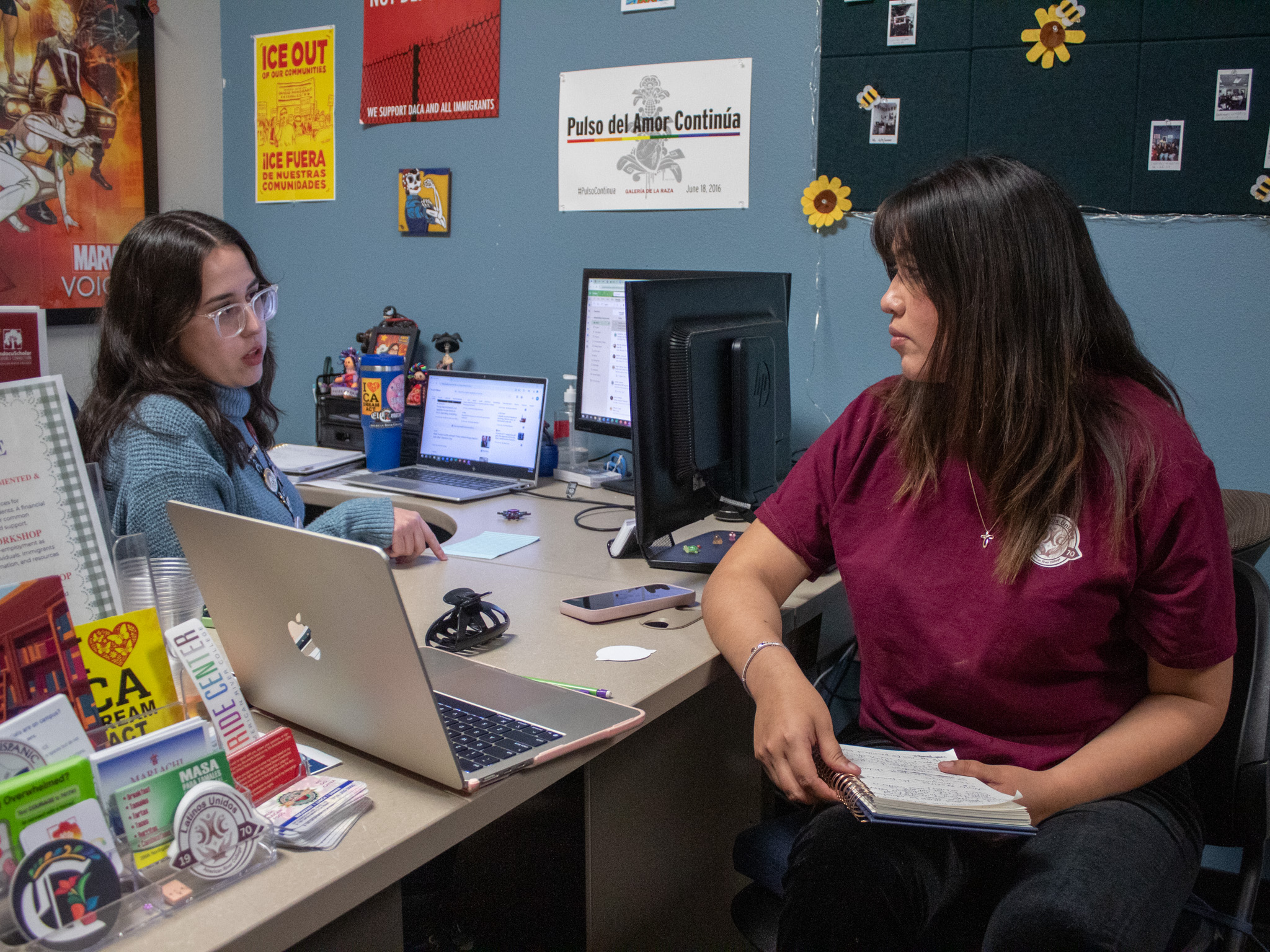
For Yuliana Rico Chavez, the fear surrounding immigration is ever-present for her family. The 19-year-old business major at American River College in Sacramento expressed, “My family and I are scared. It has a lot to do with who I vote for and where I stand now.” However, when reflecting on the California gubernatorial race, immigration ranks lower on her list of priorities compared to affordability issues, particularly housing and gas prices.
“My mother and siblings work, so now that prices have gone up, it’s a big burden on their shoulders,” Chavez explained. As a full-time student, she acknowledges that this burden falls heavily on her family. She emphasized the importance of candidates prioritizing affordability for Californians, stating, “All that matters is whether they care about affordability for Californians and how long they’ve been helping actual Californians.”
Active in student organizations like Latino Unidos and El Centro, which support Latino students, Chavez is leaning towards supporting Xavier Becerra due to his experience defending immigrant rights during his tenure as Secretary of Health and Human Services under President Biden.
As the Trump administration continues its strict immigration policies, immigration remains a poignant issue for many Latino Californians. However, interviews with young voters and political experts reveal that economic factors such as the cost of living, education, and healthcare are emerging as primary concerns. The increasing number of Latino voters presents Democratic candidates with an opportunity to address these economic pressures, particularly following a discernible shift towards the Republican Party noted during the 2024 elections, which saw more Latinos voting for Republican candidates, largely spurred by economic issues.
Shifting Political Priorities Among Young Voters
Lilian Esvegel, 30, a psychology student at American River College and a member of El Centro, became a naturalized citizen last year and is preparing to cast her vote for the first time in the upcoming primary. Her priorities echo those of Chavez: affordability, education, housing, and healthcare. “It’s complicated because I need to have more time to work and I need to earn more money, but at the same time, I want to build a future and I want to study,” she said.
Esvegel continues to feel the weight of immigration concern, particularly as she navigates the challenges of accessing financial aid amid her immigration process. “I felt like we needed more resources. It was scary because I was trying to get money and time,” she admitted, highlighting how immigration issues permeate her daily life rather than existing solely as political discourse.
Recent polls by UnidosUS affirm that economic stability—including the cost of living, inflation, affordable housing, healthcare, and employment—dominates Latino voters’ priorities, with immigration ranking fifth despite national enforcement increases.
The Evolution of the Latino Electorate
Mariana Valdez Jimenez, a specialist at El Centro, noted that students often do not prioritize immigration as a top political issue. “Immigration has almost transcended politics,” she stated, observing that it has become an emotional topic discussed at home. Many young Latinos feel politically marginalized, expressing sentiments such as, “Right now, young Latinos don’t feel like they have any influence in politics.”
Political experts emphasize that past generations of Latino voters, often newly naturalized immigrants, viewed immigration policy as vital to their political engagement. However, the current younger generation growing up in California places increased focus on broader economic pressures affecting their communities. Matt Barreto, founder of the UCLA Institute for Latino Policy and Politics, remarked on the ongoing disconnect between Latinos’ significant contribution to California’s economy and their representation in the electorate.
Balancing Affordability with Immigration Issues
Leading Democratic candidates are addressing immigration in diverse ways, with some making it a central theme of their campaigns. Becerra emphasizes affordability and healthcare while acknowledging his immigrant roots. In a recent interview, he reflected, “As a policymaker, not only as the next governor, but also as the son of immigrants with family members who recently immigrated, I still have concerns about immigration.” His approach to engaging young Latino voters leans heavily on organic support through social media and content creators.
Tom Steyer, another Democratic contender, aligns with the sentiment that affordability is a pressing issue for young Latinos, while also spotlighting immigration enforcement in his platform. He voiced concerns about ICE and its impact on communities of color. “I support abolishing ICE,” he stated, emphasizing the need for comprehensive policy reform.
Antonio Villaraigosa, former Los Angeles Mayor and prominent Latino candidate, warned against oversimplifying Latino voters’ concerns to just immigration. “Latino policy is also American policy,” he stated. “They care about good jobs and an economy that works for more people. Yes, they care about immigration, but the idea that that’s all they care about or the most important thing is not true.”
As the race evolves, different demographics of Latino voters are emerging with nuanced concerns, shifting the political landscape in California. Candidates like Becerra, recognized for his work in immigrant-heavy communities, are also gaining traction among young Latinos, reflecting a growing desire for relatable representation in state politics.
