


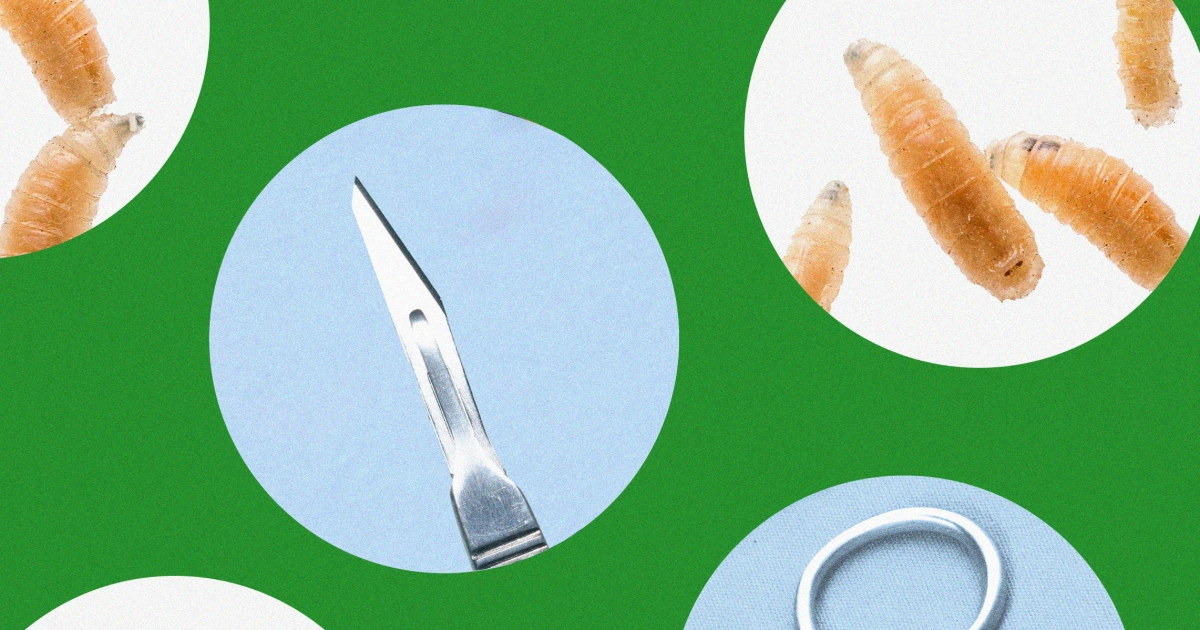
Rejuvenating an Unlikely Healer
Historically viewed with disdain, maggots are often associated with decay and death, primarily feeding on corpses and decaying flesh. However, advancements in modern medicine are reshaping their reputation as valuable tools in wound care.
A Personal Journey with Maggot Therapy
In 2023, Polly Cleveland from New York City sought out maggot therapy to assist her late husband, Tom, during his medical care. After his hospitalization, Tom experienced severe pain in his left heel, which later developed into a pressure sore. Cleveland noted the unpleasant odor emanating from the wound, prompting her to explore unconventional treatments.
Innovations in Wound Care
Despite their potential, Cleveland discovered that the medical staff treating her husband were largely unfamiliar with the use of maggots for wound cleaning. With her background interest in insects, she found the work of Dr. Ronald Sherman, a pioneer in modern maggot therapy, and arranged for an overnight shipment of sterile medicinal maggots, which are approved by the FDA.
Mechanics of Maggot Therapy
Maggots, specifically bred in sterile laboratory environments, serve as an effective and painless debridement method. As Dr. Sherman explains, maggots dissolve dead tissue using digestive enzymes, leaving healthy tissue intact. Unlike conventional surgical methods, which can be crude and limited by the surgeon’s field of vision, maggots operate with impressive precision.
Addressing Surgical Limitations
For patients who are ineligible for surgery, maggot therapy offers a viable alternative. According to Professor Sherman, one of the primary benefits of using maggots is the elimination of the need for anesthesia, which poses significant risks for patients with multiple health challenges. Clinical director Lisa Baxter from Tufts Medical Center noted that her team employs maggot therapy sporadically, usually for those waiting for surgical procedures like heart transplants.
Barriers to Adoption
Despite their advantages, maggots are not widely used due to limited insurance coverage. Sherman pointed out that maggots can be purchased for around $400, considerably less than commonly used enzyme ointments, which can cost up to $450 and often require longer healing times. Additionally, the general awareness and acceptance of maggot therapy remain low, partly due to its unconventional nature.
Challenges and Misconceptions
Dr. Sameer Patel, chief of plastic and reconstructive surgery at Temple University Hospital, emphasized that maggot therapy is not yet considered standard care. He acknowledged that there is insufficient high-quality research to support its widespread use. Furthermore, many patients are often hesitant or unwilling to try maggots for fear of the stigma associated with their appearance and primary function.
