


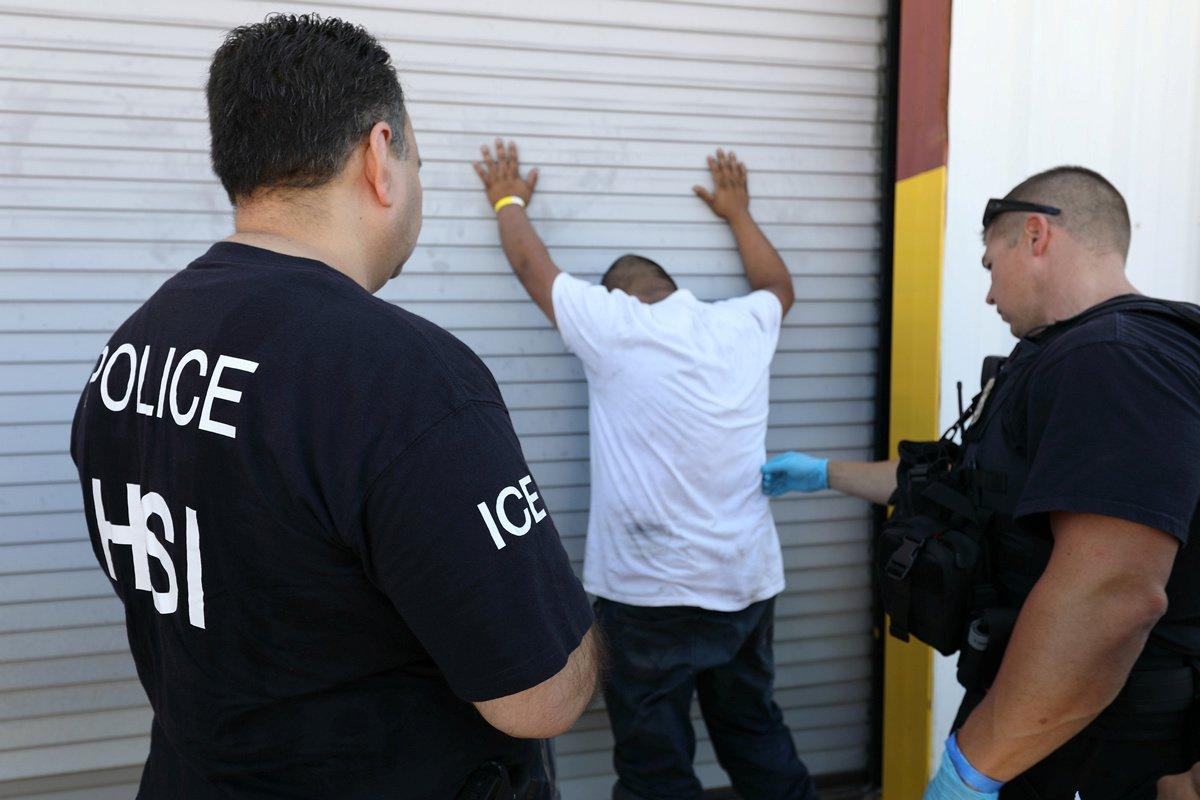
WASHINGTON (OSV News) – The mass deportations initiated by President Donald Trump’s administration could have a profound negative impact on the economy and labor market, even affecting U.S.-born workers, according to new research findings.
This analysis is presented in the report titled “The Impact of ICE Activities on the Labor Market in Trump 2.0.” Co-authors Chloe East, an associate professor of economics at the University of Colorado Boulder, and Elizabeth Cox, a research assistant at the University of California’s Institute of Behavioral Sciences, shared their findings in early May. They compared regions in the U.S. that experienced a significant increase in monthly ICE arrests between January 2025 and October 2025 with areas that did not, concluding that there was a marked chilling effect on the labor market.
East noted, “Our evidence indicates that increased ICE activity adversely affects the overall labor market, with no benefits observed for U.S.-born workers. In fact, the evidence suggests fewer job opportunities for these individuals.”
Estimating Illegal Immigration through a Proxy Model
To estimate the population of undocumented immigrants, economists employed a proxy model, as U.S. national surveys do not inquire about immigration status. The study demonstrated that in areas where ICE enforcement surged, there was an average decline of 4% in the number of “likely undocumented” immigrants who reported working in their communities the previous week.
Kevin Appleby, a senior policy fellow at the New York Migration Research Center and former director of immigration policy at the U.S. Conference of Catholic Bishops, emphasized that the findings from CU Boulder highlight that, contrary to some beliefs, undocumented immigrants play a crucial role in driving economic growth in specific sectors, which, in turn, creates job opportunities in related fields.
“Research indicates that most Americans tend to avoid jobs typically filled by immigrants,” Appleby remarked. “Consequently, mass deportations could jeopardize the economy and lead to higher prices due to a dwindling workforce.”
No Evidence of Increased Wages for U.S.-Born Workers
The study also revealed that there was no evidence employers raised wages to attract U.S.-born workers to fill positions previously occupied by undocumented immigrants, nor did U.S. citizens experience enhanced job prospects following the spike in ICE enforcement.
On average, U.S.-born men with a high school diploma or less faced a 1.3% decrease in job opportunities in areas affected by increased ICE activity. East pointed out, “Though many believe mass deportations free up jobs for U.S.-born workers, numerous studies, including ours, disprove this notion. If construction companies struggle to find workers, they will undertake fewer projects and consequently hire less.”
This adverse impact was particularly evident in the agriculture, manufacturing, and construction sectors.
The Economic Repercussions of Mass Deportations
Clayton Shinyai, a Labor Advisor at the Catholic Labor Network, underscored that the mass deportation of immigrants not only inflicts cruelty but also diminishes employment opportunities for native-born workers. He stated that both the Church and the AFL-CIO advocate for a solution to immigration challenges that ensures a path to citizenship for law-abiding undocumented workers contributing to their communities.
Amy Sherid Mayer, the group’s executive director, added that Catholic social teachings emphasize the dignity of all workers, suggesting that they should not be treated as disposable assets when politically convenient.
Disrupting Local Economies
“Increasing evidence indicates that mass deportation policies do not support working families; instead, they can destabilize local economies, diminish the workforce, and adversely impact both immigrant and U.S.-born workers—especially in sectors already facing labor shortages,” Sherid Mayer noted. In her view, a just immigration policy must uphold the rule of law while recognizing the vital contributions of immigrant workers and establishing a realistic pathway for compliant long-term workers to remain with their families and engage in community life.
Catholic social teaching concerning immigration balances three fundamental principles: the right of individuals to immigrate to sustain their lives, the state’s authority to manage its borders, and the moral obligation of states to enforce their immigration laws fairly and compassionately.
“The moral issue lies in the fact that while immigrants contribute significantly to our economy, we are often willing to vilify them, tearing apart their families and exploiting their labor at minimal wages,” Appleby concluded. “As a society, we must acknowledge this contradiction and extend legal protections.”
Kate Scanlon serves as a national reporter for OSV News with a focus on Washington. Follow her on X @kgscanlon.
