


Africa Emerges as a Promising Growth Frontier for AI Investment
As global investment in artificial intelligence (AI) intensifies, Africa is increasingly being recognized as a vital growth frontier for the sector. However, according to Stephen Santini, Vice President of SSA Secure Power at Schneider Electric, the continent’s ambitions in AI hinge on addressing one critical issue: infrastructure readiness.
Strategic Interest in Africa from Global AI Players
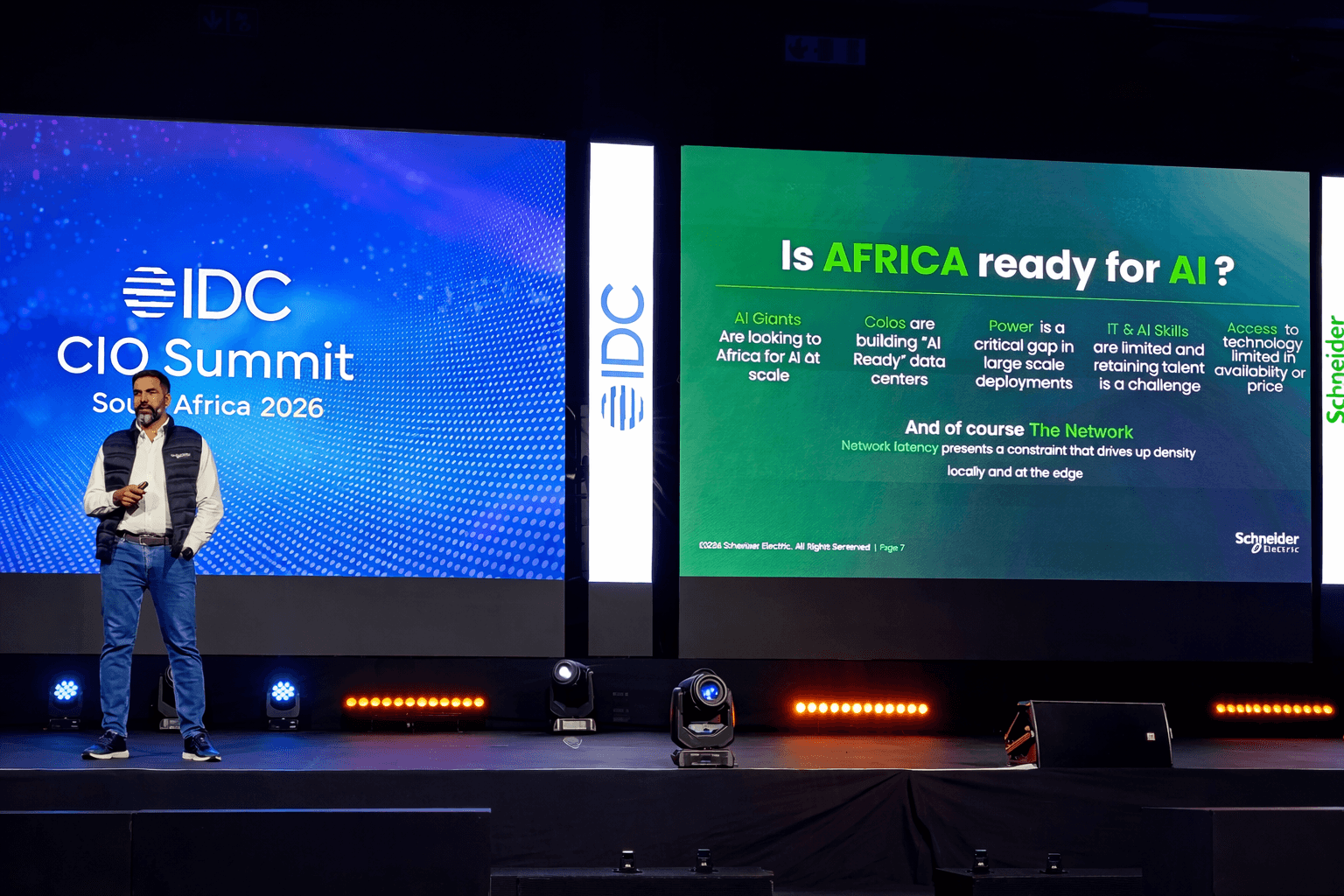
During this year’s IDC CIO Summit 2026 at the Sandton Convention Center in Johannesburg, Santini noted that major global AI companies are already eyeing Africa as a strategic investment hub. He posed the question, “Is Africa ready?” The consensus among international AI stakeholders is that the continent could represent the next significant opportunity, akin to a modern-day gold rush, due to its vast land, abundant resources, and potential for remarkable growth. Investment in data centers is already evident in countries like Kenya, Nigeria, and South Africa.
Barriers to AI Adoption in Africa
Despite the growing momentum surrounding AI infrastructure, Santini cautioned that significant obstacles remain. Failure to tackle these issues effectively could hinder the continent’s ability to fully embrace AI technologies. “Power remains the biggest challenge for AI, especially in data centers. To illustrate, some of the projects we are involved in the Middle East demand power requirements akin to those of entire cities,” he stated.
Rethinking Infrastructure Deployment
Santini emphasized that discussions on African infrastructure must encompass more than just large-scale facilities. Organizations should consider how to implement AI in ways that generate the most operational value. “When people hear ‘AI,’ they often envision vast hyperscale data centers. However, AI can also function on laptops or small server clusters deployed in industrial environments. It doesn’t necessarily need centralized, massive infrastructures,” he explained.
Emergence of Small-Scale AI Environments
This perspective is particularly relevant to African industries, including mining, agriculture, financial services, and government. Many organizations are currently deploying small-scale AI solutions via prefabricated systems or containerized data centers, which allow them to optimize existing cooling and power infrastructures while facilitating easier deployments.
The Importance of Reliable Connectivity
In addition to power, Santini underscored the critical importance of connectivity for AI success across Africa. “A data center without a dependable network infrastructure is essentially just an expensive paperweight; if data cannot move efficiently, the infrastructure fails to deliver value,” he remarked.
Integrating Software Intelligence with Infrastructure
Beyond the physical components, Santini highlighted the necessity of software intelligence for enhancing energy efficiency and cooling performance amidst an increasingly constrained power environment. “We live in a world where power is limited, and this challenge is most acutely felt in Africa. Therefore, aligning the right physical infrastructure with advanced software intelligence is crucial for maximizing efficiency and performance,” he stated.
Ultimately, Santini believes that the success of AI in Africa will depend on strategically aligning infrastructure investments with clear business objectives rather than pursuing AI for its own sake. “AI in Africa is not merely a futuristic concept; it’s very much present. However, achieving success involves defining the right operational outcomes and aligning technology, power, cooling, compute, storage, and networking around those goals,” he concluded.
At Schneider Electric, they position themselves as energy technology partners committed to helping organizations achieve results in an efficient and sustainable manner.
