


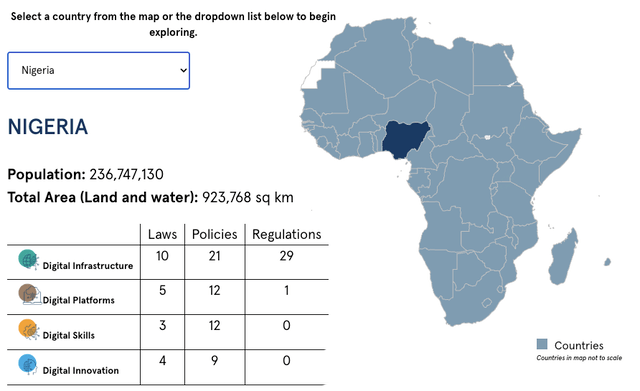
In recent years, navigating the complex digital regulatory landscape across African nations has proven challenging. Researchers have encountered a myriad of obstacles, from inaccessible online legislation to outdated material. Engaging with colleagues in key cities like Nairobi and Lagos hasn’t always yielded comprehensive insights, as many crucial laws remain elusive. The Africa Technology Policy Tracker aims to consolidate the fragmented digital economy laws, regulations, and policies from numerous countries into one searchable database, organized into four key pillars: digital infrastructure, digital platforms, digital skills, and digital innovation.
This tool not only simplifies the search for information but also highlights the stark differences in regulatory approaches among various nations. For instance, I extracted data from Nigeria, Rwanda, and Zambia—three countries that often dominate discussions among healthcare workers, donors, and digital health practitioners.
The disparities in regulatory frameworks across these nations are striking. A mere tally of existing laws might suggest that Nigeria, with its extensive documentation, is the most advanced, while Rwanda appears to be the most inclusive, and Zambia may seem to be the least developed. However, these assumptions can be misleading, as the quality and underlying intent behind these regulations vary significantly.
Regulatory Numbers Can Be Misleading
The Africa Technology Policy Tracker reveals the total number of documents by country across all four regulatory pillars:
- Nigeria: 60 documents, comprising 22 laws, 54 policies, and 30 regulations, covering infrastructure, platforms, skills, and innovation.
- Rwanda: 59 documents, primarily focused on digital infrastructure, including 8 laws, 18 policies, and 31 regulations, while lacking coverage in the other three categories.
- Zambia: 19 documents, with 13 laws and 5 policies concerning digital infrastructure, while the columns for digital skills and innovation remain largely empty.
Donor program officials might inaccurately conclude that Nigeria leads in maturity, Rwanda is a model of inclusiveness, and Zambia is merely developing. Such conclusions overlook deeper insights into each country’s regulatory environment.
Nigeria’s 60 entries reflect the country’s evolving ICT legislation that dates back to the Nigerian Communications Act of 2003, indicating an ongoing layering process of new regulations. Conversely, Rwanda’s 59 records reveal a regulatory authority (RURA) that generates numerous technical regulations but does not necessarily impact substantive policy. On the other hand, Zambia’s 19 documents indicate a nation that has historically lagged behind but is now poised to implement pivotal legislation that could reshape its civic landscape for years ahead.
Diverse Regulatory Profiles in Africa
The tracker clearly illustrates that while all three countries have enacted cybersecurity laws, the implications of these laws differ significantly. Users must discern the nuances between a law that aligns with international standards, such as the GDPR, and one that facilitates extensive surveillance.
Nigeria’s Approach: Building a Comprehensive Digital Economy
Nigeria stands out as the only nation among the three with a significant presence of legislation across all four pillars. Key documents include the National Digital Economy Policy (2020-2030), the National Data Protection Act (2023), the Nigeria Start-up Act (2022), the National AI Strategy (2024), and the Blockchain Policy (2023), alongside the Cybercrime Act (2015). These entries underscore a robust framework for digital skills development and innovation, with policies designed to bolster the ICT sector, which is projected to constitute approximately 20% of Nigeria’s real GDP by 2024.
Rwanda’s Strategy: Infrastructure-Centric Legislation
Rwanda’s regulatory landscape demonstrates significant gaps. It lacks any laws governing digital platforms, skills, or innovation, though it boasts policies in these areas lacking legal enforcement. Most of Rwanda’s binding instruments are centered around digital infrastructure, including cybersecurity, data protection, and SIM registration. This regulatory orientation primarily focuses on controlling and coordinating digital infrastructure rather than empowering users and businesses through legal safeguards. While Rwanda has ambitious strategic plans, such as Smart Rwanda and Vision 2050, the legal frameworks are heavily weighted in favor of governmental control.
Zambia’s Shift Toward Strengthened Administration
Zambia’s regulatory transformations reveal uncomfortable dynamics. Recent laws, like the Cybercrime Act (2025) and Cybersecurity Act (2025), appear alongside older legislation but serve to centralize administrative power under presidential control. This means enhancements in surveillance practices that may pose risks to civil liberties. The U.S. Embassy in Lusaka raised alarms about these developments, reinforcing public apprehension as the nation prepares for general elections in August 2026, which make regulatory integrity paramount.
Practical Recommendations for Industry Stakeholders
While the Africa Technology Policy Tracker serves as a springboard for users, it is essential to adopt a strategic approach when leveraging its insights.
- Ensure that regulatory baselines are grounded in actual documents rather than memory or vendor presentations. When designing systems in Lusaka, consult the tracker for Zambia’s Data Protection Act (2021) and Cybersecurity Act (2025) to ascertain compliance requirements.
- Conduct gap analyses to identify significant omissions in legislation. For instance, Rwanda’s absence of laws on digital skills and innovation isn’t an oversight but rather a deliberate policy choice. Attempts to push new legal frameworks without considering the existing political landscape are likely to falter.
- Collaborate with civil society organizations that can provide context around the implementation of laws and highlight voices that may be excluded from the formal drafting process. Understanding local dynamics is key to fully comprehending the regulatory environment.
Recognizing the Tracker’s Strengths and Limitations
The Africa Technology Policy Tracker is a groundbreaking resource developed by the Carnegie team and ATU. Previously, analyzing the digital policy landscape across three African nations could take days; now, it requires just an hour, significantly enhancing productivity for analysts, donor representatives, and regulatory bodies.
However, it is crucial to acknowledge its limitations. The tracker exclusively indexes officially adopted documents, leaving out bills under public consideration and ministerial circulars. Moreover, it treats all entries equally, regardless of their substantive significance. This means countries with vastly different governance structures may seem similar based solely on their document count.
None of these points are shortcomings of the tracker itself but rather reflections of how users might engage with the information. Future users should be cautious not to overlook the complexities underlying surface-level similarities in regulatory frameworks.
