


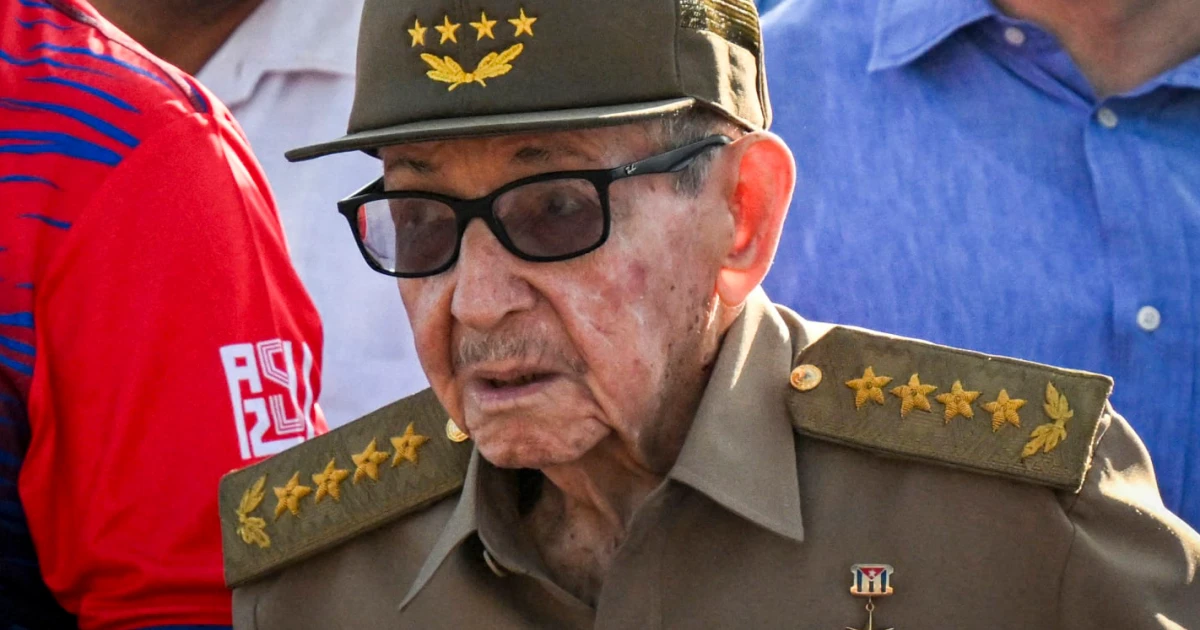
Former Cuban President Indicted for 1996 Plane Shootdown
MIAMI – The Justice Department announced on Wednesday the indictment of former Cuban President Raul Castro in connection with the 1996 downing of two commercial planes, an incident that resulted in the deaths of four Cuban-Americans.
Castro, now 94 and the younger sibling of the late revolutionary leader Fidel Castro, faces charges that include conspiracy to murder American citizens, as well as the murder and destruction of an aircraft, according to Acting US Attorney General Todd Blanche.
The announcement was made during a press conference on May 20, coinciding with Cuba’s Independence Day, held in front of Miami’s Freedom Tower—a significant landmark for Cuban-Americans who have fled the communist regime, often referred to as the “Ellis Island of the South.” The crowd greeted the news with enthusiastic cheers.
During the event, officials honored the memory of the four Cuban-American victims—three U.S. citizens and one lawful resident—who lost their lives when a civilian airplane was shot down by the Cuban Air Force on February 24, 1996. At that time, Castro served as Cuba’s Minister of Defense.
The civilian aircraft belonged to Brothers to the Rescue, a humanitarian organization founded in 1991 by Cuban-American pilot Jose Basulto and other Cuban exiles. The group dedicated itself to rescuing Cubans who had fled the country on makeshift rafts in the treacherous waters between Cuba and Florida.
On one of their missions, two Brothers to the Rescue planes were shot down by Cuban MiG-29s while flying in international airspace. The Cuban government has consistently claimed that these planes violated its airspace. An investigation by the UN’s International Civil Aviation Organization and the Inter-American Commission on Human Rights found that the victims “died as a result of direct action carried out by agents of the Cuban state in international airspace.” The report criticized Cuba for not adhering to standard interception protocols.
This incident, which prompted immediate condemnation from the Clinton administration and Congress, resulted in substantial sanctions against Cuba. Additionally, a man was convicted for providing state intelligence about the Brothers to the Rescue group during their rescue operations. Decades later, the incident continues to ignite political tensions in U.S.-Cuban relations, with Cuban-American lawmakers and victims’ families longstanding advocates for prosecution against Castro within the United States.
Indictment Amid Increased US Pressure on Cuba
The indictment of Castro emerges during a time of heightened pressure from the Trump administration on the Cuban government to implement fundamental political and economic reforms. In recent weeks, U.S. threats of military action have intensified.
In a bold move earlier this year, President Donald Trump targeted Cuba’s entrenched communist regime following U.S. military operations that captured Venezuelan leader Nicolás Maduro. During this period, Trump remarked that Cuba “really needs help,” highlighting the dire situation concerning access to basic necessities like electricity and food.
Secretary of State Marco Rubio directly addressed the Cuban populace in a video message on Wednesday, acknowledging the “unimaginable hardship” they are currently enduring. He attributed the current energy and food shortages to corrupt governance, stating, “Those who control this country are stealing billions of dollars while nothing is being spent on helping our people.”
Cuban President Miguel Díaz-Canel responded via social media, asserting that the nation’s anti-imperialist sentiment has been reinforced by ongoing external threats. Following the U.S. cut-off of oil supplies from Venezuela, a close ally of the Cuban regime, the island has been plunged into severe fuel shortages, leading to widespread power outages.
Residents of Havana shared their plight with NBC News, reporting power interruptions lasting over twenty hours a day due to acute fuel scarcity. Basic services, including water supply, have been severely impacted as municipal systems depend on electricity for operation. One resident stated, “This situation needs a solution now. There are a lot of problems: electricity, water, food. The problems here affect everything.”
The Cuban government condemned recent U.S. actions as ruthless attempts to undermine Cuban resilience and impose a transition that aligns with U.S. interests. Echoing this sentiment, Havana resident Marcelino Fuentes described the U.S. sanctions as a “barbaric act,” asserting that claims of rights made by the Trump administration are unjustified.
Reporting contributed by Carmen Cecin in Miami, Nicole Acevedo in New York, Ryan Riley and Gary Grumbach in Washington, D.C., and Orlando Matos in Havana.
