


Teenager’s Long Detention in Texas Immigration Center
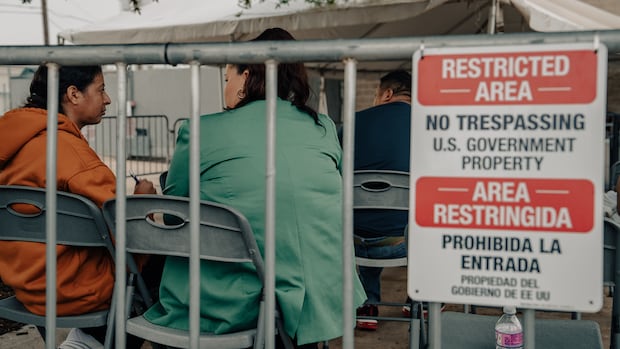
In the early hours of the morning, a 16-year-old boy known as CRB was taken to the Dilley Immigration Processing Center in south Texas. He would remain there for an extended period of 141 days. This facility, a series of chained, fenced trailers positioned along a remote highway about 70 miles southwest of San Antonio, is primarily used by U.S. Immigration and Customs Enforcement (ICE) to detain families—predominantly mothers and their children, some as young as two years old—targeting them for deportation.
CRB’s journey to the U.S. began when his mother brought him here at the age of seven, fleeing violence in Mexico. While the family settled in San Antonio under the protection of the United Nations Convention against Torture, their lives took a drastic turn when CRB was arrested by ICE. Before his detention, CRB was an active member of his high school tennis team and was focused on graduating early. Reflecting on his life before incarceration, he noted, “Everything was going pretty well. I had a pretty stable life. But when I went to jail, they changed me. My whole life was 360 degrees.”
Leadership Change at ICE Amidst Ongoing Detentions
Last week, a significant leadership change occurred within the Trump administration as David Venturella, a former executive at private prison company GEO Group, was appointed to lead ICE from the end of the month. This transition takes place as over 60,000 individuals currently inhabit prison-like facilities that comprise the ICE detention network. Historically, immigration detention was reserved for noncitizens viewed as flight risks or security threats; however, recent statistics reveal that more than 70% of immigrants in detention currently hold no criminal convictions.
Conditions Within Family Detention Centers
As the Trump administration underscores its ambition to deport one million people annually, it has widened the criteria for detention and reinstated family detention practices, reopening the Dilley facility, which had been shuttered by the Biden administration. During CRB’s detention, the situation became dire. Days turned into months, leading CRB into a profound state of depression. He recounted, “I couldn’t distract myself all day. At night, I started crying. I didn’t want to be there, I wanted to leave.” His mental health deteriorated to the point where he experienced a panic attack and engaged in self-harm, prompting a quick release just two days later.
Despite guidelines issued by U.S. courts stating that children should not be held in immigration detention for more than twenty days, recent court documents indicate that around 600 children were held longer in December and January alone. During CRB’s time at Dilley, educational resources were virtually nonexistent, and detainees reported substandard food and unsanitary drinking water, contributing to a dire living environment.
Controversy Surrounding Detention Facilities
CoreCivic, the organization responsible for operating Dilley, refuted claims made by detainees regarding the quality of food, water, and treatment from staff, labeling them as “false.” The company asserted that it provides age-appropriate education for children and rigorous medical care, including trauma-informed mental health services. ICE officials echoed concerns about media portrayals of the detention conditions but maintained that detained individuals could voluntarily leave by submitting the appropriate paperwork, which raised further questions about the nature of consent in these circumstances.
Ongoing Arrests and Legal Concerns
In recent months, ICE has adjusted its approach, distancing itself from previously violent enforcement strategies practiced in cities like Chicago and Minneapolis that resulted in deaths and sparked social unrest. Despite these changes, an average of over 900 noncitizens are still being apprehended daily, primarily during routine encounters such as traffic stops. CRB and his mother were arrested during a regular inspection at the San Antonio ICE field office last September.
Decisions regarding who gets detained often appear to hinge on ethnic profiling and the availability of space within the detention system. Amanda Aguilar, an attorney at American Gateways—a Texas nonprofit providing legal aid to immigrants—highlighted the arbitrary nature of detentions, noting that often it is a matter of choosing between parents during family separations, leading to undue stress and financial pressure on families.
Impacts of New ICE Policies
Last July, ICE adopted a policy mandating the detention of unauthorized immigrants without the possibility of bail hearings, essentially allowing it to hold millions without the opportunity for legal recourse. Dan Gividen, a former deputy general counsel at ICE, expressed grave concerns about these developments, stating that “constitutional norms are breaking down.” Now operating his own immigration law firm, Gividen emphasizes the troubling implications of treating noncitizens like common criminals, calling the situation appalling.
Conditions within detention facilities further complicate the narrative, with many of them operated by private companies that are often overcrowded and understaffed. For instance, the Pearsall facility, located midway between Dilley and San Antonio, houses over 1,700 detainees and generates substantial revenues for GEO Group. Former detainee Yanquiel Lima shared his harrowing experience, describing unsanitary conditions and the systemic neglect often faced by detainees.
Families Struggling from the Outside
The ramifications of ICE detentions extend beyond the walls of facilities, deeply affecting families and communities left in the wake of these arrests. Carla Soriano, whose husband was deported to Honduras five months ago, reported significant financial struggles as she navigates life alone with her two sons. Forced to rely on food donations, Soriano described the anxiety of being threatened with deportation herself, illustrating the pervasive fear that grips families affected by immigration enforcement.
Pastor Diane Garcia of Cristiana Roca de Refugio Church acknowledged that more families in her Texas congregation are finding it difficult to maintain stability after being torn apart by ICE raids. In a sense of relentless commitment, she travels to various detention centers each week, witnessing first-hand the distress and trauma caused by aggressive immigration policies. Reflecting on these experiences, she noted that the administration’s motive seems clear: to instill suffering, cause trauma, and effectively discourage entire families from remaining in the U.S.
