


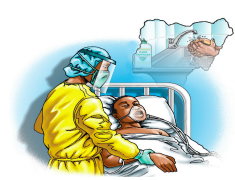
Enhanced Surveillance Required at Key Entry Points
Health authorities in Nigeria must remain vigilant in the wake of a warning from the World Health Organization (WHO) regarding a surge in suspected Ebola cases in the Democratic Republic of the Congo (DRC) and Uganda. Reports indicate a troubling rise to 600 suspected cases, accompanied by 139 fatalities. Following a meeting of the WHO Emergency Committee in Geneva, Director-General Tedros Adhanom Ghebreyesus reassured the public that while Ebola is classified as a public health emergency of international concern, it does not constitute a pandemic emergency. According to Tedros, the organization assesses the risk of infectious diseases as high at the national and regional levels, yet low globally.
The Nature and Spread of Ebola Virus
Ebola is a severe viral illness that can lead to death within a week of infection, leaving minimal time for medical intervention. Symptoms typically manifest between two days and three weeks post-infection and mirror those of malaria, including fever, sore throat, headache, and vomiting. The virus is transmitted through direct contact with the bodily fluids of an infected person, as well as through certain animals, such as fruit bats. Health authorities in the DRC have identified the current outbreak as being driven by the Bundibugyo strain of the virus, for which there is currently no vaccine or effective treatment.
Historical Context of Ebola in Nigeria
The 2014 Ebola outbreak caused widespread fear across West Africa, resulting in approximately 11,300 deaths, predominantly in Liberia, Sierra Leone, and Guinea. Nigeria experienced its first case when Patrick Sawyer, a Liberian-American who contracted the virus, entered the country and died in July 2014. The Nigerian government’s rapid and coordinated response to the crisis, which included extensive screening and public awareness campaigns, successfully contained the virus, leading the WHO to declare the country Ebola-free on October 20, 2014. During that outbreak, Ebola claimed eight lives in Nigeria, including that of Dr. Ameyo Adadeboh from First Consultant Hospital in Lagos.
Strengthening Preparedness Measures
While Ebola is not endemic to Nigeria, it can be imported through land, sea, and air borders. Importantly, there are currently no direct flights from the DRC to Nigeria. Nonetheless, thorough screening of all passengers entering the country is critical. During the 2014 outbreak, the federal government enhanced response teams and increased surveillance at vital entry points. The measures included testing travelers from affected regions and mobilizing trained healthcare professionals to manage the situation effectively.
International Commendation for Response Efforts
The international community praised the Nigerian Federal Government and the Lagos State Health Authority for their effective response to this public health crisis, which ultimately safeguarded countless lives. According to the latest WHO projections, a vaccine for the Bundibugyo strain of Ebola could take up to nine months to develop. Although two vaccine candidates have been created, they have yet to undergo clinical trials.
Proactive Monitoring and Preparedness
Despite the WHO categorizing the risk of another Ebola outbreak as high at the national and regional levels but low globally, the Nigeria Center for Disease Control and Prevention (NCDC) is taking proactive measures to bolster surveillance and emergency response efforts. NCDC Director-General Jide Idris indicated that while there have been no confirmed cases in Nigeria to date, the agency is closely watching developments in affected countries and coordinating preparedness strategies with port health services and other stakeholders. Idris emphasized that response operations will continue in affected regions, ensuring sustained vigilance within Nigeria’s public health infrastructure.
