


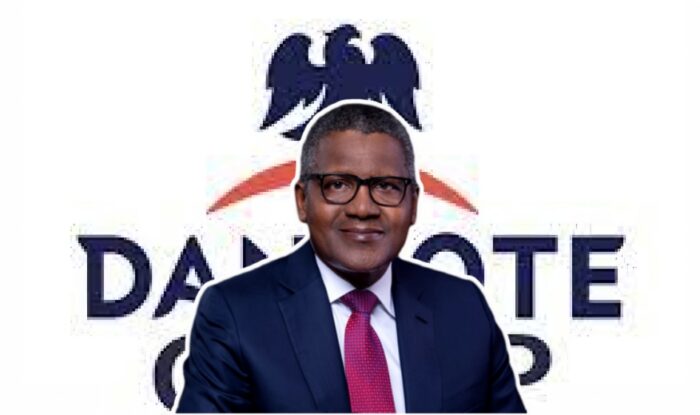
Dangote’s Refinery IPO Signals Confidence in African Markets
During a recent tour of the world’s largest single-train crude oil processing facility, Aliko Dangote revealed to First Hold Company Chairman Femi Otedola and a group of banking executives that investors have already submitted nearly $2 billion in purchase offers for a private placement not yet launched. This announcement represents a significant economic milestone for Africa.
“The IPO we are currently undertaking has attracted overwhelming interest, with many eager to invest,” Dangote stated in a subsequent press briefing. He emphasized the urgency of launching the offering in September, highlighting the strong demand for shares.
The upcoming initial public offering (IPO) of Dangote Oil Refinery and Petrochemical FZE aims for a valuation between $40 billion and $50 billion. The company is planning to sell up to 10% of its stakes, which could yield as much as $5 billion in a single transaction. This IPO is not merely a corporate event but a landmark moment for Nigeria and the continent as a whole.
With demand for the offering reaching into the billions, Dangote’s advisors are still fine-tuning the listing price. This IPO could serve as a vital test for Africa’s often-fragmented capital markets, potentially reshaping the financial landscape for generations.
Nigeria’s Struggle with Oil Dependency
For over six decades, Nigeria, Africa’s largest oil producer, has faced a paradox. Despite possessing the continent’s largest proven crude oil reserves and exporting millions of barrels daily, the country has been forced to reimport nearly all refined products at premium global prices. This practice has strained the economy, as significant import bills severely deplete foreign exchange reserves and exacerbate balance of payments deficits.
Looking ahead, Nigeria’s gasoline import costs are projected to reach N15.42 trillion in 2024, marking a staggering 105% increase from the previous year. Aliko Dangote aims to address this critical issue not as a government initiative, but as a private enterprise. His approach comes without the constraints of World Bank loans or structural adjustments.
Investing in Infrastructure and Capability
Before diving deeper into investment banking and institutional frameworks, it’s essential to acknowledge the physical assets underpinning this venture. The refinery, which cost $20 billion to build and took a decade to complete, began commercial operations in January 2024. With a processing capacity of 650,000 barrels of crude oil per day, it is not only the largest refinery in Africa but also the planet’s largest single-train crude processing unit.
The facility is currently operating at near full capacity, bolstered by shifting global supply chains due to geopolitical tensions, including the U.S.-Israel-Iran conflict. This presents a significant opportunity for the Dangote refinery to stabilize the West African energy market, supported by extensive infrastructure developments in the Lekki corridor. Plans to increase refining capacity to 1.4 million barrels per day over the next three years have also been announced, which would position it as the world’s largest refinery.
A Broader African Economic Vision
This IPO is more than a national endeavor; it is part of a broader vision for Africa. The Nigerian Exchange Group is already engaged in discussions with five other African stock exchanges, including the Johannesburg Stock Exchange, about a historic cross-listing agreement. “What we are building goes beyond isolated transactions; it is about creating a framework for more efficient cross-border capital movement,” noted Emomotimi Agama, Director of the Securities and Exchange Commission.
This collaborative effort aims to enhance liquidity and establish Africa as a competitive hub for global investments. Notably, individual South African investors will have the opportunity to engage through their existing brokerage accounts, sidestepping the complexities of opening an account in Nigeria.
Strengthening Financial Foundations
Before equity investors get their chance, Dangote has already showcased his assets’ capacity to attract significant debt financing. The African Export-Import Bank recently confirmed it has underwritten $2.5 billion of a $4 billion senior syndicated term loan to support the Dangote refinery. This transaction represents one of the largest project finance agreements ever completed in Africa.
Afreximbank President George Eronbi stated that the investment terms go beyond mere commercial interests, emphasizing the refinery as a testament to African ambition and execution. With approximately $15 billion invested in Dangote Group since 2015, he outlined a strategic vision for building a resilient economic future for the continent.
This $4 billion financing will help strengthen the refinery’s balance sheet before the IPO, creating a solid foundation for equity investors while paving the way for expansive growth and development in Africa’s energy sector.
