


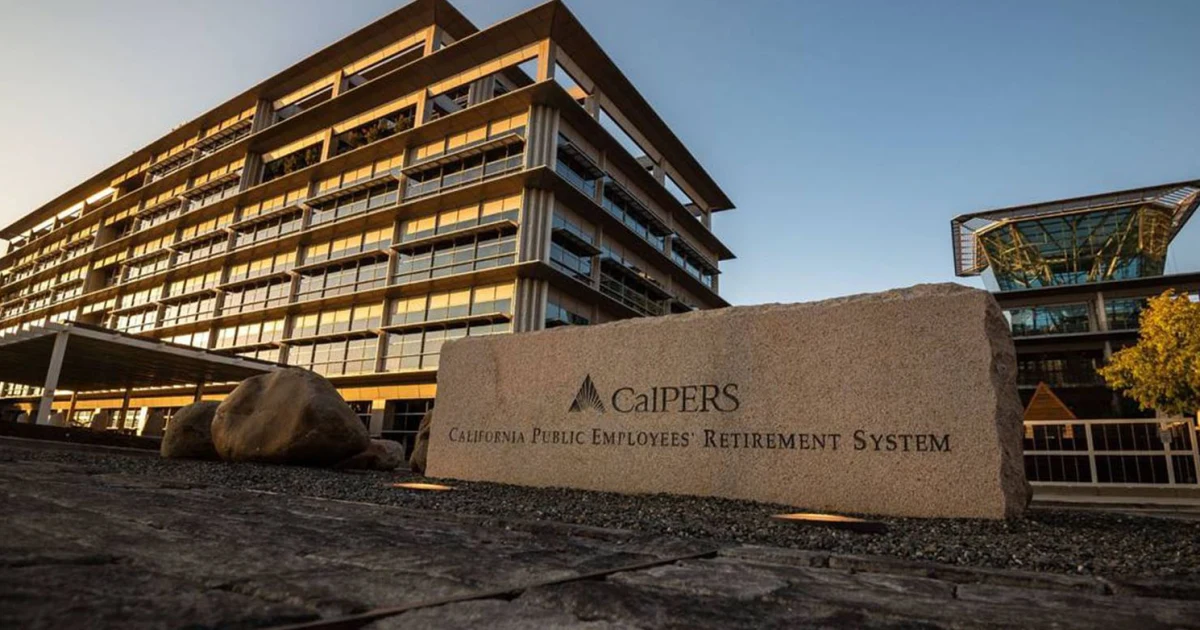
California Public Employees’ Retirement System Faces Serious Criticism
An independent review of the California Public Employees’ Retirement System (CalPERS), the largest public pension fund in the United States, has revealed significant risks for its 2.4 million members. The report highlights issues of secrecy, sustained underperformance, underestimated investment costs, and potential conflicts of interest.
Commissioned by nonprofit advocacy groups concerned about transparency and delays in the fund’s performance, the investigation followed unsuccessful attempts to convince the state Legislature to mandate an audit and the appointment of an inspector general. Consequently, the advocates hired a former Securities and Exchange Commission attorney as their investigator.
Key Findings of the Investigation
The report’s findings are alarming. Over five- and ten-year periods, CalPERS’ investment returns placed it in the bottom 15% of all 230 public pension funds in the country. Approximately 9% of the plan’s assets are tied up in aging private equity partnerships, commonly referred to as zombie funds, which complicate the selling of portfolio companies. These funds generate substantial management fees yet yield minimal returns for investors. Additionally, the report reveals excessive compensation for fund executives, with four earning over $1 million, four others making more than $900,000, and 26 staff members receiving between $500,000 and $900,000 annually.
Concerns Over Fund Governance
Margaret Brown, president of the California Retired Public Employees Association and a former CalPERS board member who funded the review, expressed her deep concerns about the fund’s risks, stressing the need for an independent Office of the Inspector General. Brown insists that such oversight is crucial for obtaining necessary records and restoring trust.
In response, CalPERS CEO Marcy Frost criticized the report as an opinion piece filled with unverified claims designed to unnecessarily alarm members regarding their pensions’ security. She asserted that the fund’s private equity investments have positively impacted performance, pointing to a reduction in fees by 35% from 2024 onward.
Increased Scrutiny of Public Pension Funds
Public pension funds are under greater scrutiny as questions arise about the confidentiality of their operations, the authenticity of their private equity valuations, and the use of questionable benchmarks that obscure actual performance levels. Across the United States, these funds manage a staggering $6 trillion, impacting over 36 million Americans who depend on them. The investigation into CalPERS was conducted by Edward Seidle, known for scrutinizing pension funds in Ohio, Minnesota, and Florida.
Seidle encountered challenges as CalPERS executives provided limited documentation and declined to share other requested materials, hampering his ability to assess the fund’s opaque private equity and debt holdings. A spokeswoman from CalPERS stated that links to over 20,000 pages of documents had been provided but conceded that access issues may have hindered Seidle’s investigation.
Call for Independent Oversight
The need for independent oversight of public pension funds has been reiterated by numerous financial experts, including Rich Wiggins, former director of investment risk and operations for the Iowa Public Employees’ Retirement System. He advocates for a centralized independent auditor funded by the state to critically assess pension fund operations. Wiggins emphasizes that transparency is essential for protecting both beneficiaries and taxpayer interests.
Wiggins’ experience in pension management adds weight to his perspective. After noting discrepancies in the Iowa pension fund’s reporting of investment risks, management fees, and expenses, he was dismissed from the role, leading to an ongoing wrongful termination lawsuit. The case’s denial of a motion to dismiss suggests continuing legal examination.
Persistent Issues with Private Equity and Potential Conflicts
While some public pensions, like the New York State Common Retirement Fund, have instituted inspector generals for oversight since 2008, CalPERS is still without such accountability. Seidle’s report suggests that an inspector general could address a multitude of concerns surrounding the fund’s private equity and private debt investments. Scrutinizing past payments to investment managers may expose inappropriate fees and expenses—a point previously highlighted by an SEC director in 2014.
The report also raises alarms about potential conflicts stemming from CalPERS’ long-standing reliance on Wilshire Associates for investment advice, noting that Wilshire is owned by private equity firms. This relationship has led to questions about whether CalPERS beneficiaries are fully aware of the fees associated with these investments. Despite reassurances of conflict management, both Wilshire Associates and its owners, CC Capital Partners and Motive Partners, have refrained from commenting further on these matters.
