


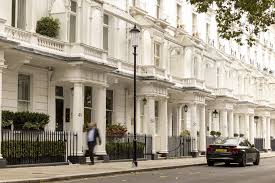
Nigerian Investors Turn to London Real Estate Amid Economic Uncertainty
Despite increasing taxes in the UK’s luxury housing sector, many of Nigeria’s leading bankers and business elites are making significant investments in London properties. This trend is emerging as a strategic response to economic uncertainty and currency fluctuations, transcending its original perception as merely a status symbol.
In the past ten months, high-profile purchases by Nigerian investors have rejuvenated interest in British real estate. Noteworthy figures include the late Herbert Wigwe, former CEO of Access Bank, who reportedly had connections to over 100 London properties through offshore entities, and Roosevelt Ogbonna, the current CEO of Access Bank. Other prominent acquisitions include a mansion on Billionaires Row in Hampstead, bought for approximately £15 million, and a St John’s Wood property acquired by Femi Otedola, chairman of First Hold Co, for £53 million.
London’s Real Estate: A Safe Haven for Investors
Real estate experts affirm that while this trend isn’t entirely new, it’s gaining heightened visibility due to the involvement of well-known Nigerian elites. “Many high-profile names are emerging, which is attracting public attention,” remarked Temidayo Oluyede, CEO of Edara Developments. He added that Britain remains an appealing destination due to its considerable Nigerian diaspora and established immigration pathways.
As the UK hosts one of the largest Nigerian communities abroad, it is not surprising that residents choose to invest in property in a nation where they live, work, and build networks. Joseph, an anonymous real estate expert, noted that as Nigerian banks extend their reach globally, owning properties in key locations like London becomes a strategic imperative for executives and investors.
Recent reports indicate that Access Holdings’ UK subsidiary has surpassed its Nigerian counterpart, marking a significant milestone for the group. In the first quarter of 2026, Access Bank UK’s profit after tax soared by 73.5% to NOK 83.8 billion, contrasting with a downturn in profits from its Nigerian operations—a trend that highlights the growing international focus of Nigerian banking institutions.
Investment Benefits in the UK Housing Market
For many affluent Nigerians, London real estate represents more than just prestige; it is increasingly regarded as a reliable monetary asset capable of generating rental income while preserving its value in tumultuous macroeconomic times. “The UK, particularly London, features a dynamic apartment-driven market that allows for easier acquisition of multiple units than in the U.S.,” Oluyede explained, pointing out that housing demand in the UK continues to outpace supply.
According to Enness Global, over 202,000 homes are owned by foreign investors in the UK, with nearly 34% of them located in London. This continuing trend underscores the significance of overseas buyers in the housing market, particularly in London’s upscale neighborhoods.
Economic Pressures and Foreign Investment
Investment interest from Nigeria persists, despite rising taxes and a downturn in luxury real estate in the UK. Recent figures show that UK homebuyers contributed £15.4 billion in stamp duty in 2025, reflecting an 18% rise from the previous year. Furthermore, upcoming tax changes, including a new ‘mansion tax’ on properties valued over £2 million set for 2028, have raised concerns among investors.
Trevor Williams, former chief economist at Lloyds Commercial Bank, noted that recent policy changes have rendered the UK less appealing to wealthy foreigners. Nevertheless, analysts suggest that Nigerian investors are committed to capital preservation, seeking the stability of hard currency assets amid fluctuating local economies.
Market Dynamics and Opportunities for Nigerian Buyers
The UK housing market now faces challenges due to the rising cost of living and weakened domestic demand, which has prompted developers to offer more flexible financing options. Jennifer Oyelade, a global talent acquisition leader, highlighted that recent trends have resulted in lower deposit requirements, making real estate investments more accessible. This shift is prompting many Nigerians to view UK property not merely as a residence but as a means of generating rental income and diversifying wealth portfolios.
This broader shift in wealth management strategies among Nigerian elites reflects a changing landscape. For many of Nigeria’s banking executives and entrepreneurs, investing in London real estate has become a critical component of a global asset allocation strategy that encompasses real estate, business expansion, and wealth preservation.
As Nigeria’s elite increasingly seek stability amid economic pressures, London properties are now seen as vital assets, not merely luxurious investments. This trend underscores the growing desire for prudence and diversification among African business leaders and highlights London’s continuing role as a preferred investment destination.
