


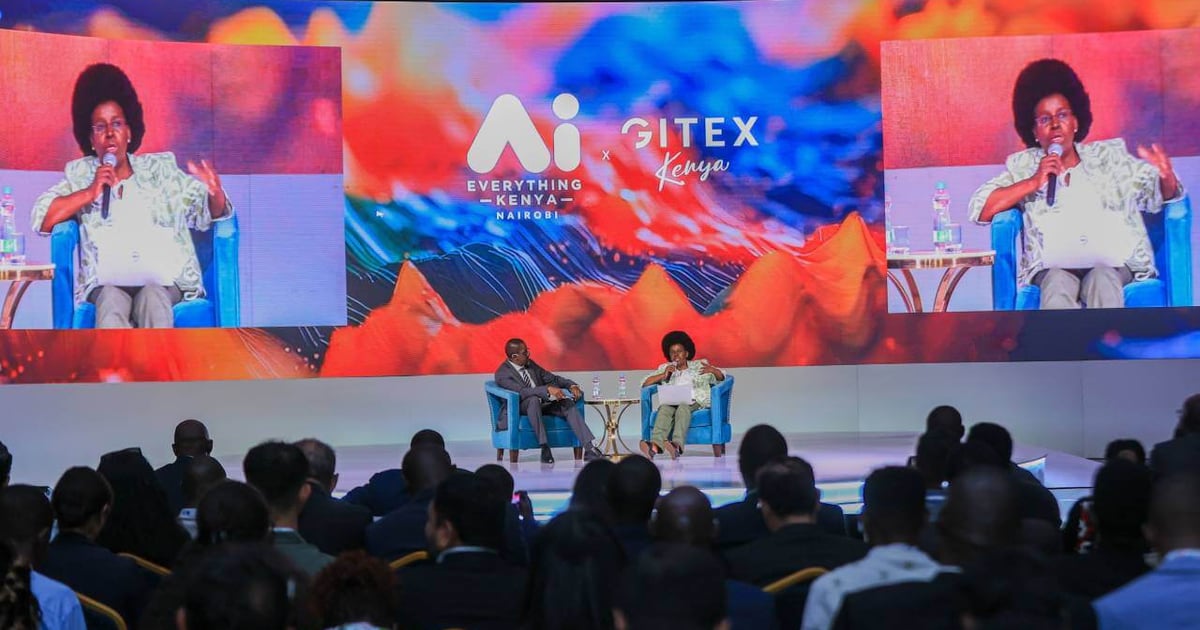
AI as an Economic Catalyst in Africa
Dr. Monica Musenelo Masanza, Uganda’s Minister of Science, Technology and Innovation, advocates for African governments and policymakers to view artificial intelligence (AI) as a crucial driver of economic development, rather than merely a technological advancement. She emphasized this perspective during her address at the AI Everything Summit, part of Gitex Kenya, held in Nairobi.
Masanza noted that while AI was initially classified as a technology of the Fourth Industrial Revolution, it has evolved to encompass a broader range of technologies. She stated, “Industrial revolutions present cutting-edge technologies, but they fundamentally redefine how individuals and nations conduct business, develop, and grow.” This shift marks the first industrial revolution in which Africa will actively participate, as previous revolutions largely bypassed the continent.
Expressing the urgency of this transformation, she declared, “This is Africa’s industrial revolution. Understanding it is essential because it will change everything.” However, Masanza acknowledged that Africa currently lags behind in AI utilization, primarily consuming AI technology rather than pursuing its economic opportunities.
“While we recognize AI as technology and invest in it as such, we have not leveraged it as a platform for socio-economic transformation,” she stated. To harness the potential of AI, African governments must shift their mindset from merely being consumers of technology to viewing it as “the new ground in which we grow wealth.”
According to market forecasts, Africa’s AI industry is projected to expand from USD 4.5 billion in 2025 to USD 16.5 billion by 2030, according to Mastercard’s AI in Africa Report. Yet, Masanza stressed that countries need to strategically assess how to derive real value from AI investments and “understand the sentiment of where the money flows.”
She underscored the need to leave conferences with actionable insights, questioning, “How can we ensure that AI investments result in tangible financial benefits for the continent?” Presently, she pointed out, Africa accounts for only 1% of the global wealth generated by AI, a situation she believes must change.
Metrics and Indicators for AI Impact
As discussions on AI evolve, Masanza called for improved metrics to measure AI’s actual impact on African economies. “We often hear the narrative that AI will transform us automatically, but we must ask, ‘How do we measure its effectiveness for farmers and businesses?’” she queried. Reflecting on her conversations with Uganda’s agritech sector, she lamented a lack of clear indicators that connect AI implementation to enhanced farmer incomes.
She stressed the importance of establishing context-specific indicators, given that many enterprises in Africa operate informally. “We cannot apply the same metrics used in developed countries to measure AI’s effects here. We need tools that reveal whether AI is genuinely fostering economic growth or inadvertently draining wealth,” she explained. To this end, Masanza has initiated the creation of a think tank aimed at developing relevant metrics to track the progress of the AI economy.
Empowering Policymakers with AI Knowledge
Highlighting the crucial role of informed policymakers, Masanza argued that economic decision-makers should possess a solid understanding of AI and actively participate in related discussions. “It’s essential that those shaping our economy engage with AI conversations rather than remain insulated in their offices,” she pointed out.
She noted that events like the AI Everything Summit should feature key figures, such as finance ministers and central bank governors, to foster discussions about funding and infrastructure essential for harnessing AI opportunities. “We must involve those who influence economic policies as we move forward with AI,” she added. Additionally, she called for a concerted effort to retrain civil servants and specialists in various sectors—including health, agriculture, and tourism—to enable seamless AI integration into daily operations.
Dr. Lourinho Chamane, Chairman of Mozambique’s National Institute of Information and Communication Technology, echoed this sentiment, asserting the importance of building local capacities for AI development to transition from mere consumption of AI services to production and contribution within the digital economy. The future of Africa’s economy hinges on creating a robust framework for AI that fosters innovation and drives sustainable growth.
