


Reflections on South Africa’s Socio-Political Climate Amidst the World Cup
June 11, 2026 marked a poignant day for the African continent. As we approach June 30, a critical deadline looms for African immigrants residing in South Africa.
Watching the opening match of the Soccer World Cup between Mexico and South Africa stirred a whirlwind of emotions. Witnessing an African nation take the field on the tournament’s inaugural day was a historic milestone whose significance cannot be overlooked. Yet, it was equally disheartening to see numerous Africans donning Mexican jerseys in the stands, along with millions of African soccer fans from all over the continent, collectively wishing for Mexico to overcome its African counterpart.
This raises an important question: How did Africa find itself in this predicament? As the leader of a pan-African organization, ONE AFRICA INITIATIVES (OAI), I find this widening chasm between South Africa and the rest of Africa troubling. Without Africa, South Africa risks becoming merely a regional entity; and on that opening day, the team’s performance symbolized that decline. The reputational damage inflicted by xenophobia on South Africa’s brand is immeasurable, especially considering that tourism and travel contribute nearly 10% of its GDP.
In light of the current crisis, silence is no longer an option. Trust, much like an egg, once shattered, cannot be easily restored. Those dedicated to realizing the vision of a united Africa must speak out with candor, abandoning empty rhetoric for genuine discourse. Through the One Africa Academy initiative, which comprises thousands of enthusiastic young Africans, I owe them a clear message before circumstances worsen.
It is crucial to avoid overgeneralizing the situation. Many Africans feel betrayed by a small faction of South Africans imposing a June 30 deadline for certain African nationals to exit their country. It’s important to recognize that not all South Africans endorse these xenophobic attitudes.
Furthermore, the idea that South Africa’s Bafana Bafana team’s underperformance in the World Cup could tarnish Africa’s image is misleading; this is akin to airing grievances publicly. We must also question whether African leaders have fully exhausted peaceful negotiations before contemplating evacuations of their citizens.
The Complexities of Crime and Cultural Misunderstandings
That said, we must also hold accountable the small number of Nigerians and other Africans engaging in illegal activities such as drug trafficking and prostitution in South Africa. The recent outcry surrounding Solomon Ogbonna Ejiko, who proclaimed himself the Igbo King of East London, illustrates a deeper issue. Such actions not only demonstrate a profound lack of responsibility but also infringe upon the cultural integrity of local institutions. It’s reminiscent of past incidents in Ghana where similar self-appointments triggered outrage. In both instances, local youth were justified in defending their cultural heritage.
I urge my fellow Igbo brothers abroad to cease the practice of appointing kings outside their traditional regions. While freedom of association is a fundamental right, missteps can lead to complications. The political leadership of South Africa, represented by leaders like Thabo Mbeki and Cyril Ramaphosa, has a historical responsibility to educate the current youth about Nigeria’s pivotal role in the anti-apartheid struggle.
History is a teacher. Mr. Mandela would have undoubtedly taken it upon himself to elucidate these connections if he were alive today. South Africa remains a paradox—once liberated by the sacrifices of countless Africans, it is now turning against those who funded its freedom.
A Call for Leadership and Unity
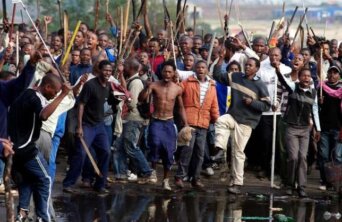
Today, the rhetoric afoot paints a dire picture. Mobs are not merely acting out of malice; they reflect a deeper failure of political leadership. South Africa is grappling not just with xenophobia, but with a pervasive “vision hunger” that has obscured the line between blame and accountability. When unemployment spikes, focus shifts to foreigners. When public services deteriorate, immigrants are scapegoated. This misdirection has become a prevalent strategy for deflecting public dissatisfaction away from systemic issues.
The damage extends beyond social unrest to economic repercussions. Countries that once sought to send students to South Africa’s esteemed institutions are now forging partnerships with Rwanda, Ghana, and Mauritius instead. Once-reputable Johannesburg is losing its allure as a business hub for African investors, who are redirecting their resources elsewhere. The erosion of South Africa’s image as a beacon of hope across the continent is palpable and accelerating.
What South Africa desperately needs is leadership capable of confronting its citizens with the truth. A leader must rise to remind the public that the very Africans they are attacking are their brothers—individuals whose ancestral contributions facilitated their freedoms. President Cyril Ramaphosa has the potential to rally a narrative of unity, yet thus far, that voice has remained silent. In this absence, populists revel.
Navigating the Crisis
Statistics underscore South Africa’s troubling reality: youth unemployment stands at 55.6% for those aged 15-34, with figures soaring to 60.9% for 15-24 year-olds. Furthermore, the demographic imbalance in land ownership, where about 7% of the white population controls more than 70% of the agricultural sector, exacerbates tensions. The current crisis demands solutions that transcend simplistic measures like the June 30 evacuation order, akin to resolving a headache through a drastic self-harm.
For sustainable recovery, we must advocate for innovative solutions. Technical and vocational education and training (TVET) presents an effective avenue forward. With over 6 million global job opportunities in fields such as artificial intelligence, data analysis, and programming, South Africa could train one million ICT professionals in less than a year, enabling them to work and earn remotely.
To address rising crime rates, we must strip power from those committing offenses while purging corruption from law enforcement agencies, thus ensuring that justice prevails without favoritism. There is no merit in allowing white farmers to retreat; instead, a progressive tax framework imposing a 50% land tax could finance free, compulsory education for the nation’s youth. These strategies require the political will to implement, but they exist within the realm of possibility.
Lastly, I propose that President Cyril Ramaphosa convene a summit with African leaders to address the looming June 30 resignation notice affecting various nations. Today’s goal should be to work toward a united Africa. Fragmentation through negligence or ignorance proves counterproductive and harmful.
*Tim Akano
Ti*******@***il.com
President and Representative Director of One Africa Initiative
