


U.S. Seeks Alternative Sources of Tungsten Amid Depleting Weapon Stockpiles
YONGWOL COUNTY, South Korea — As the United States becomes increasingly engaged in conflict with Iran, its stockpile of advanced weaponry, including Tomahawk, Patriot, and Precision Strike missiles, is being depleted. To replenish these essential resources, the U.S. requires tungsten—a robust metal that is currently dominated by China, which controls the production and refinement processes. This situation has led the U.S. to urgently explore alternative sourcing options.
Tungsten’s Role in National Defense
Tungsten is crucial for various military hardware, including fighter jets, bunker buster bombs, armor-piercing munitions, and missile systems. With the last commercial tungsten mine in the U.S. shuttered since 2015, the Trump administration has made efforts to reduce reliance on Chinese tungsten. This strategic push aims to bolster national security and ensure a more resilient supply chain.
Prospects in South Korea
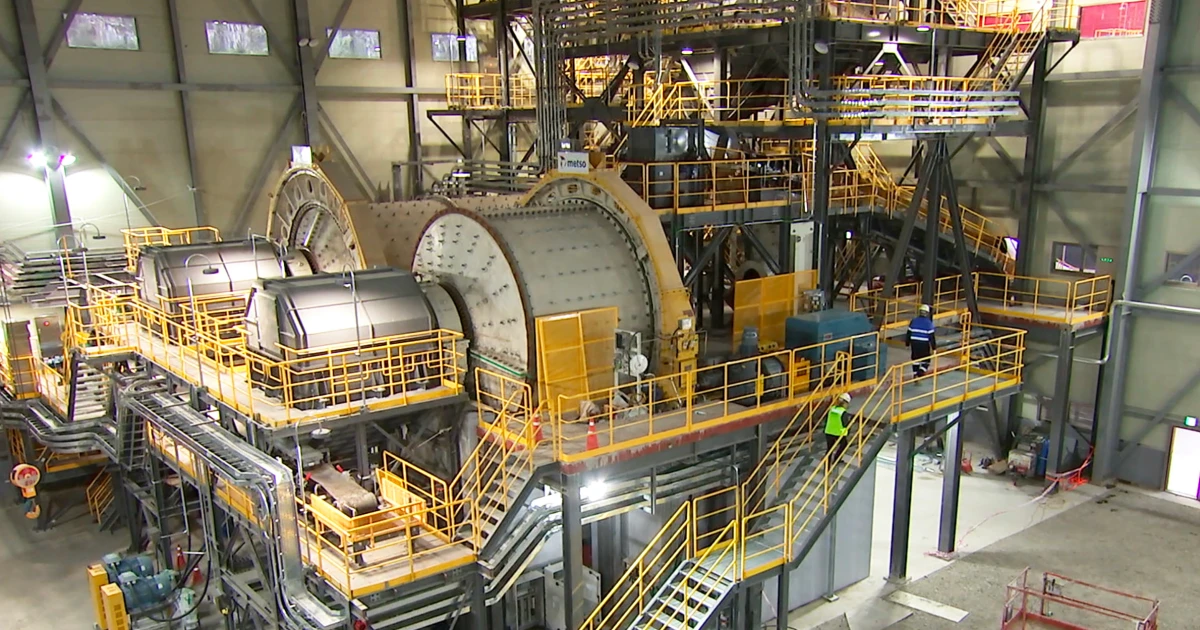
A notable mine located in the mountainous eastern region of South Korea, owned by a U.S. firm, contains millions of tons of tungsten ore. Lewis Black, CEO of Almonti Industries, highlights the scarcity of large-scale tungsten mines globally. Almonti reactivated its Shangdong mine in March, after several decades of closure due to competitive pressures from Chinese producers.
Expanding Applications of Tungsten
Historically regarded as a “war metal,” tungsten’s significance has evolved, as it now plays a vital role in the technology sector, being employed in semiconductors, batteries, and smartphones. Almonti’s Chief Operating Officer, Steve Allen, emphasizes that demand for tungsten is set to increase, making it essential for the U.S. to strengthen its supply chain over the coming decades.
Challenges and Global Supply Issues
The global supply of tungsten is becoming increasingly strained, especially since the onset of the current U.S.-Iran war in February. According to Marc Cancian, a senior adviser at the Center for Strategic and International Studies, it could take up to four years to restore key munitions to pre-war levels, a situation that could prove critical in the event of a confrontation with China. This shortage also impacts U.S. allies, including Japan and South Korea, both of which rely on advanced missile systems.
China’s Dominance in Tungsten Production
China has held a dominant position in the global tungsten market for decades, producing over 80% of the world’s supply while consuming more than half of it. American tungsten production largely relies on recycling and imports, with approximately 6,000 tons processed annually. The recent trade tensions have led China to implement export controls on critical minerals, including tungsten, which has contributed to soaring prices.
Efforts to Revive the U.S. Tungsten Industry
The U.S. tungsten industry faces significant challenges as it attempts to revive operations that have been dormant for years. Black notes that essential knowledge and expertise have been lost, with no existing consultants or reference materials from the pre-1990s era. The revitalization of the Sangdong Mine in South Korea marks a significant step forward. This mine, equipped with advanced safety technology, is expected to operate for another century, projecting an annual output of approximately 1.2 million tons of tungsten ore.
To further ensure a sustainable domestic supply, Almonti is also making plans to reopen a mine in Montana. As Allen notes, the ability to restart tungsten mines in the U.S. is of paramount importance not just for the present, but for the nation’s future defense strategies.
