


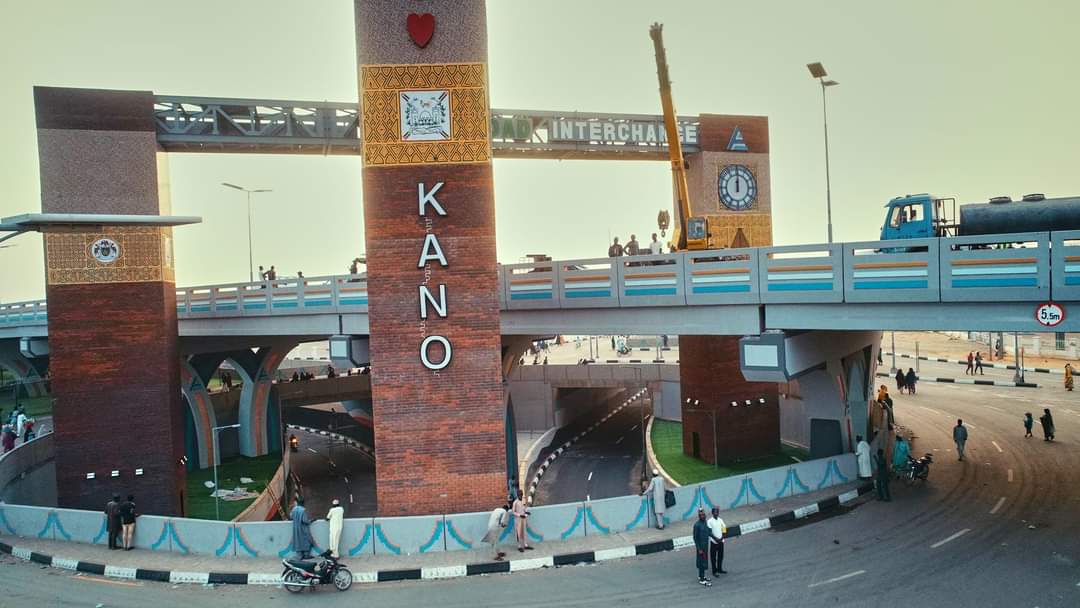
Kano State Recognized as Nigeria’s Top Family City for Quality of Life
Kano State has been identified as the most livable city for families in Nigeria, excelling in safety, childcare, affordability, and grid availability. This finding comes from a recent study conducted by SBM Intelligence.
The report, made public on Tuesday, analyzed the quality of life among 442 respondents across eight states—Abuja (FCT), Anambra, Bauchi, Cross River, Kano, Lagos, Oyo, and Rivers—between April and May 2026.
As a supplementary source, SBM Intelligence carried out its own Electric Power Survey in January, engaging 191 participants from the same states. A five-point composite scoring system was employed throughout the report.
The data reflects conditions as of May 6, 2026, but notes that some information may change over time.
Key Findings from the Survey
The report highlighted that while Kano State struggles with income levels, families who manage on lower incomes or have established livelihoods in the area benefit from a quality of life often unavailable in wealthier cities. Kano has been recognized for its safe streets, low cost of living, and easy access to childcare services.
Rivers State follows closely behind Kano in terms of overall quality of life rankings, largely due to its high levels of family stability, minimal disruptions, and strong health scores. Conversely, Cross River State ranked lowest across the board, with deficiencies in safety, education, healthcare, and affordability.
Cross River State finished at the bottom of the rankings with a score of 11 out of 15. Abuja, often regarded as Nigeria’s premier city, placed fourth—characterized by high incomes but hindered by affordability issues and a pessimistic outlook on power supply.
The report remarked that Kano leads the quality of life indicators with respect to safety and childcare services, despite its lower income levels. Conversely, Oyo State is noted for fostering optimism, while both Lagos and Abuja face challenges related to affordability and power instability.
Income Levels Across the States
Abuja attained the highest income score of 3.16, with around 41.2% of respondents earning between 500,000 and 999,999 Naira monthly. Following closely was Cross River State with a score of 3.04, while Kano ranked last with a score of 2.08, where more than 31% of residents earn below 100,000 Naira each month.
Despite its reputation as Nigeria’s highest-paying city, Lagos managed only a score of 2.43, signaling wage pressures and a significant informal workforce. The report found that rising living costs—such as rent, transportation, and utilities—outpace the high incomes in both Lagos and Abuja.
Respondents noted that after covering basic expenses, they felt as if their earnings were largely consumed by necessities, leaving little room for savings.
Affordability and Housing Conditions
Kano State also excelled in daily affordability, achieving the highest score of 3.53. Conversely, Rivers State reported a housing cost score of 3.53 and daily living score of 3.44, indicating relatively inexpensive living conditions.
In stark contrast, Lagos had the lowest housing score of 1.63 and a daily living score of 1.71. Despite a decent income, Cross River State also ranked poorly in these areas.
Abuja received a score of 2.25 on both indicators, demonstrating that higher income does not guarantee financial comfort.
Community Support Systems
The survey revealed that residents of Abuja and Kano benefit significantly from the support of family and friends, who assist with childcare, school management, and emergencies, scoring 3.55 and 3.27 respectively. This high level of community cohesion is indicative of strong kinship ties found in northern Nigeria and the Federal Capital Territory (FCT).
Cross River State recorded a score of 1.97 on the Additional Support Index, the lowest among the states surveyed, while Lagos and Rivers scored below the average, at 2.53 and 2.98 points respectively.
This data aligns with the observed social fragmentation in heavily urbanized areas, where frequent relocation disrupts established community support networks.
Safety Ratings and Initiatives
Kano State achieved a safety score of 3.98, with about 80.4% of respondents indicating they felt “somewhat or very safe” after dark, expressing little concern for their children’s exposure to crime. Following an increase in criminal activities in late 2025, Governor Aba Yusuf took action by deploying 2,000 neighborhood watchers and initiating cross-border intelligence-sharing with neighboring states.
In contrast, Cross River recorded the lowest safety score of 1.84. Although Rivers State received a score of 3.47—despite its reputation for public safety issues—the study focused on specific residential areas rather than the overall urban landscape. Lagos maintained a score of 3.14, just above the midpoint.
Education and Healthcare Quality
Kano State led in the quality of affordable schooling, earning a score of 3.61, trailed by Abuja at 3.55, and Rivers at 3.53. Lagos’s score of 2.92 indicates limited access to quality education for average-income families, while Cross River finished last with a dismal score of 1.96, attributed to declining educational standards and deteriorating public school conditions.
Rivers State also excelled in healthcare quality, achieving a score of 3.68, followed by Oyo at 3.49 and Abuja at 3.33. In contrast, Lagos scored 2.67, suggesting that many residents still lack access to adequate healthcare services, while Cross River’s 2.00 indicates a frail public healthcare system.
Rivers State’s commitment to improving health services is evident with the recent commissioning of the Ahoada Regional Hospital, a 105-bed secondary healthcare facility, alongside enhancements to over 200 primary health centers—an effort praised by UNICEF.
Emerging Concerns and Recommendations
The two surveys highlighted Oyo and Bauchi states as having the highest incidence of household instability, while Rivers and Kano boast better living conditions. Oyo’s challenges, such as frequent power outages, contrast with Kano’s improved power accessibility, where only 9.5% experience less than eight hours of electricity daily.
Anambra State faced the lowest electricity usage rate, prompting state intervention to address the ongoing supply challenges. Additionally, high relocation intentions were reported in Anambra (49.1%) and Lagos (49.0%), largely driven by high living costs and perceived opportunities elsewhere.
The report urges Cross River State to treat its declining quality of life as a political emergency and to address urgent infrastructure needs to retain residents. It also calls for federal government initiatives to emulate Kano’s successful childcare and security models while recommending that Lagos focus on affordable housing and healthcare improvements to mitigate middle-income displacement. Lastly, there is a pressing need for Abuja to manage its rising living costs to maintain its aspirational status as Nigeria’s capital.
SBM Intelligence is an Africa-focused research and communications firm that leverages data analytics to navigate changing political, social, economic, and market landscapes.
