


Navigating Financial Challenges Amid Rising Living Costs in Nigeria
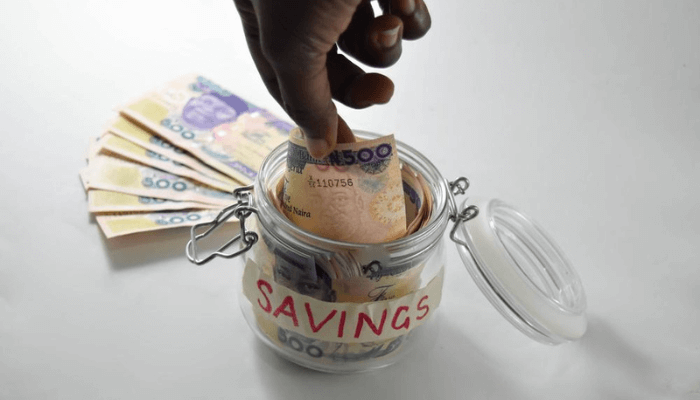
The escalating cost of living is increasingly challenging for Nigerians striving to establish a financial safety net. As inflation continues to diminish disposable income, many households find themselves vulnerable to unforeseen expenses. Although financial experts typically suggest maintaining an emergency fund equivalent to three to six months of living expenses, many Nigerians now question the practicality of this aspiration.
Experts assert that while traditional benchmarks remain relevant, the appropriate amount to save varies according to individual income, spending habits, and job stability. Titilayo Daramola, a fixed income analyst, notes that while the three- to six-month guideline can provide a framework, it demands considerable discipline. “Inflation is continuously eroding paychecks, making daily survival the priority for many families,” Daramola observes, highlighting how basic necessities dominate household budgets.
Daramola encourages individuals to adopt a more approachable strategy by starting small. “Consider saving between 5 to 15 percent of your income based on what you can realistically manage. Initiating with at least 5 percent allows for gradual progress while accommodating lifestyle adjustments,” she advises.
Adebola Adedire, head of business and strategy at Radix Capital Partners, reinforces the idea that emergency savings should align with personal financial circumstances. “The amount you save is contingent upon your income,” Adedire explains. He points out the rising costs of transportation, which further limit available resources for essential needs and savings, particularly for middle-income earners feeling the pinch in recent years.
For instance, if an individual’s monthly essential expenses—such as rent, food, transportation, utilities, and loan payments—total N400,000, a comprehensive six-month emergency fund would need to amount to approximately N2.4 million. This underscores the importance of tailoring financial plans to one’s individual situation.
Choosing the Right Vehicle for Emergency Savings
The establishment of an emergency fund is just one piece of the financial puzzle; how and where these funds are kept plays a critical role in their effectiveness during crises. Experts emphasize that while safety and ease of access should take precedence, the quest for higher returns shouldn’t be ignored. Regarding the suitability of Treasury bills for emergency savings, Daramola remarks that they may not be the best option due to the need for immediate liquidity. “Emergency funds should be readily accessible—something not guaranteed with Treasury bills,” she explains, noting the balance between risk and availability.
Although Treasury bills are considered low-risk and often yield better returns than traditional savings accounts, their fixed maturity schedule can hinder immediate cash availability. Savings accounts offer quicker access but typically provide lower interest rates. Conversely, money market funds invest in short-term securities, offering competitive returns while maintaining liquidity. Ultimately, Daramola believes that investors should weigh their options based on individual profiles and liquidity requirements.
Current Opportunities in the Market
In the current economic climate, Adedire views money market and bond funds as increasingly appealing. “Money market funds are yielding around 17%, and some bond funds are approaching 18%,” he notes, suggesting that these alternatives may outperform standard savings accounts. However, he cautions that while yield is significant, ensuring immediate access to funds is paramount.
Financial advisors recommend maintaining a balanced portfolio between accessibility and returns instead of concentrating all emergency savings in one type of account. Asset manager Obinna Eme advocates the principle that all earners should keep at least one month’s salary in a separate emergency reserve. A practical approach incorporates a portion of the emergency fund in a readily accessible savings account, supplemented by investments in money market funds or Treasury bills for additional liquidity.
Common Pitfalls in Emergency Fund Planning
Experts agree that one of the gravest mistakes individuals make is neglecting to build an emergency fund altogether. “Not having an emergency reserve is among the most critical financial oversights,” Daramola asserts. “Many fail to recognize the value of proactive planning, but having that safety net can prove invaluable during crises.” While the idea of accumulating a six-month emergency fund may seem daunting for many Nigerians, experts emphasize that consistency—rather than the size of contributions—holds the key. Starting with small, regular deposits and scaling up as income allows individuals to create a financial cushion that mitigates short-term setbacks and prevents them from evolving into long-term crises.
