


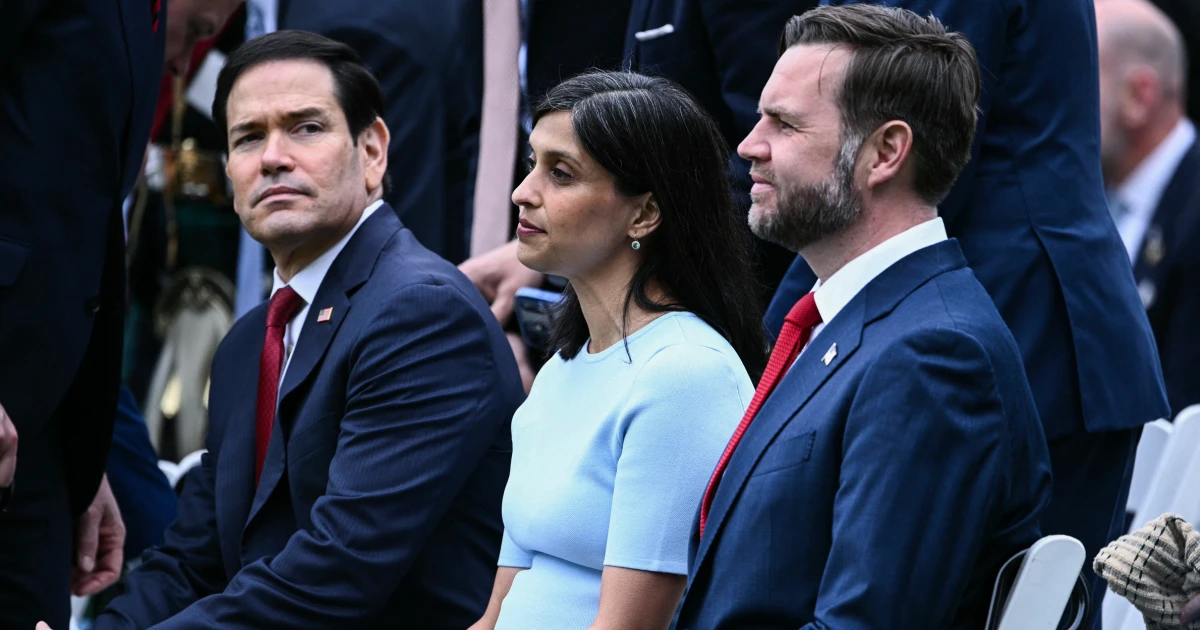
Vice President J.D. Vance Acknowledges His Wife’s Crucial Role in New Book
Vice President J.D. Vance has called his wife, Usha Vance, a “rogue editor” of his upcoming book, “Communion.” This collaboration highlights her significant contribution to the writing process. Vance stated that she brings a candid, direct approach to their discussions.
In a recent interview with NBC News, Vance discussed Usha’s extensive involvement in the book, set to release on June 16 by HarperCollins. Her contributions included refining the narrative and eliminating unnecessary sections while providing a critical perspective on their personal story, which chronicles his transformation through faith—from Protestant to Catholicism.
Vance remarked, “This book wouldn’t exist without her input.” The irony lies in the fact that Usha, a non-Christian, has nevertheless played an instrumental role in Vance’s spiritual journey, a theme he explores throughout his memoir.
“Communion” serves as a sequel to Vance’s breakout memoir, “Hillbilly Elegy,” which catapulted him into the public eye and was adapted into a film. The early excerpts detail his evolving relationship with Usha and the love story that intertwines with his faith exploration.
Last fall, Vance faced backlash for expressing his hope to someday become a Christian. In addressing this controversy, he framed his remarks as an honest expression of faith and love for his wife, acknowledging the improbability of her conversion.
“What I appreciate most about Usha is her intelligence and fierce independence,” he noted. “Christianity encourages believers to share their faith with loved ones, and while it may not be possible for her, I accept that.” This openness reflects Vance’s commitment to discussing faith in personal relationships.
Reflections on Faith and Political Career
During a recent phone call, Vance connected the themes of his book to his brief political career since joining the Senate in 2023. He is considered a potential contender for the 2028 Republican presidential nomination and shared insights on how his Catholic faith influences his political life.
Vance remarked, “Being vice president has certainly deepened my faith,” highlighting the importance of prayer and reflection in his new role. He described occurrences in his life that feel too serendipitous to be mere coincidences, suggesting a divine influence shaping his path.
Perspectives on Warfare and Ethics
As an outspoken opponent of interventionism, Vance has recently found himself in a challenging position regarding the war initiated by President Trump in Iran. He acknowledged that his faith compels him to critically evaluate the ethics of warfare, adhering to the principles of the Christian “just war” theory.
“The complexities of conflict force leaders to confront tough moral questions,” he explained. According to Vance, it is vital to scrutinize whether military actions are both legal and ethical, which serves as a limiting factor for political leaders.
Controversy Over Political Funding and Trust
Utilizing the philosophy of Basil Mitchell, Vance discussed the nature of loyalty within political circles. He refrained from directly comparing Trump to the “stranger” in the parable, acknowledging the intricate dynamics of trust among supporters.
Recently, significant pushback has emerged from Senate Republicans concerning a proposed $1.8 billion “anti-weaponization” fund. Critics argue the fund could potentially compensate Trump supporters who felt unjustly targeted by the government, prompting a delay in legislative decisions.
Vance addressed the concerns, emphasizing the need for careful governmental spending. He asserted, “When managing public funds, we must ensure fairness and accountability, especially regarding those wronged by the legal system.”
Speculations Surrounding Future Political Aspirations
Trump has frequently mentioned both Vance and Marco Rubio in succession, leading to speculation over future leadership dynamics. While the two are longtime allies and downplay a competitive relationship, they acknowledge each other’s influence in shaping their political aspirations.
Vance expressed a humble stance regarding the presidential race, stating, “Currently, I am not a presidential candidate, but who knows what the future holds?” He credited Rubio for enriching his understanding of economic and trade policies through a Catholic lens.
Vance noted, “Marco’s insights on these subjects have profoundly impacted my political perspectives.” Their intertwined journeys reflect a broader conversation about the role of faith in guiding principles and policies in contemporary politics.
