


Nigeria’s Defining Moment in Infrastructure Reform
Every nation faces pivotal moments when reforms transition from mere promises to tangible realities—evident in the infrastructure that supports daily life. For Nigeria, that moment has arrived. Three years after President Bola Ahmed Tinubu took office on May 29, 2023, the country’s progress is no longer gauged solely by policy announcements. It’s now reflected in signed agreements, operational airports, functioning power plants, and the influx of investors eager to bring capital. This administration is marked not only by its willingness to make tough decisions but also by the visible results stemming from those choices.
President Tinubu inherited an economy under severe strain, including a budget deficit of 5.4% of GDP and net foreign exchange reserves of just $3.99 billion. Trust had eroded among investors, skeptical of Nigeria’s ability to fulfill its promises. Confronting this reality, he candidly informed the public about the challenging road ahead. His measures, such as the abolishment of subsidies and the unification of exchange rates, reflected a level of political courage rarely seen in democracies. These actions were not merely reactive but strategic, as no nation can attract private capital amid a broken economic model.
Global Trust in Nigeria’s Economic Recovery
Three years later, the assessments from leading financial institutions paint a more optimistic picture than governmental statements alone. Nigeria’s foreign exchange reserves have surged from $3.99 billion in 2023 to approximately $50 billion by May 2026. The fiscal deficit has significantly improved, shrinking from 5.4% of GDP to 3.0%. With GDP growth rates of 4% in 2025 and projections of 4.2% for 2026, the Nigeria Exchange Group (NGX) reported an impressive growth rate of 48.12% in 2025. Furthermore, foreign direct investment soared to $720 million in the third quarter of 2025, a substantial increase from just $90 million in the first quarter.
These numbers are backed by a series of independent global evaluations that have shifted perceptions of Nigeria. In 2025, Fitch Ratings upgraded Nigeria’s long-term issuer default rating from ‘B-‘ to ‘B’, citing ongoing currency reforms and fiscal policy improvements. Similarly, Moody’s raised Nigeria’s sovereign outlook, acknowledging a more coherent policy approach. On May 15, 2026, S&P Global Ratings issued Nigeria’s first upgrade in 14 years, elevating its rating to ‘B’ with a stable outlook supported by sustained reforms and growing foreign reserves. In October 2025, Nigeria was taken off the Financial Action Task Force gray list, demonstrating enhanced financial governance, and in April 2026, FTSE Russell reinstated Nigeria’s frontier market status.
Engaging Global Partners for Development
In June 2025, President Tinubu organized the Nigeria PPP Summit, hosted by the Infrastructure Concession Regulatory Commission (ICRC), under the theme “Unleashing Nigeria’s Potential: The Role of Public-Private Partnerships in Realizing the Agenda of New Hope.” This gathering brought together key financial institutions and private sector partners—not as spectators, but as active participants prepared to invest. His message was straightforward: For Nigerians, actions speak louder than promises, emphasizing the need for real infrastructure improvements such as roads, access to clean water, modern hospitals, and quality schools.
Traditionally, discussions around infrastructure in Nigeria tended to end with statements and commitments. However, the current administration is prioritizing execution. The ICRC has approved over 17 new PPP projects since 2023, each mobilizing private investment for essential public infrastructure. Long-standing projects are witnessing renewed interest from private investors, exemplified by the recent concession of Akanu Ibiam International Airport in Enugu, and the resolution of a lengthy concession dispute in the aviation sector.
Ongoing Projects Across Multiple Sectors
From 2023 onwards, significant advancements have taken place across various sectors. The aviation sector has seen developments like the rollout of the V-PASS biometric identification system at airports and the resolution of historical disputes that enhance investor confidence. In the energy sector, multiple hydropower projects are nearing completion, aimed at addressing Nigeria’s pressing energy needs. The Farin Ruwa Hydropower Plant, for instance, is set to become operational in October 2025.
Additional maritime projects, including the approval of the Ondo Multipurpose Deep Sea Port and Bakassi Deep Sea Port, aim to enhance cargo transport capabilities while a centralized drug procurement and distribution system is set to reform the health sector. The implementation of advanced digital governance systems, such as the Product Authentication and Tracking System, further reflects progress towards enhancing accountability and efficiency in various sectors.
A Commitment to Future Growth
Nigeria’s infrastructure deficit is estimated at an alarming $2.3 trillion, necessitating annual investments of around $100 billion—far beyond the scope of public funding alone. Recognizing this, President Tinubu has positioned PPPs as a cornerstone of his administration. The upcoming national PPP project pipeline, to be released by the ICRC, aims to provide investors with structured visibility into Nigeria’s most promising opportunities.
With projects being rolled out across the country, the vision embodied in the New Hope Agenda is steadily transforming into reality. From major aviation hubs to essential healthcare facilities, Nigeria is making strides that can be seen and felt. The President has emphasized that Nigerians are not seeking mere promises; they demand results that improve their lives. The success of these transformative policies depends not only on the government but also on collective commitment from all Nigerians, fostering a spirit of unity to realize a more prosperous future.
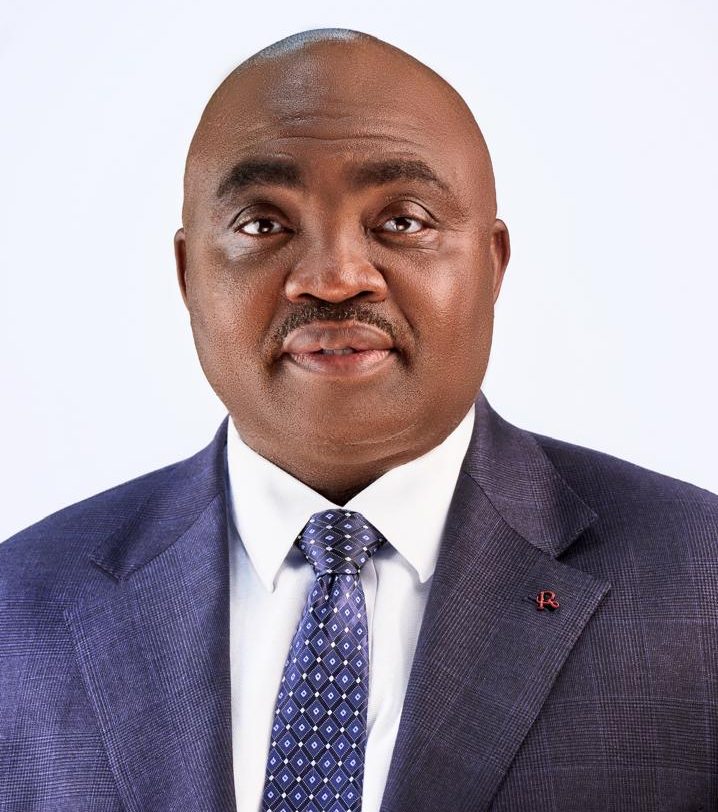
*Dr. Jobson Oseodion Ewarefo is the Executive Director/CEO of the Infrastructure Concessions Regulatory Commission.
