


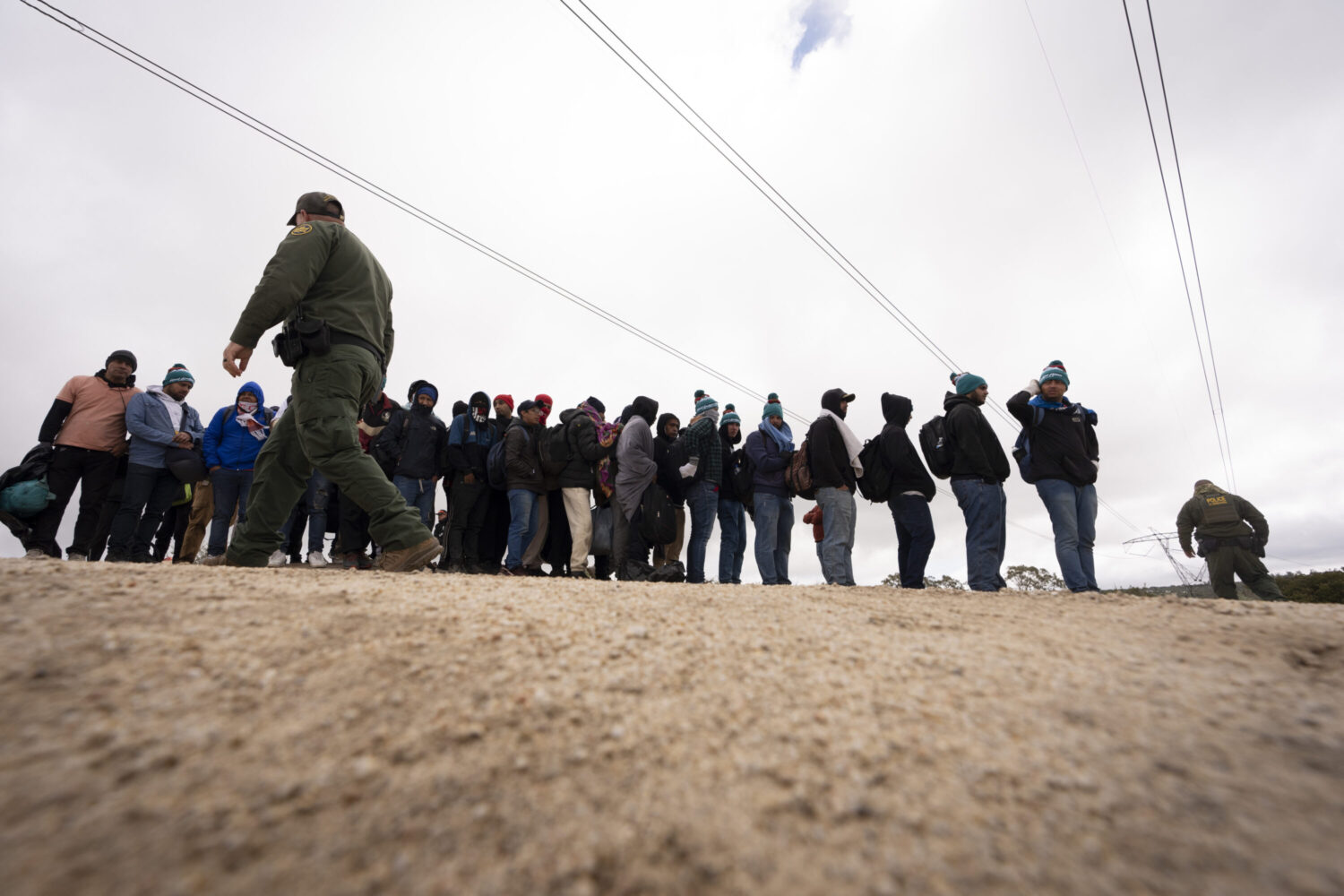
New Rule Streamlines Asylum Process but Raises Concerns
The Department of Homeland Security (DHS) has introduced a new rule that permits federal agents to refer asylum seekers directly to immigration court without a preliminary interview. This significant change aims to expedite the asylum process amid increasing numbers of individuals apprehended at the U.S.-Mexico border.
Effective immediately, the interim final rule is designed to come into action ahead of public comment, set to take effect on Tuesday. The rule purportedly seeks to alleviate the backlog of asylum applications and enhance operational efficiency, all while upholding national security and public safety priorities.
The U.S. Citizenship and Immigration Services (USCIS) has stated that the new approach will help identify individuals posing a risk more swiftly. It allows for the more immediate referral of those cases to the Immigration Review Office (EIOR), where asylum claims can be argued in a more adversarial environment before an immigration judge.
Changing Dynamics of Asylum Applications
Asylum seekers are individuals who have fled their home countries and have formally sought legal protection, often due to threats of persecution, war, or violence. However, experts worry that the new rules undermine due process for these vulnerable individuals.
Rehan Alimohammad, a professor at the University of Houston Law Center, emphasizes that pretrial interviews traditionally help asylum seekers present their cases in a non-hostile environment. “This new rule eliminates that opportunity,” he asserts, warning that immigration judges could dismiss cases prematurely due to inadequate application submissions.
Backlog and Concerns Over Detention
As of December 2023, Texas immigration courts are facing a backlog exceeding 102,600 asylum cases. Gordon Quan, a Houston immigration attorney, argues that the new regulations will likely exacerbate the already strained detention situation. He likens the shift to taking resources from one area to fund another, suggesting that the cases will simply be absorbed in an overwhelmed court system.
Both Quan and Alimohammad express concerns that the new rules may ultimately increase the risk of deportation for asylum seekers. “The quicker they can bring you to court, the faster they can release you and expedite your removal from the country,” Quan explains.
Previous Administration Practices Resurface
USCIS has defended the new regulations by asserting that the previous system allowed for exploitation and unnecessary delays in processing asylum claims. Joseph Edlow, the USCIS Director, maintains that the reform is designed to mitigate those issues. However, immigration attorney Ali Zakaria suggests that this practice may not be entirely new; he notes that the Trump administration had already been utilizing similar tactics for several months.
According to Zakaria, the new rule provides legal justification for actions that may have faced previous scrutiny regarding due process. He indicates that individuals potentially impacted include those who risk losing their temporary protected status in light of recent Supreme Court decisions affecting nationals from Venezuela, Haiti, and several African nations.
As the immigration landscape continues to evolve, experts like Zakaria warn that significant changes are underway that could reshape the U.S. asylum system as we know it. “By the time the current policies reach full implementation, we may not recognize the country we live in,” he states.
Bianca Seward of Houston Public Media contributed to this report.
