


Concerns Raised Over Immigration Enforcement Practices in Alabama
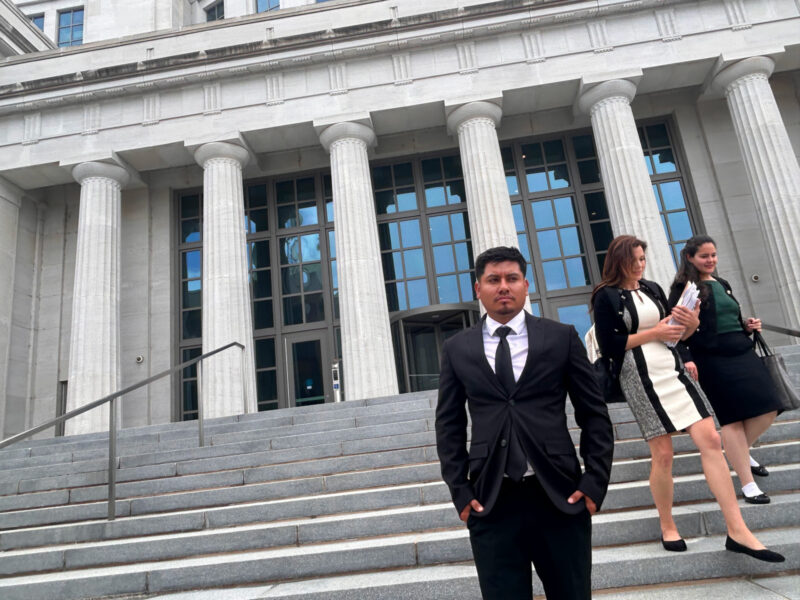
MOBILE, Ala. — Leo Garcia Venegas, a U.S. citizen born in Florida, has brought attention to the troubling experiences he faced while asserting his legal status. Despite holding a birth certificate, a Social Security card, and an Alabama REAL ID, Venegas, who is of Hispanic descent and has limited English proficiency, found himself detained on three separate occasions over the past year by federal immigration enforcement agents.
During these encounters, Venegas endured aggressive tactics, including being rammed into, shackled, and accused of misrepresenting his immigration status. Although he was released without charges each time, he filed a lawsuit against the government in September 2025 to prevent similar incidents from occurring in the future, both for himself and others in comparable situations.
In his case, Venegas seeks to challenge the immigration officers’ practice of conducting warrantless entries at construction sites, where they preemptively detain workers regardless of their documented status. At a recent court hearing, he testified through an interpreter about the mounting fears and hardships he has faced since the Trump administration intensified deportations in January 2025.
“They just show up and take you into custody when you’re not doing anything,” Venegas recounted, recalling the ICE raids at a housing subdivision where he and his colleagues were working. “Now I’m not free to drive my car, go to work, or even shop.” His third detention occurred on May 2, when immigration officers apprehended him in his front yard after stopping his brother’s car, who was in the country unlawfully and has since been deported.
Another individual, Gehovani Albilde-Ruiz, shared his own troubling experience in court, where he described being subjected to similar detention policies. Although Albilde-Ruiz is a permanent resident with a green card and a Social Security number, officers dismissed his documents as “the best fakes they had ever seen” and questioned where he had acquired them. “I was terrified that I would be deported and that my green card would be revoked,” he stated through an interpreter. “I felt helpless and degraded.”
Philippe Lavoie, the special agent in charge of immigration enforcement in the region, explained that his officers focused on construction sites based on information from the public and informants. He acknowledged that no warrants were issued and clarified that specific individuals were not targeted. “We do not believe there is a reasonable expectation of privacy in an open scene,” Lavoie said, defending the actions taken during Venegas’ detentions. Notably, he mentioned that while some workers were detained, white and black workers were not subjected to the same treatment.
Lavoie also emphasized that the Department of Homeland Security is responsible for verifying REAL IDs prior to their issuance by the state. However, he noted that standards vary between states and that there have been many instances where individuals with REAL IDs were arrested despite their legal status.
Meanwhile, Assistant U.S. Attorney Sam Rudd Jr. argued that Venegas lacked the standing to sue for alleged trespass on property he did not own and insisted that the Fourth Amendment had not been violated. He maintained that short detention periods are generally reasonable under such circumstances.
Contrastingly, Jared McClain from the Institute for Justice asserted that Venegas sustained recoverable injuries from his experiences. He questioned the credibility and functionality of proper documentation if it is not effectively recognized by the government. REAL IDs, equipped with barcodes for easy authentication, are frequently verified at various venues including airports and bars. “If authorities cannot verify these IDs promptly, it raises serious legal concerns,” McClain contended, urging the court to issue an injunction and compel the Department of Homeland Security to adopt consistent enforcement policies nationwide.
The case will be overseen by Chief U.S. District Judge Jeffrey U. Beaverstock, who was appointed to the bench by Donald Trump. As of now, a timeline for the ruling has not been disclosed.
