


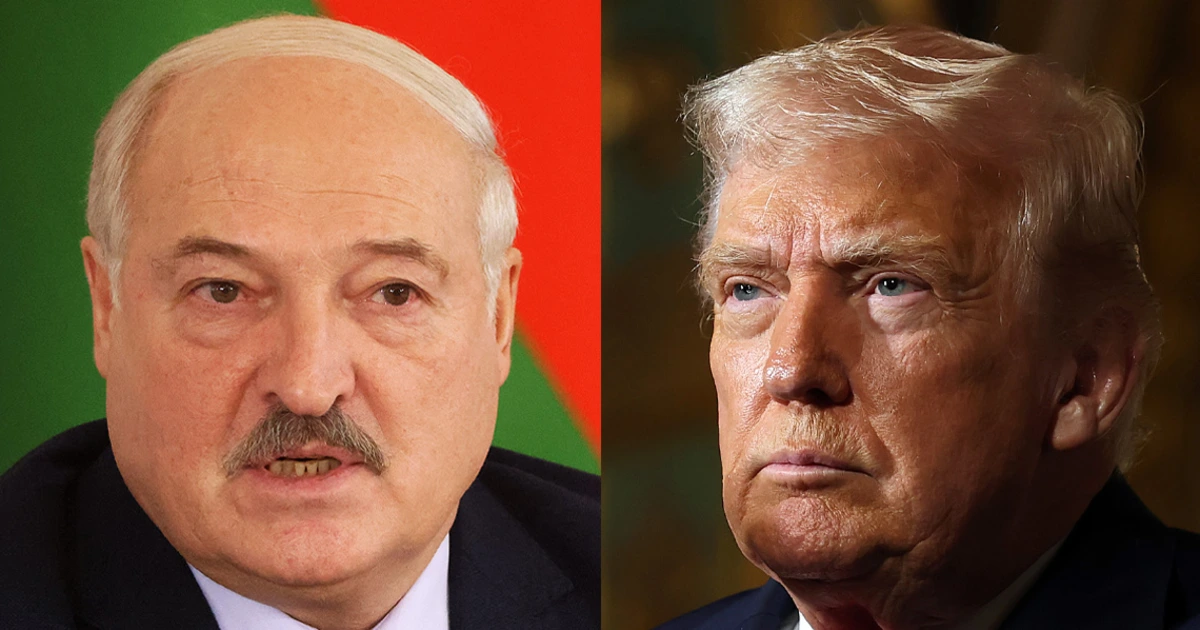
Belarusian Leader Makes Diplomatic Moves Amid U.S. Relations
Often referred to as Europe’s last dictator, Belarusian President Alexander Lukashenko has been playing a strategic role in President Donald Trump’s efforts to reestablish ties with nations previously marginalized by U.S. foreign policy. Recent developments suggest Lukashenko may be stepping out of diplomatic isolation.
In a post on Truth Social earlier this month, President Trump expressed gratitude towards Lukashenko for his collaboration and friendship, particularly praising the Belarusian leader for agreeing to release some political prisoners. Trump’s sentiment included the statement, “I’m so happy!” hinting at the thawing of relations between their administrations.
In addition to easing restrictions on specific Belarusian state entities, the U.S. has been incrementally lifting sanctions aimed at penalizing the nation for its close ties to President Vladimir Putin, particularly during Russia’s invasion of Ukraine in 2022. This shift underscores a nuanced approach where diplomatic overtures could potentially reshape Belarus’s geopolitical stance.
Lukashenko has expressed aspirations to negotiate a “big deal” with the United States and may participate in an upcoming meeting related to President Trump’s peace commission. However, many inside Belarus view him far less favorably, citing a history of severe human rights abuses against dissenters and the systematic dismantling of opposition parties and independent media outlets.
The current political climate in Belarus is marked by widespread repression. Following the controversial 2020 presidential election—widely deemed fraudulent—Lukashenko initiated a brutal crackdown on protests. Reports indicate that ordinary Belarusians who participated in the demonstrations faced arrest and prosecution, with thousands imprisoned under harsh conditions. Notably, in March, approximately 250 prisoners were released as part of negotiations linked to U.S. sanctions relief.
Pavel Slankin, a former Belarusian diplomat who resigned over Lukashenko’s handling of dissent, remarked that the regime’s repressive nature is unparalleled, drawing comparisons to Stalinist practices. The grim reality of Belarus under Lukashenko’s rule has raised skepticism, even as Trump’s administration seems to pursue a diplomatic realignment.
The evolving U.S.-Belarus relationship poses questions among international observers. Critics highlight the complexities of linking the release of political prisoners to diplomatic engagement, noting that Lukashenko continues to detain new individuals while selectively releasing others. A United Nations report estimated that more than 1,100 political prisoners languish in Belarusian jails, raising concerns regarding the authenticity of any reform measures implemented by the regime.
Some analysts speculate that a closer alignment with Lukashenko could offer Trump leverage in negotiations concerning the ongoing conflict in Ukraine. However, a State Department spokesperson clarified that U.S. engagement with Belarus remains independent of broader geopolitical discussions. As diplomatic channels open, the international community watches closely to see how these developments may influence the balance of power in Eastern Europe.
