


Montgomery County Executive Signs Immigration Enforcement Bills
Montgomery County Executive Mark Elrich has officially signed four significant immigration enforcement bills in collaboration with county legislators. This move underscores the administration’s commitment to supporting the immigrant community within the county.
During a rally at the Executive Building in Rockville prior to the bill signing, Elrich emphasized the importance of ensuring that immigrant residents know they are safe, stating that the county is “here to help you, not to get in your way.”
The newly enacted legislation aims to limit the influence and operational reach of U.S. Immigration and Customs Enforcement (ICE) within the county. Elrich noted that the Montgomery County Values Act directs him to create and disseminate guidance for all county agencies. The act specifically prohibits the use of county-owned parking lots and land as staging or processing sites for private immigration enforcement, while also establishing a public reporting mechanism for violations.
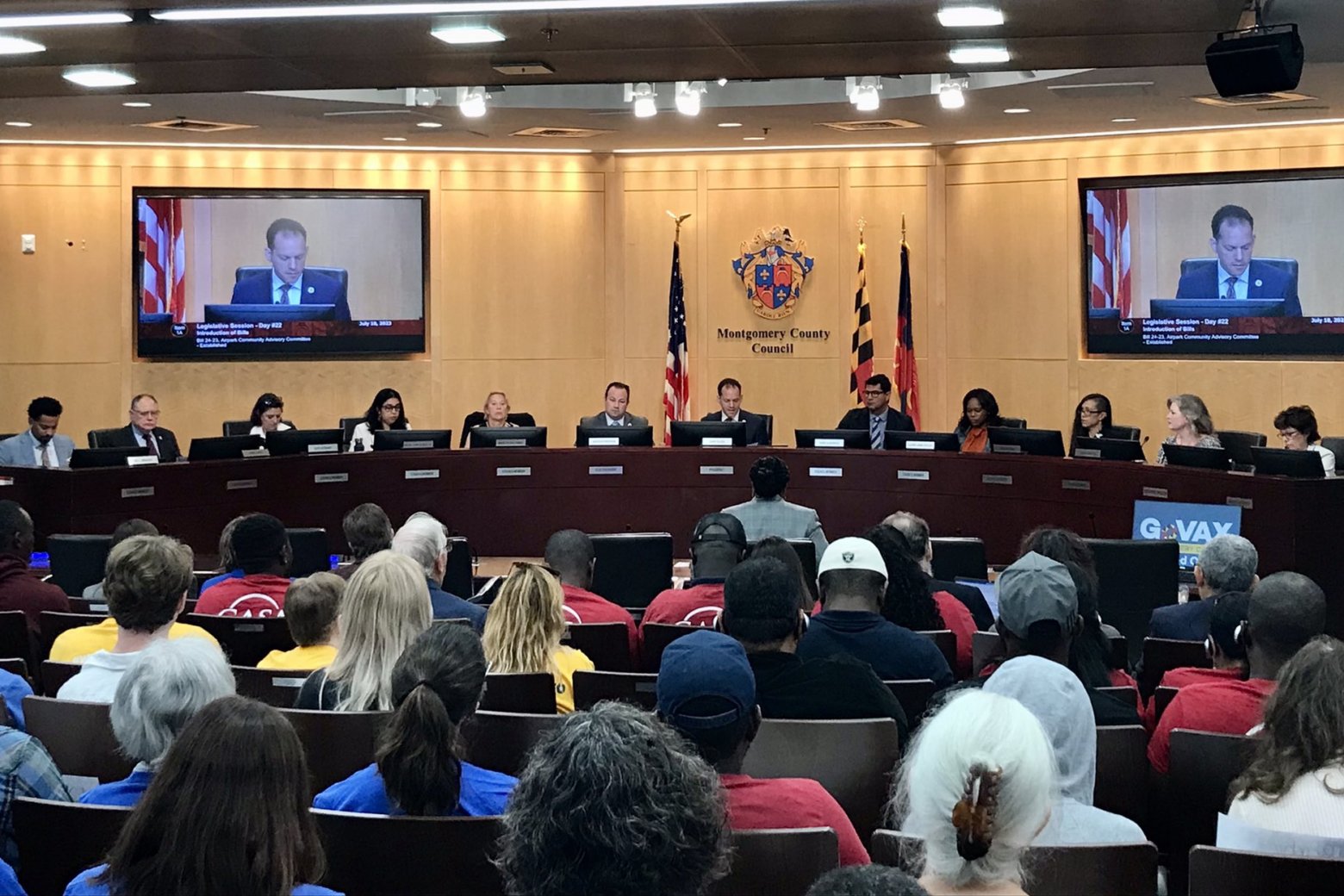
City Councilwoman Kristin Mink, who spearheaded the debate surrounding the bill, addressed concerns related to ICE enforcement. She indicated that such incidents had been occurring prior to the legislation’s introduction, which was a motivating factor for her in drafting the bill. “We know that ICE is encroaching on both county parking lots and non-public parking lots,” Mink said.
“More than 30 percent of the people who live in this county are immigrants like me,” commented County Council President Natali Fani Gonzalez, who played an instrumental role in the passage of the Trust Act. This law prohibits county officials and agencies from inquiring about an individual’s immigration status, emphasizing a commitment to the rights of all residents.
Three of the bills were expedited to take effect immediately. Among them, Bill 5-26, known as the Unmask ICE Act, prohibits law enforcement officers from wearing masks while on duty, with certain exceptions. City Councilman Will Jawando, whose immigrant background fuels his advocacy, stated, “This shows that we care about our residents and we’re going to fight with every tool we have.” He acknowledged the potential for legal disputes over whether local governments have the authority to regulate federal agency operations.
Additionally, Bill 13-26, termed the ICE Out Act, prohibits the issuance of construction or occupancy permits for private detention facilities. Introduced by City Councilman Evan Glass in response to a proposal to convert warehouses into detention centers for immigrants, the bill reflects the county’s proactive stance. “We stepped up proactively and said, ‘We’re not going to let that happen here,'” Glass affirmed, aiming to reassure immigrants that they are welcomed and safe.
City Council member Kate Stewart’s Bill 14-26, now a signed law, addresses challenges faced by families whose loved ones have been detained by ICE. Stewart pointed out the difficulties encountered by families trying to locate both their loved ones and their vehicles, which often end up being towed. The new legislation aims to ease the process for these families by expanding the documentation requirements necessary to reclaim their vehicles.
During the bill signing event, lawmakers were questioned about whether the new laws would hinder law enforcement efforts. Gonzalez assured that the council had consulted local law enforcement agencies. Montgomery County Police Chief Mark Yamada recognized the importance of the Trust Act, stating that ensuring residents feel safe is essential for effective policing. “I’m proud that they cooperated with us 100 percent,” Gonzalez concluded.
