


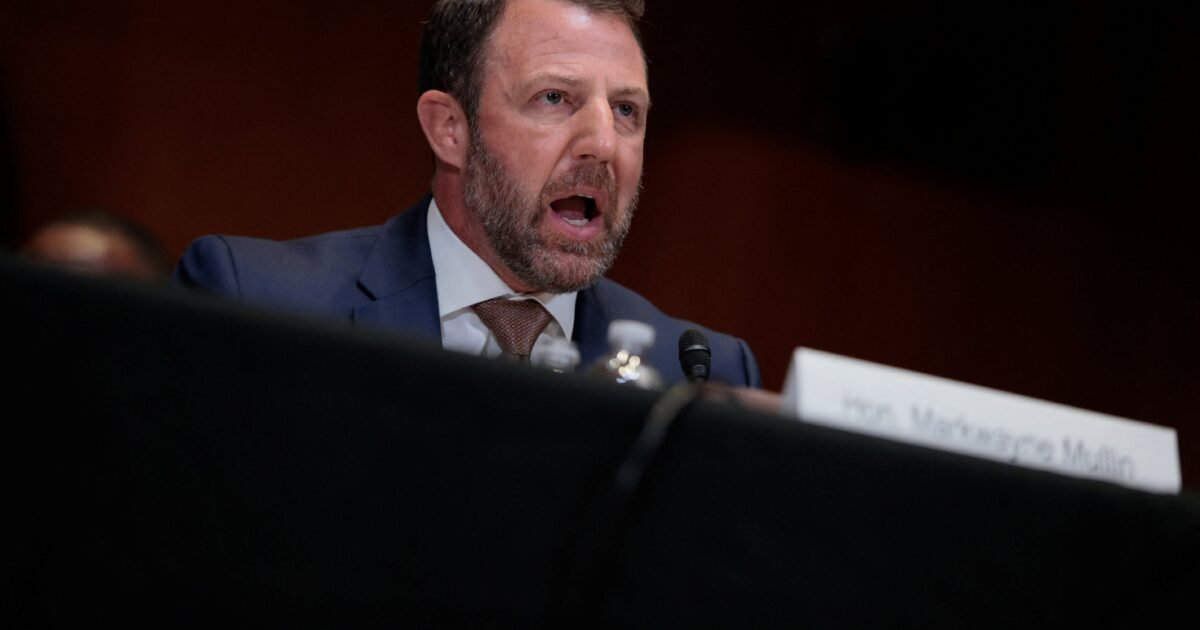
Homeland Security Secretary Testifies Amid Growing Immigration Enforcement Concerns
Homeland Security Secretary Mark Wayne Mullin testified on June 2 before the Senate Appropriations Subcommittee regarding a contentious immigration enforcement bill. This legislation, championed by Senate Republicans, has drawn significant objections from U.S. bishops, highlighting the ongoing debate over U.S. immigration policy.
Mullin’s testimony comes at a critical time as the Senate prepares to discuss a proposed package that seeks an additional $72 billion for immigration enforcement. This comes after President Donald Trump’s previous initiative for a $1.8 billion “weaponization fund” faced setbacks last month.
In a letter dated June 1, Bishop Brendan J. Cahill of Victoria, Texas, who chairs the U.S. Conference of Catholic Bishops’ Immigration Committee, urged senators to consider essential policy reforms. He emphasized the need to protect the dignity of immigrants and called for measures to prevent family separations.
“Regardless of specific policy disagreements, immigration fundamentally involves the movement of people, each created in the image of God,” Bishop Cahill noted. He added that current discussions often neglect this reality, which contributes to dehumanizing rhetoric and policy choices that fall short of promoting the common good.
The bishop’s correspondence further underscored the necessity of safeguarding religious rights for individuals in immigration detention. He also advocated reestablishing previous restrictions on immigration enforcement within places of worship and endorsed the Religious Workforce Protection Act, aimed at easing entry barriers for qualified religious workers from abroad.
“In line with our earlier communications, the USCCB insists that Congress must ensure respect for religious sites during immigration enforcement and guarantee access to religious services for immigrant detainees, irrespective of the facility’s administration,” he stated. “We reiterate our call for Congress to condition the utilization of immigration enforcement and detention funds on these crucial objectives.”
Diverse exchanges marked the hearing, including a contentious dialogue with Senator Patty Murray (D-Wash.) concerning the Trump administration’s policies on sensitive locations. Mullin defended the administration’s stance, stating, “We’re not actively in sensitive areas. Occasionally, we need to apprehend felons near such locations, but we are not conducting patrols there.”
The policy governing sensitive locations previously restricted immigration enforcement agents from arresting individuals in places such as houses of worship, schools, and hospitals without supervisory approval. Tensions escalated further in discussions about the Trump administration’s intent to withdraw Customs and Border Protection (CBP) agents from airports in jurisdictions labeled as “sanctuary cities.” The absence of these agents could cripple international flight operations, substantially affecting regional tourism and the forthcoming World Cup.
The U.S. bishops have voiced their apprehensions about various aspects of the proposed immigration enforcement package. On May 15, Archbishop Paul S. Coakley of Oklahoma City, along with Bishop Cahill, addressed both chambers of Congress, imploring lawmakers to reject partisan agendas in favor of a collaborative approach that prioritizes the common good and upholds human dignity.
Similarly, a coalition of bishops, largely from the U.S.-Mexico border region, conveyed “grave concerns” about the immigration bill in their May 20 letter to Congress. These growing apprehensions reflect the complexities and challenges surrounding immigration enforcement in the U.S. today.
