


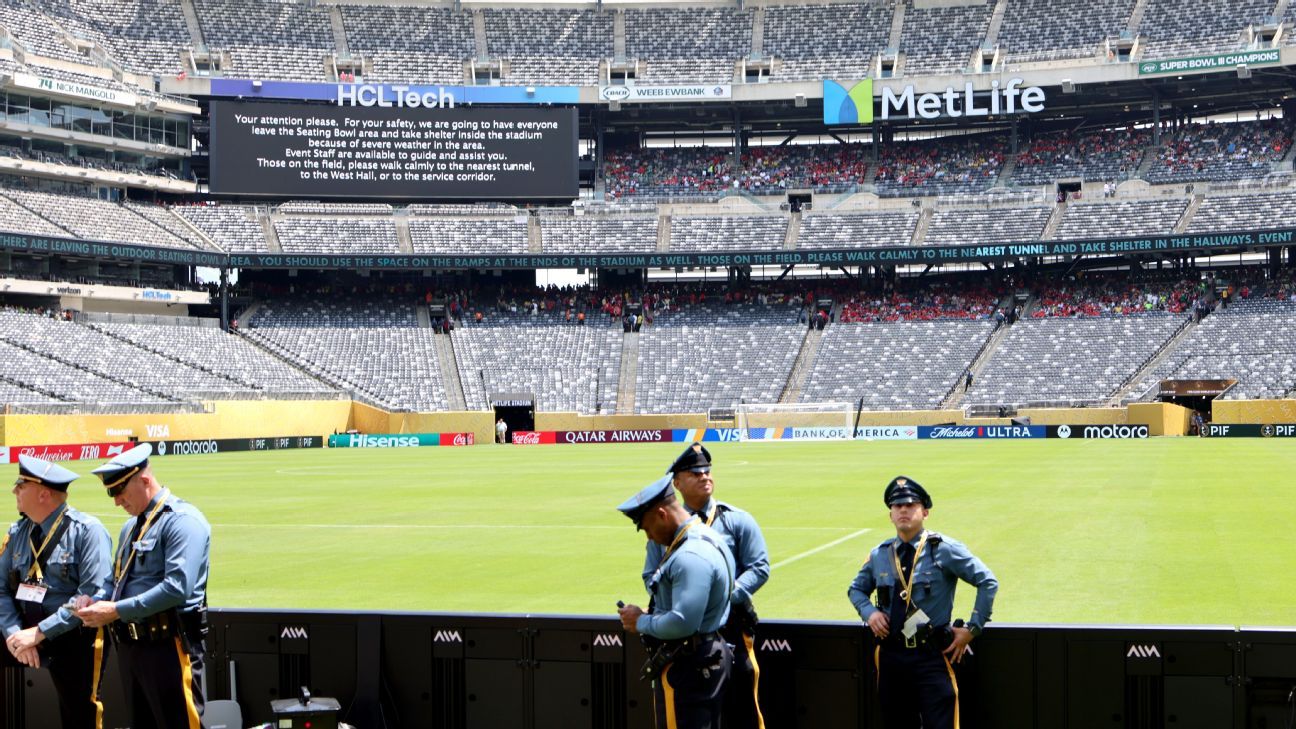
This summer’s World Cup is set to face extraordinary security challenges due to its unprecedented size and reach. Andrew Giuliani, executive director of the White House FIFA World Cup 2026 Task Force, emphasized in a recent interview with ESPN that domestic law enforcement is preparing rigorously for the event.
Giuliani stated, “Police across this country are stepping up,” highlighting the significant responsibilities local law enforcement has shouldered in recent weeks. With a record 48 teams participating across 78 matches in 39 days, the scale of coordination is unprecedented compared to the previous World Cup, which featured just 32 teams in smaller nations.
Extensive Collaboration Among Agencies
Over 400 law enforcement agencies are collaborating with federal entities and private security firms to secure stadiums, fan festivals, base camps, and hotels. Giuliani noted that because of the magnitude of the event, federal resources are stretched thin, limiting their ability to control the security as they would during presidential inaugurations or the Olympics. Instead, they are enhancing coordination with local and state police to effectively manage security operations.
To mitigate risks, security personnel are paying close attention to local trends that could affect safety across the host cities, such as Miami potentially impacting New York or Houston. Giuliani explained that planners have had to adapt strategies in light of a partial shutdown of the Department of Homeland Security earlier this year, complicating their preparations.
Understanding Fan Dynamics
As millions of international fans are expected to attend, organizers are taking proactive steps to understand the diverse behaviors of various fan groups. Giuliani pointed out that what may appear to be a volatile situation to local law enforcement could be normal behavior for soccer enthusiasts from different countries. This understanding is crucial in ensuring effective communication and management during the event.
Security planners are also receiving threat assessments from FIFA regarding each team’s background, which aids in tailored preparations. Chief Inspector John Przepiolka from Philadelphia’s Tactical Support Office noted that language barriers are being addressed, with officials fluent in multiple languages stationed at key locations to assist non-English speakers.
A Heightened Focus on Safety
In light of incidents such as the 2024 Copa America final, which saw chaotic scenes at stadium gates, FIFA has enforced a “last mile” security perimeter around venues. This includes restricting access to parking areas and requiring fans to present valid tickets before entering. “We don’t want people coming onto our property without a ticket,” asserted JP Haislip, director of security for the Philadelphia Eagles.
While event security is centered around stadiums, attention must also be given to softer targets including hotels, restaurants, and gathering spaces such as fan festivals. FBI Deputy Director Christopher Reier expressed concern about the threat of homegrown extremists taking advantage of large gatherings, noting that smaller, less fortified targets can often be more vulnerable.
Advanced Threat Mitigation Strategies
Giuliani emphasized the importance of addressing potential cyber threats, warning that hackers might attempt to exploit vulnerabilities in systems related to ticketing and event security. Recent government advisories have highlighted an ongoing cyber threat believed to be linked to Iranian groups, raising the stakes further. Cybersecurity analysts have voiced concerns regarding the federal government’s current capabilities to address these threats, given recent budgetary cuts.
With billions of dollars in federal funding allocated to bolster local law enforcement efforts, the responsibility for safeguarding fans ultimately rests on the shoulders of local police. A surge in resignations and retirements has stretched many departments thin, prompting concerns about their readiness for the high-demand security landscape of the World Cup.
As preparations ramp up, Giuliani believes success will be measured not just by memorable sporting moments but also by maintaining a secure environment. His aim is for the event to be remembered for its celebration rather than its challenges, as safety remains a top priority in the face of such unprecedented circumstances.
