


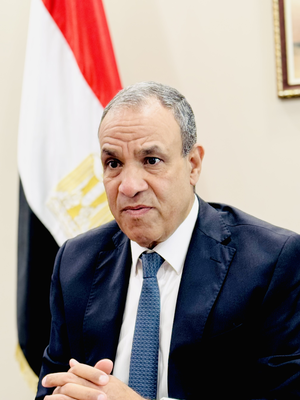
Collaboration for Sustainable Development Between Egypt and South Korea Requires Joint Efforts in Technology and Defense
During an interview on Tuesday, Egyptian Foreign Minister Badr Abdellatti emphasized the need for African nations to establish a partnership with South Korea that goes beyond traditional aid frameworks. He called for a meaningful alliance grounded in mutual respect, aimed at fostering real outcomes as both countries look ahead to the 2029 Korea-Africa Summit.
A key focus of the discussion was technology transfer, with Abdellatti highlighting its essential role in Africa’s economic transformation and job creation. He stated, “Without technology transfer and localization, there will be no jobs,” underscoring the urgency for South Korean engagement in Africa’s industrial sectors.
Abdellatti articulated a vision where Africa is not merely seen as a market, but as a vibrant investment landscape. He identified sectors like manufacturing, pharmaceuticals, automobile production, artificial intelligence, digitalization, vocational training, and higher education as critical areas ripe for collaboration.
He stressed the necessity for tangible deliverables, stating, “We need more investment, more trade, more technical cooperation, and more localization.” Abdellatti also urged South Korea to increase its investments in Egypt, pointing to the country’s advantageous location, extensive network of free trade agreements, and access to broader Arab and African markets.
“South Korean companies can tap into a multi-billion-dollar market through Egypt,” he noted. Abdellatti encouraged investment in areas such as manufacturing, shipbuilding, logistics, artificial intelligence, and green transformation projects, along with support for establishing a Korean industrial zone in Egypt’s Suez Canal Economic Zone. He was enthusiastic about the potential that the Suez Canal Economic Zone offers.
Emphasizing Defense and Regional Security Cooperation
Touching on defense, Abdellatti cited the K-9 self-propelled howitzer program as a successful example of collaboration, but he insisted on prioritizing joint manufacturing efforts. “The most important issue is co-manufacturing,” he asserted, pointing out that Egypt has the necessary infrastructure and capabilities for effective defense production partnerships.
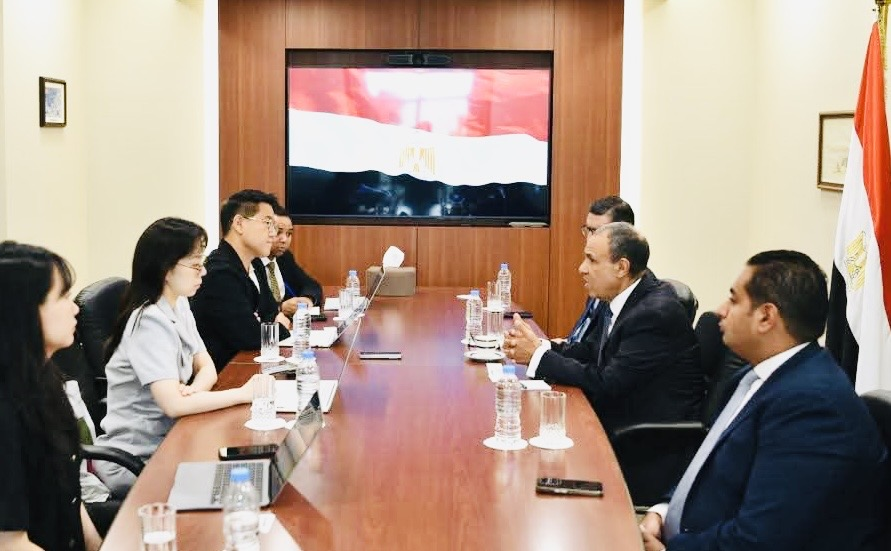
On the topic of regional security, Abdellatti highlighted the importance of ensuring freedom of navigation in the Red Sea, noting Egypt’s ongoing efforts with regional partners to promote stability and de-escalate tensions. However, he expressed regret over the delays in advancing the next phase of the Gaza Peace Framework, arguing that enduring stability in the region hinges on resolving the Palestinian situation.
He asserted that “there can be no sustainable peace or security without addressing the Palestinian issue,” reaffirming Egypt’s determination to advance peace negotiations, support the US-Iran agreement, and advocate for a humanitarian ceasefire in Sudan.
In response to questions about the denuclearization of the Korean Peninsula, Abdellatti reaffirmed Egypt’s commitment to opposing nuclear proliferation and emphasized the need for dialogue as a pathway to de-escalation in regional tensions. He concluded that “military escalation will lead nowhere,” advocating for increased multilateralism, dialogue, and coexistence as vital components of balanced diplomacy in the midst of rising geopolitical challenges.
sa*********@********rp.com
