


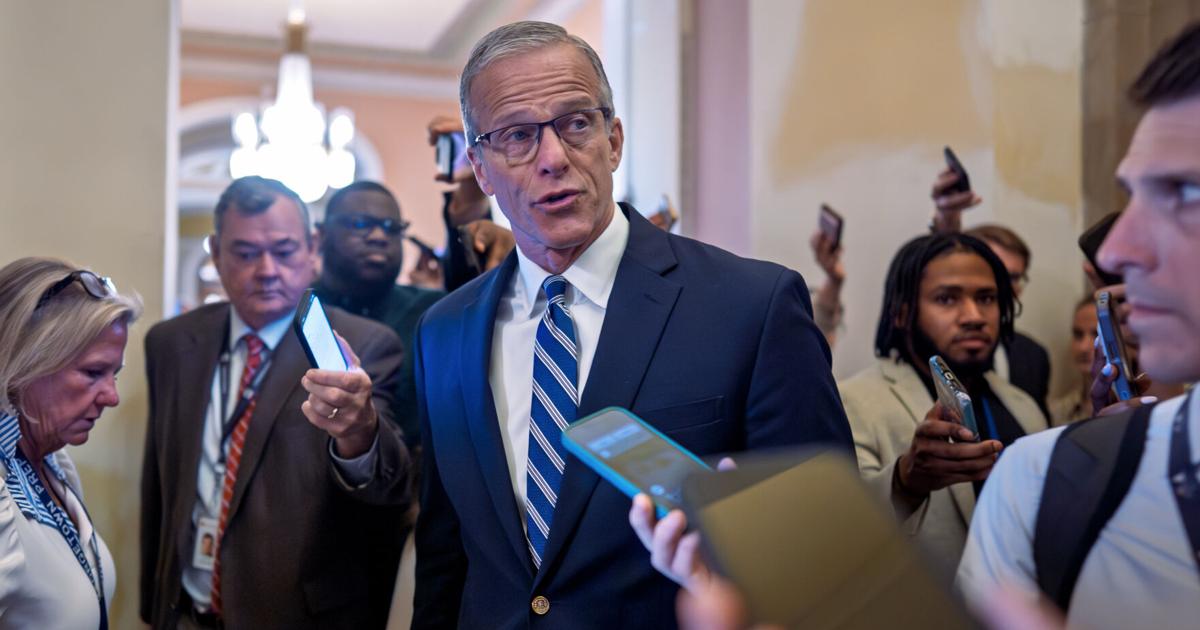
Senate Approves Funding for Immigration Enforcement Amid Controversy
WASHINGTON – Early Friday morning, the Senate passed a bill to allocate funds for President Donald Trump’s immigration enforcement agency after enduring weeks of delays and intense opposition largely centered around a $1.776 billion settlement fund, which nearly obstructed the legislation’s progress.
Funding Bill Narrowly Secured
In a significant move, senators voted 52-47 to approve a $70 billion funding package for Immigration and Customs Enforcement (ICE) and Border Security, extending support until the end of President Trump’s term. The bill is now poised for discussion in the House of Representatives next week.
Last-Minute Amendments Challenge Party Unity
The pivotal vote took place just before 5 a.m. and saw Republicans successfully fend off multiple bipartisan attempts to attach a permanent ban on Trump’s settlement funds for allies they claim are facing political persecution. An amendment was introduced to direct settlement payments to law enforcement officers injured during the Capitol riot on January 6, 2021, when a mob sought to challenge the results of the 2020 presidential election.
Republicans Navigate Political Tensions
The amendment complicated what should have been a straightforward vote for Republicans aiming to centralize immigration enforcement in an election year. Instead, extensive negotiations characterized the day, as lawmakers debated whether to block the contentious settlement fund, even after Acting Attorney General Todd Blanche indicated it could not proceed.
Concerns over Settlement Fund Persist
Senate Majority Leader John Thune criticized the settlement fund, which emerged from Trump’s legal dispute with the IRS regarding leaked tax returns. Thune urged his fellow Republicans to concentrate on ICE and border funding to make passage smoother in the House. Yet, numerous Republican senators aggressively pushed to prevent the disbursement of these funds, especially in light of Trump recently expressing uncertainty about their status, stating they were “very important.”
Vote Breakdown Reveals Political Divide
The final tally reflected a near-party line division, with only Alaska Senator Lisa Murkowski opposing the bill. Democratic Senator Michael Bennet of Colorado was absent for the vote. Earlier attempts by Democrats to ban the settlement fund failed narrowly, as did a secondary amendment proposed by Senator Thom Tillis of North Carolina that sought to reallocate the settlement funds to an anti-fraud initiative within the Justice Department.
Comments on Political Accountability Emerge
Amid the discussions, Tillis asserted that the fund constituted a political responsibility for the Republican party. He remarked on the necessity to codify decisions related to the fund to help senators navigate the electoral landscape leading up to November. Cassidy’s amendment, which aimed to compensate injured police officers, faced considerable criticism due to the potential to allocate funds to those involved in the Capitol riot.
Legislative Hurdles and Future Implications
Senate Minority Leader Chuck Schumer voiced concerns that the current approach by Republicans would create dependency on Trump’s pledges rather than foster accountability. If enacted, this funding bill could dissolve a Democratic blockade seeking changes after federal agents fatally shot two protesters in January. Using a complex procedural maneuver, Senate Republicans managed to bypass the filibuster, but the journey to the floor was fraught with obstacles, emphasizing the contentious nature of Trump and the White House’s influence on legislation.
