


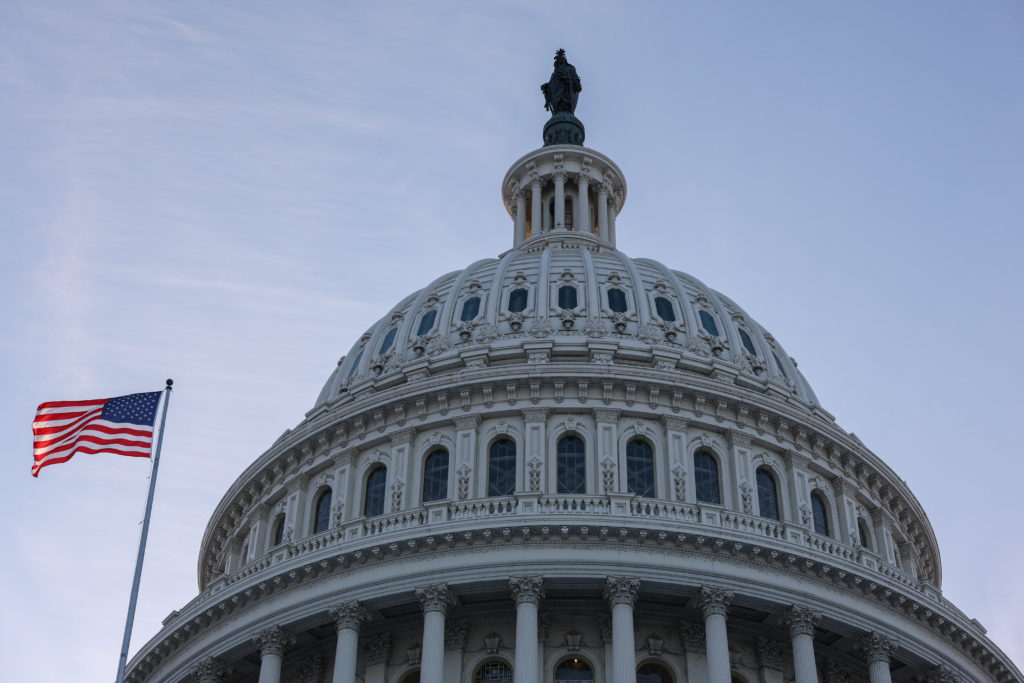
Senate Republicans Approve $70 Billion Immigration Enforcement Bill
In a significant legislative move, Senate Republicans have passed a $70 billion bill aimed at funding multiple immigration enforcement agencies for the remainder of President Trump’s term. This pre-dawn vote concluded a grueling 18-hour session, marking the end of months of Democratic efforts to block funding for both Immigration and Customs Enforcement (ICE) and Customs and Border Protection (CBP).
Funding Priorities and Legislative Challenges
The bill, which is now heading to the House of Representatives, was approved without previously proposed measures that would have established a $1.8 billion settlement fund for Trump associates claiming political persecution. Notably, the Senate omitted a requested $1 billion for heightened White House security, as well as funding for Trump’s envisioned White House ballroom. Additionally, critical oversight powers linked to FISA Section 702 were not renewed, just one week before their expiration, partly due to concerns surrounding Bill Pulte, the President’s nominee for overseeing national intelligence agencies.
Changes in National Intelligence Leadership
President Trump has expressed a desire for Pulte to implement further reductions in the workforce of the Office of the Director of National Intelligence (ODNI). Speaking aboard Air Force One, Trump noted he is untroubled by budget constraints, stating he welcomes reductions if they are determined as necessary.
Legal Setback for Trump’s Immigration Policies
In a noteworthy judicial decision, a federal judge has overturned the Trump administration’s sweeping immigration freeze affecting individuals from 39 countries. This ruling, which encompasses asylum applications, work permits, and green card requests, stems from a policy implemented in November following the tragic killings of two National Guard soldiers by Afghan nationals in Washington, D.C.
Escalation of Hostilities in the Middle East
Meanwhile, tensions in the Middle East continue to escalate as fighting between Israel and Hezbollah intensifies. Israel has launched additional airstrikes across southern Lebanon, urging thousands of residents to evacuate as rockets rain down. Reports indicate at least nine fatalities in the recent violence. Evacuation advisories have been issued for several villages, one of which is sheltering numerous displaced families. This surge in conflict followed Hezbollah’s rejection of a ceasefire proposed by the United States.
Concerns Amid Ongoing Conflict
In northern Israel, residents facing months of cross-border hostilities are expressing skepticism regarding the durability of any ceasefire. As one local resident stated, despite assurances from authorities about a truce, the reality on the ground suggests otherwise, rendering the concept of a ceasefire nearly meaningless.
International Space Station Experiences Air Leak
In a separate development, five astronauts aboard the International Space Station (ISS) were forced to prepare for an evacuation in response to an air leak detected in the station. NASA initially issued an evacuation order but later lifted it, allowing the crew to return to their duties while Russian teams investigate and address the issue. This section of the ISS has historically experienced various structural challenges, prompting this precautionary measure.
Financial Markets React to Economic Indicators
On the financial front, despite reporting strong hiring figures, stock markets suffered a substantial decline, marking Wall Street’s most challenging day since October. The Dow Jones Industrial Average plummeted nearly 700 points, driven by concerns over potential interest rate hikes that particularly affected tech stocks, with the Nasdaq down 4%. The S&P 500 also registered its first downturn in ten weeks.
