


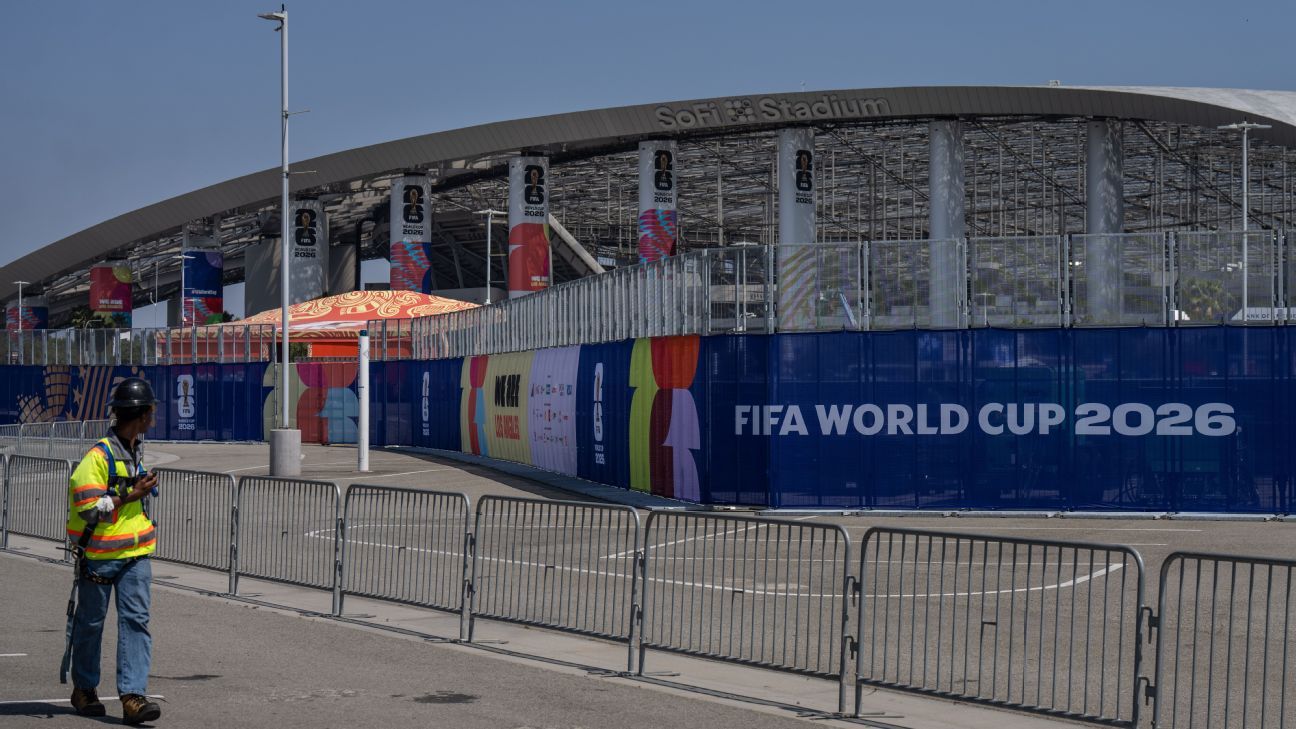
ENGLEWOOD, Calif. — Workers at SoFi Stadium, located near Los Angeles, have voted to authorize a strike just ahead of the U.S. men’s national soccer team’s opening World Cup match. Approximately 2,000 bartenders, servers, cooks, and dishwashers are involved in this decision, stemming from stalled contract negotiations with the stadium’s food service provider. While there is no guarantee that a strike will take place, the authorization gives these employees the option to walk off the job if an agreement is not reached.
Union Concerns Before World Cup Match
This vote occurs days before the United States faces Paraguay in the World Cup opener on June 12. Union member Yolanda Fierro emphasized that workers are prepared to strike if negotiations fail to yield a satisfactory outcome.
Workers have expressed deep concerns over job security and wages, particularly in light of heightened immigration enforcement policies under previous government leadership. Los Angeles County Sheriff Robert Luna indicated that federal agents would be present at the event for security purposes but assured that they would not engage in immigration enforcement during the World Cup matches.
Kurt Petersen, co-president of UNITE HERE Local 11, raised critical points regarding the impact of low wages on workers’ lives. “What good is the World Cup for Los Angeles when workers cannot afford their rent and face the threat of ICE while they work?” he remarked. Petersen further noted that a strike would primarily leave premium suites with little more than water and snacks.
Legend Global, SoFi Stadium’s hospitality manager, has reaffirmed its commitment to negotiating with the union and maintaining a lasting relationship. In a recent statement, the company expressed anticipation of providing an excellent hospitality experience for the FIFA World Cup attendees.
Petersen described the pace of contract negotiations as “glacial,” citing that although Legends has agreed to increase the minimum wage for cooks and dishwashers, other employees, such as suite attendants and bartenders, face wage freezes. The union also seeks safeguards against subcontracting and the risk of federal immigration raids.
For Cesar Zamora, a bartender at the stadium and lifelong soccer enthusiast, the lack of necessary reforms from his employer before the World Cup is disheartening. “The FIFA World Cup will generate huge profits, yet we are still advocating for basic respect and safety. We deserve better, and I am prepared to strike if necessary,” he stated.
Concerns are not limited to SoFi Stadium; community groups in other World Cup host cities like Atlanta and Miami have called for suspending U.S. immigration enforcement during the tournament, fearing that immigration arrests near stadiums and viewing parties could overshadow the celebratory atmosphere.
The World Cup is projected to attract millions of fans across 11 host cities in the United States, Canada, and Mexico throughout June and July, marking a significant event for soccer enthusiasts across the continent.
