


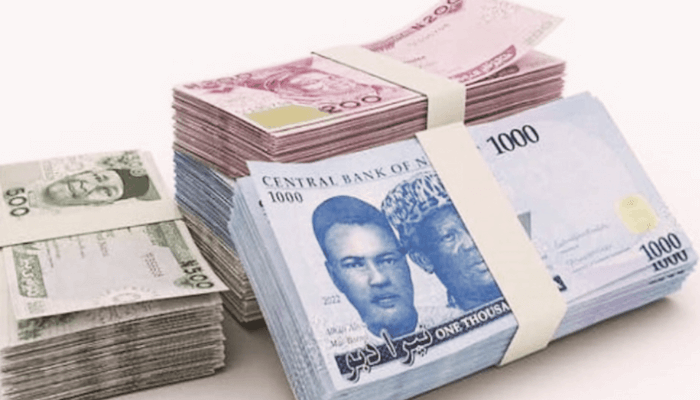
Naira Remains Undervalued Despite Currency Reforms
Despite significant currency reforms and a recent stabilization in the market, the naira is undervalued by over 13%, according to Bismarck Rewane, Managing Director and Chief Executive Officer of Financial Derivatives Company (FDC).
Valuation Insights from Purchasing Power Parity
Speaking at a breakfast session held at the Lagos Business School, Rewane presented his assessments based on purchasing power parity, which indicates that the naira is trading below its fair value on the foreign exchange market.
Current Exchange Rates Highlight Naira’s Depreciation
According to Rewane, the naira’s exchange rate stands at 1,374.92 to the dollar, which highlights a 13.22% undervaluation. His findings were informed by analyzing the prices of various consumer goods and services within Nigeria relative to international standards.
Recent Gains Boost Investor Confidence
In a positive development, the naira recorded gains against the dollar, strengthened by Nigeria’s foreign exchange reserves, which have reached an unprecedented $50.04 billion. This increase enhances investor confidence and bolsters the Central Bank of Nigeria’s (CBN) ability to support the naira.
Market Analysis Reveals Consumption Patterns
Rewane’s study encompassed a range of products, from beverages and groceries to electronics and transportation. According to his analysis, the theoretical fair value of the naira sits at N1,193.22 per dollar, indicating a considerable gap with the current market rate.
Impact of Currency Market Liberalization
The economist observed that the naira has undergone substantial fluctuations following the liberalization of the foreign exchange market. He noted a depreciation from roughly 410 naira to the dollar in 2021 to over 1,900 naira in 2024 as reforms aimed at eliminating long-standing market distortions have been implemented.
Future Outlook for the Naira
While acknowledging the significant exchange rate depreciation, Rewane asserted that the reforms have introduced improved transparency and market efficiency, thereby narrowing the gap between the official and the parallel exchange rates. Looking ahead, he projected that the naira would stabilize in a short-term range of 1,390 to 1,420 to the dollar, supported by a strengthening outlook for Nigeria’s economy.
Global Factors Still Pose Risks
According to the data presented, Nigeria’s foreign exchange reserves rose from $32.91 billion in 2023 to $49.58 billion in 2026, with remittance inflows increasing from $19.55 billion to $23 billion during the same period. Additionally, oil production is expected to improve from 1.24 million barrels per day in 2023 to 1.49 million barrels by 2026, aided by enhanced export activities. Rewane underscored, however, that global uncertainties, inflation differentials, and geopolitical risks continue to play a significant role in determining exchange rate movements.
