


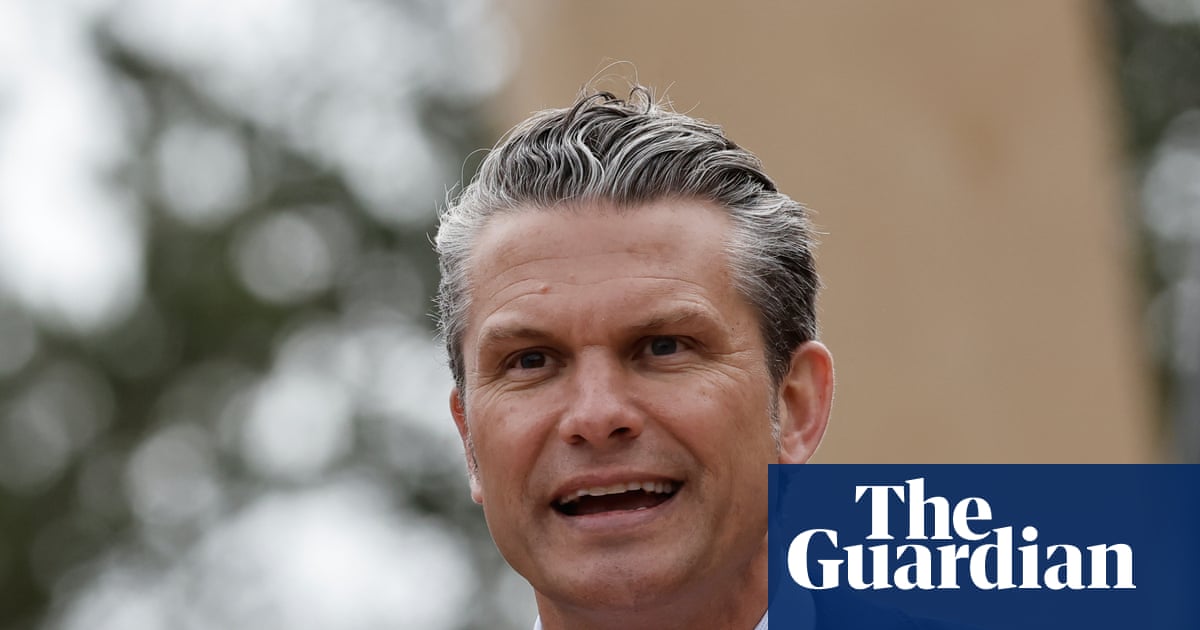
Controversy Surrounds U.S. Defense Secretary’s D-Day Comments
U.S. Secretary of Defense Pete Hegseth has faced strong backlash from historians and rights advocates after labeling Europe’s immigration challenges as a form of “invasion” during a recent D-Day commemoration in France. Critics have described his remarks as “grotesque stupidity” and an affront to the memory of the soldiers who bravely stormed the beaches of Normandy.
Addressing attendees on the 82nd anniversary of the D-Day landings, Hegseth seized the opportunity to reiterate longstanding criticisms of European immigration policies made by the current U.S. administration. His comments, delivered at the American military cemetery in Colville-sur-Mer, aimed to link historical events with present-day issues.
“Unfortunately, today different beaches in Europe are being attacked by different dangerous ideologies,” Hegseth stated. He further expressed concern over the arrival of migrants from Spain, Italy, Greece, and Bulgaria, questioning when European capitals would respond to what he termed an “invasion.” He concluded with a note of hope, asserting that it was not too late to act.
Hegseth, a former Fox News host, underscored his belief that the freedoms restored during World War II must be preserved by today’s leaders and defenders, warning that without such action, those sacrifices were merely temporary.
The online response was swift and critical. British historian Simon Schama condemned Hegseth’s comments as a “special kind of abomination,” blending historical deafness with arrogance. He argued that the resentment toward immigration should not diminish the immense sacrifices made to defeat the Third Reich.
Israeli human rights lawyer Daniel Seideman echoed this sentiment, condemning the Secretary’s remarks as a “vile desecration” of the legacy of those who fought at Normandy, particularly those who lost their lives. Meanwhile, Anders Åslund, a Swedish economist, criticized Hegseth’s statements as contradictory to the American commitment to its allies, pointing out that immigration policies are inherently domestic issues.
Hegseth’s comments are part of a broader trend among U.S. officials, including former President Trump, who have frequently attacked European immigration despite the U.S. hosting a higher percentage of foreign-born residents than many European countries. On the same day as Hegseth’s speech, U.S. Vice President JD Vance also stirred controversy by linking immigration to a specific crime in the U.K., which drew immediate pushback from British officials.
In the lead-up to Hegseth’s trip to France, community organizations expressed their objections, with some advocating for the cancellation of his visit. One group, the Langlung an Commune Association, criticized his values as incompatible with democracy and human rights. Members emphasized the need for vocal opposition against what they described as colonialist and far-right ideologies.
