


Nikki Marshak’s Struggles with Welcoming Japan
Since arriving in Japan in 2019, Nikki Marshak envisioned a bright future for herself in this vibrant country. However, her experiences today leave her feeling increasingly unwelcome. In recent months, she has observed a troubling rise in incidents of “bumps,” where individuals intentionally collide with others in public spaces such as train stations and grocery stores.
Marshak recounts instances where people have aggressively bumped into her before expressing anger and insisting she should “go back to her country.” One particularly jarring incident occurred in March 2024 at a subway station, where a man shoved her for seemingly no reason while she was with her partner. Following a review of CCTV footage, the police took action, requiring the perpetrator to issue an apology.
Marshak recalls the man trying to rationalize his behavior with unfounded assumptions about her inability to understand Japanese. “It seemed he needed a justification for his aggression,” she said. Such experiences reflect a broader trend, as anti-immigration sentiments grow among segments of the Japanese population.
Political Shifts and Rising Xenophobia
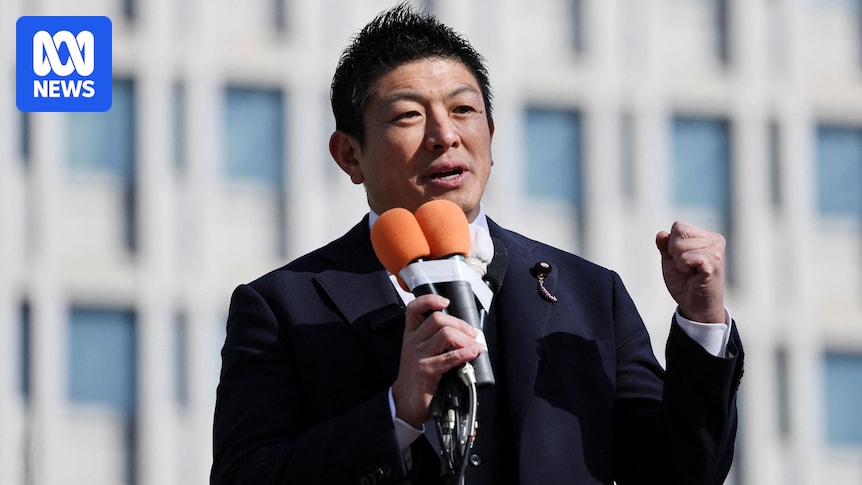
The emergence of the far-right Sankokuminto party signifies a shift in Japan’s political landscape. Since 2024, this party has gained substantial traction, consolidating 15 seats in both the House of Representatives and the House of Councilors while advocating a “Japan First” platform steeped in xenophobia. This party is now the fourth-largest opposition force in the country.
According to Tetsuro Kobayashi, a professor at Waseda University, the party’s success has prompted Prime Minister Sanae Takaichi to adopt stricter immigration policies. These new measures include heightened requirements for foreign property ownership, increased visa fees, and caps on foreign residents. A national survey revealed that 66% of respondents supported these policies, with 56% believing Japan does not require more immigrants.
For Marshak and her South African partner, Miguel Carmichael, the rising intolerance has forced them to reevaluate their future in Japan. Carmichael noted a marked change in the perception of foreigners, stating, “It’s definitely a visible change.” Marshak, who describes her Japanese language skills as conversationally advanced, has encountered individuals expressing their frustration over the presence of foreigners.
Political Borrowing from the West
The influence of right-wing populism has become evident in the rhetoric of Sankokuminto, with its leader, Sohei Kamiya, clearly channeling strategies akin to the “Make America Great Again” movement. The party has made appeals to cultural protectionism and anti-immigrant sentiments, drawing attention to a growing group of supporters with anti-establishment views.
Despite broader economic realities demanding a higher influx of foreign labor to counteract Japan’s aging population and declining birth rates, the populist party frames immigration as a cultural threat rather than an economic necessity. This rhetoric runs contrary to reports from the Japan International Cooperation Agency projecting the need for 6.74 million foreign workers by 2040 to sustain economic growth.
Japan’s Declining Birthrate and Population Challenges
Japan is confronted with the paradox of a declining birthrate alongside rising anti-immigrant sentiment. According to the Ministry of Health, 2025 is expected to record the country’s lowest birth rate at just 1.14 births per woman, significantly below the 2.1 needed for population maintenance. As the total population has fallen by roughly 5 million since its peak of 128 million, local sentiments around immigration are increasingly bewildering.
In stark contrast, around 32% of Australia’s population was born overseas, illustrating Japan’s unique demographic challenges. The largest foreign communities in Japan are comprised of Chinese, Vietnamese, South Korean, and Filipino nationals, concentrated in major metropolitan areas such as Tokyo, Osaka, and Aichi, where the Sankokuminto party has gained notable support.
Social Interactions and Perceived Xenophobia
The prevailing atmosphere has affected the lived experiences of foreigners, with Carmichael sharing that he faced undue attention from police following Marshak’s assault, simply due to his multiracial background. “If my skin color had been a little different,” he reflected, “I think that interaction would have been smoother.” This sentiment is echoed by various studies indicating significant discrimination against foreign workers in Japan.
Despite the ongoing push for more tourism, with a goal of attracting 60 million visitors annually by 2030, local sentiments about overtourism are rising. While the Japan National Tourism Organization anticipates record foreign arrivals, communities express concern over the detrimental effects of mass tourism on their daily lives, prompting calls for more effective management of tourist influx.
