


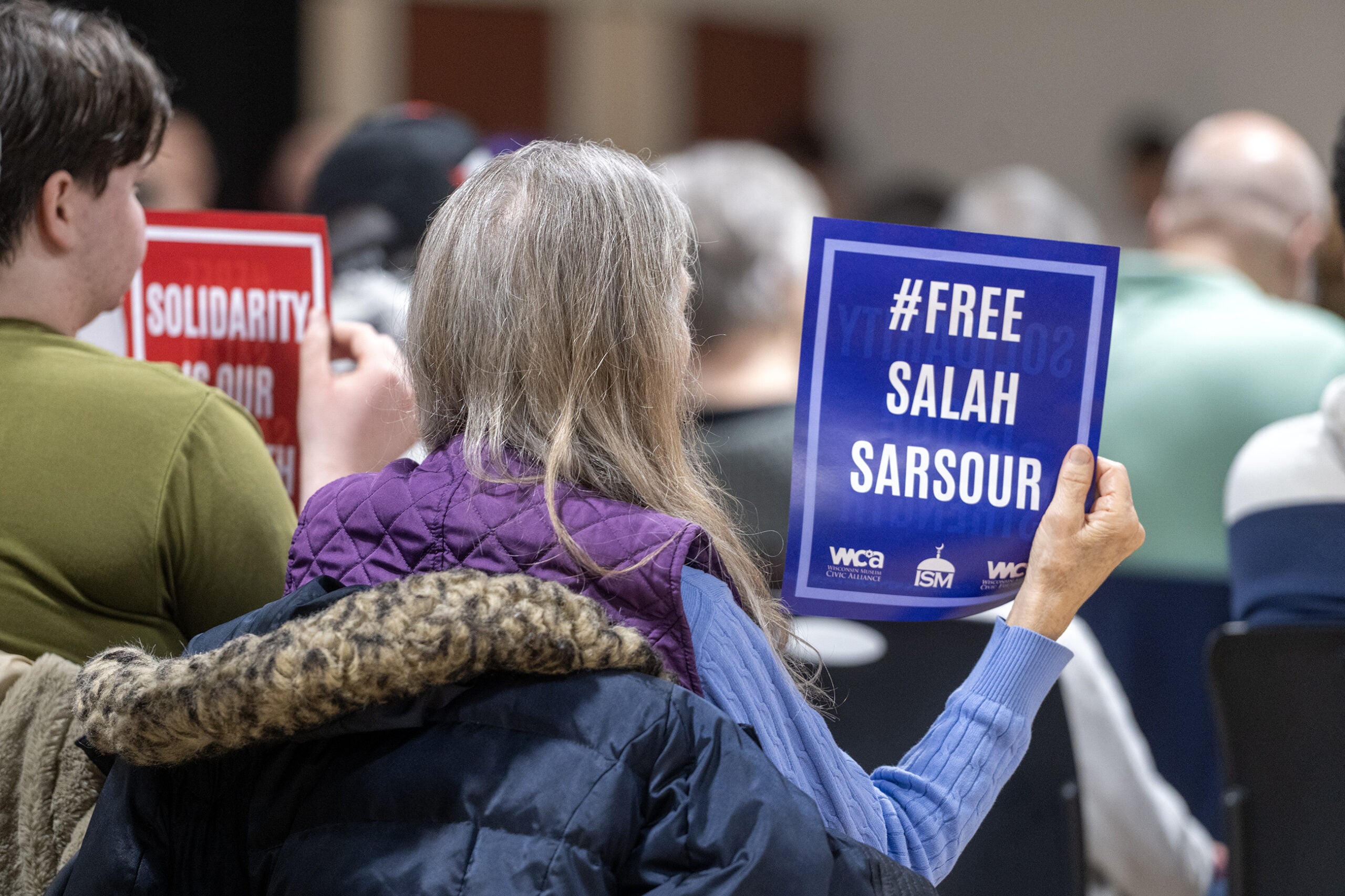
Detained Mosque Leader Experiences Rapid Weight Loss and Health Decline
Salah Sarsour, the president of the Islamic Society of Milwaukee and leader of Wisconsin’s largest mosque, lost 30 pounds during his two-month detention in an immigration facility, according to his legal representatives.
On Monday, a federal lawsuit was heard in district court in which Sarsour’s advocates argue that lawful permanent residents like him are being unfairly targeted due to his pro-Palestinian activism. Sarsour was taken into custody after accusations from the Department of Homeland Security suggested that he had falsified immigration documents upon his arrival from Ramallah three decades ago. He has been held at Clay County Jail in Indiana since his arrest on March 30.
In light of his declining health and claims of unlawful detention, Sarsour’s legal team has filed motions for both his release and a finding that his entire detention is illegal. They assert that his rights as a devout Muslim have been infringed upon, stating that he has not received regular blood sugar monitoring or necessary medications for his diabetes. Additionally, they allege that prison staff denied him the ability to pray five times a day, a fundamental practice of his faith.
Sarsour’s team emphasized that his continued detention appears punitive and undermines the free speech rights of individuals speaking out about human rights issues in Palestine. Despite these claims, government lawyers have described Sarsour’s assertions as baseless, maintaining that his detention is lawful and that any conditional requests made by Sarsour do not merit his release.
During the court proceedings, Sarsour’s supporters highlighted the lack of halal food options, noting that he was provided with barbecued pork rinds—an inappropriate snack for someone adhering to Islamic dietary laws—which contributed to his significant weight loss. One of Sarsour’s attorneys, Luna Drubi, criticized the responses from the facility regarding his dietary needs and overall treatment.
On the other hand, government representatives contended that Sarsour’s blood sugar levels were monitored daily until medically advised to reduce the frequency to once a month. They also confirmed that he is receiving diabetes medication and following a proper diet. In addition, they noted that Sarsour has been allowed to maintain his religious practices, such as praying daily, though they acknowledged the containment of such activities within standard security protocols at the jail.
Background of Salah Sarsour’s Legal Challenges
Sarsour’s legal troubles escalated shortly after he left his home in Franklin on March 30, when the Department of Homeland Security labeled him a “terrorist” for alleged past actions during his adolescence in the West Bank, including throwing Molotov cocktails. His supporters, however, argue that the charges against him were fabricated by the Israeli government and that he was wrongfully convicted as a teenager.
Immediately following his arrest, Sarsour’s legal team filed a writ of habeas corpus, claiming that he is a Palestinian-born human rights advocate targeted under his First Amendment rights while residing in the United States. Samuel Cole, the chief immigration litigation counsel for the ACLU of Illinois, stated that Sarsour’s situation exemplifies a broader governmental pattern of pursuing immigration cases against individuals whose beliefs and advocacy they oppose.
Amidst ongoing legal battles, Cole has argued that Sarsour’s treatment in detention warrants his immediate release, noting the unusual circumstances of his case and his deteriorating health after more than two months in jail. His legal team originally sought bail at the end of April, asserting that the abrupt nature of his detention is unjustified given his lack of criminal activity over the last 30 years. They highlighted the emotional toll of his separation from his family, noting he was detained while simply on his way to work.
The government countered by claiming that Sarsour’s potential deportation is based on multiple factors unrelated to his freedom of speech. Meanwhile, the trajectory of Sarsour’s immigration case continues, with the next hearing scheduled for June 24.
