


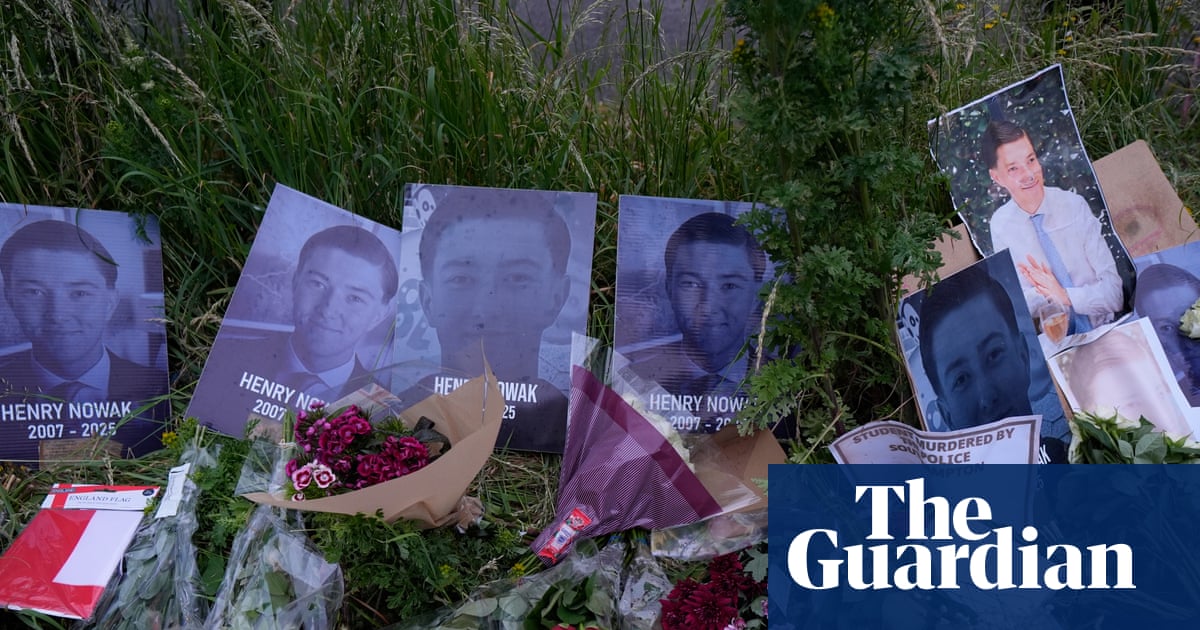
Trump Administration Challenges Europe’s Immigration Policies Amid Controversial Incident
In a striking move coinciding with D-Day’s 82nd anniversary, officials from the Trump administration disregarded diplomatic norms to critique Europe’s immigration and anti-racist strategies, claiming that these policies jeopardize the very fabric of Western civilization.
Among the administration’s harsh critics was Vice President J.D. Vance, who, along with other officials, spotlighted Britain’s contentious response to the killing of Henry Nowak, an 18-year-old student. They accused Keir Starmer’s government of lacking the “political will and leadership” needed to curtail mass immigration and uphold national sovereignty.
At the D-Day commemoration in Normandy, Secretary of Defense Pete Hegseth warned that the freedoms defended by Allied forces in 1944 are now under threat from what he described as an “invasion” of immigrants jeopardizing the continent’s stability. This unusual intervention in an allied nation’s policy-making follows significant public outrage in Britain over Nowak’s murder by a Sikh man armed with a ceremonial dagger, which also involved a distressing mishap where police mistakenly arrested Nowak as he lay dying.
Typically, such incidents would evoke minimal response from U.S. officials. Yet Nowak’s case has become a rallying point for the international far-right. The statements from Vance and the U.S. State Department mirrored the rhetoric of Nigel Farage’s Reform Britain party, framing the situation as a failure of multiculturalism and political correctness.
In a post on X, Vance lamented that “Henry Nowak died, like a civilization dying,” emphasizing the supposed negligence of authorities who mistreated him during the fatal incident. Despite this, British Prime Minister Starmer chose not to directly confront Vance. His office issued a statement emphasizing that individuals attempting to interfere with Britain’s democratic processes must be held accountable, while asserting that Nowak’s family wished for his memory to not be exploited to foment division or hatred.
The unrest in Britain intensified last week when Vikram Digwa, Nowak’s killer, received a life sentence with a minimum of 21 years. Audio footage revealed that when police responded to the scene, Nowak had clearly communicated that he had been stabbed, yet officers were skeptical of his claims. Evidence presented during the trial indicated that police had been misled by a call from Digwa’s brother, who made accusations against Nowak that the judge ultimately deemed unfounded.
Response from Law Enforcement and Media Outlets
While Hampshire Police issued an apology, the incident is now under investigation by an independent police watchdog. Nonetheless, conservative commentators have criticized the police’s anti-racism protocols, suggesting that these guidelines may have influenced officers to believe Digwa’s version of events while ignoring Nowak’s plight. The National Police Chiefs Council is currently reviewing these procedures.
Mainstream media outlets, including the Times and the Wall Street Journal, have quickly attributed Nowak’s death to “DEI indoctrination,” with some commentators going so far as to call it “woke murder.” In response, the U.S. State Department issued an unusually pointed statement lamenting what it described as “ideological conditioning and duplicitous policing,” implying that British law enforcement discriminates against white individuals, despite contrary evidence.
Far-Right Activism and International Rhetoric
Both the Trump administration and far-right allies in Britain have framed Nowak’s murder as a consequence of extensive immigration policies that, in their view, threaten the very existence of their nations. Vance remarked that Nowak “should still be alive” and would have been had past generations of European leaders resisted policies he labeled as self-destructive.
During his speech at the D-Day event, Hegseth cautioned that the valor demonstrated by Allied forces in 1944 is now endangered by emerging “dangerous ideologies.” He raised alarming questions about when European capitals would take action against this perceived invasion, hinting that it may already be too late.
According to experts monitoring far-right movements, there is an increasing trend of activists across the Atlantic mirroring one another’s narratives, casting liberal democracies as weak and suggesting that immigrants play a crucial role in the decline of Western societies. Thomas Greven from the Free University of Berlin noted that global networking has become a strategic approach for the radical right.
Although the Trump administration has not consistently led this international movement, it has steadily fostered ties with far-right groups while balancing ideological goals with U.S. commitments to longstanding allies. Trump’s rise in U.S. politics has been characterized by a willingness to shatter taboos around immigration and to criminalize what he perceives as societal ills brought about by newcomers.
Implications for Future Politics
During his previous tenure, Trump maintained relationships with various far-right figures, including Farage and leaders from Germany’s AfD party, consolidating a network that advocates against liberal democracy. Hegseth’s 2022 book, “The Battle of the American Mind,” criticizes American education, alleging it instills hatred for the country, a sentiment echoed by far-right commentators.
Veteran Trump advisor Stephen Miller has similarly championed far-right ideologies, evidenced by leaked emails indicating he embraced controversial literature that dehumanizes immigrants. Since assuming office in 2025, Vance has deepened connections with the international far-right, adopting language used by his counterparts in Europe, positioning liberal Western governments as threats to societal values.
Vance’s speech in Munich emphasized the persecution of right-wing activists, condemning what he termed “thought crimes,” a phrase that has also surfaced in Farage’s rhetoric. His meetings abroad, including with European nationalist leaders, underscore a departure from established political norms and highlight the growing influence of far-right ideology in shaping policy and public discourse.
The Trump administration’s intervention in the Nowak case signals a potentially significant shift in U.S.-UK relations and may point to a broader strategy aimed at appealing to right-wing voters in the upcoming elections. The administration appears to be amplifying calls for accountability regarding demographic and ideological shifts facing both Britain and the United States.
