


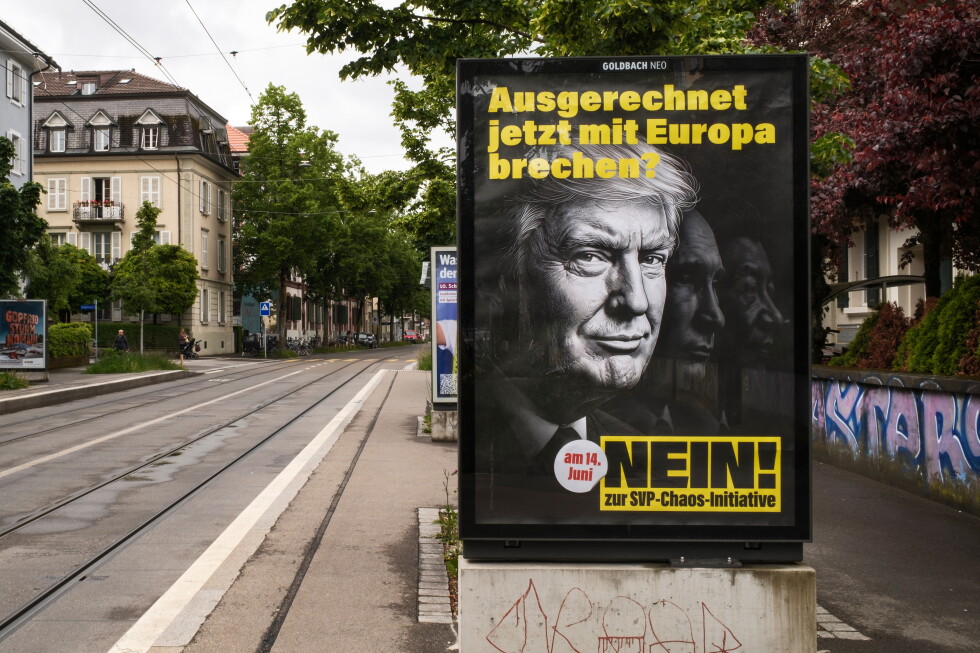
Swiss Voters Set to Decide on Population Cap in Historic Referendum
GENEVA (AP) — Swiss voters are preparing to cast their ballots on a groundbreaking proposal that seeks to limit the country’s population to 10 million as part of a broader movement led by right-wing politicians aiming to restrict immigration. This referendum, scheduled for Sunday, reflects Switzerland’s unique direct democracy system, allowing citizens to influence key policy decisions through periodic votes.
The Debate Over Population Control and Immigration
Proponents of the initiative, backed by the populist Swiss People’s Party, express concerns over the rising number of foreigners entering Switzerland from neighboring countries. They argue that the increasing population is straining the nation’s infrastructure, housing, social services, and natural resources. In contrast, critics maintain that immigration is vital for Switzerland’s economic success, particularly in sectors like healthcare, finance, pharmaceuticals, and technology. They caution that passing such a measure could have detrimental effects on the country’s economic fabric.
The federal government, alongside leading business organizations like Economy Switzerland, has denounced the proposal, labeling it a “dangerous idea” that could undermine both national security and prosperity. Bernard Bapst, a member of the Swiss People’s Party from the Friborg region, counters these concerns by linking the rise in various crime forms to the easing of immigration policies since 2002.
Impact of Open Borders on Population Growth
Since relaxing border restrictions with the European Union in 2002, Switzerland’s population has surged by 23%, reaching approximately 9.1 million by the end of last year. This population growth has been paralleled by a 24% increase in the nation’s economic output. According to Reto Fermi, a professor of international economics at the University of St. Gallen, this trend reveals that Switzerland is “a victim of its own success,” embracing the benefits that immigration brings.
Consequences of a Potential “Yes” Vote
A favorable vote for the proposal would require the Swiss government to take immediate steps to limit the population to 10 million by 2050. Should population figures reach 9.5 million by that time, Switzerland would be compelled to impose restrictions on asylum applications, family reunifications, and residence permits. This could lead to the nation’s abandonment of existing EU agreements regarding the free movement of people.
Experts warn that while the immediate economic consequences may be subdued, the long-term implications could jeopardize Switzerland’s relationship with Brussels, potentially impacting foreign investment. René Schwock, a political science professor at the University of Geneva, notes that given the EU’s status as Switzerland’s largest trading partner, a “yes” vote could have ripple effects across multiple sectors.
Immigration, A Persistent Topic in European Discourse
International migration remains a contentious issue across Europe, particularly as nations confront aging populations and a rise in anti-immigrant sentiment. In Switzerland, however, the majority of foreign nationals are from European countries, differing from trends seen in other European nations that often focus on immigrants from developing regions. Over the past five decades, Swiss voters have repeatedly revisited the immigration debate, including the narrow passage of the 2014 referendum against “mass immigration,” which heightened fears about overpopulation and the growing Muslim demographic.
Demographic experts like Philippe Wanner from the University of Geneva emphasize the uniqueness of this current proposal, noting that while countries such as China have successfully implemented population-limiting policies, no nation has ever undertaken a direct vote to decrease its population. Similarly, Etienne Piguet of the University of Neuchâtel observes that while various countries are tightening immigration policies, the underlying debate concerning immigration in Switzerland has persisted for decades. Swiss leaders have historically acknowledged the essential role of foreign talent, highlighting an ongoing tension between national identity and economic necessity.
