


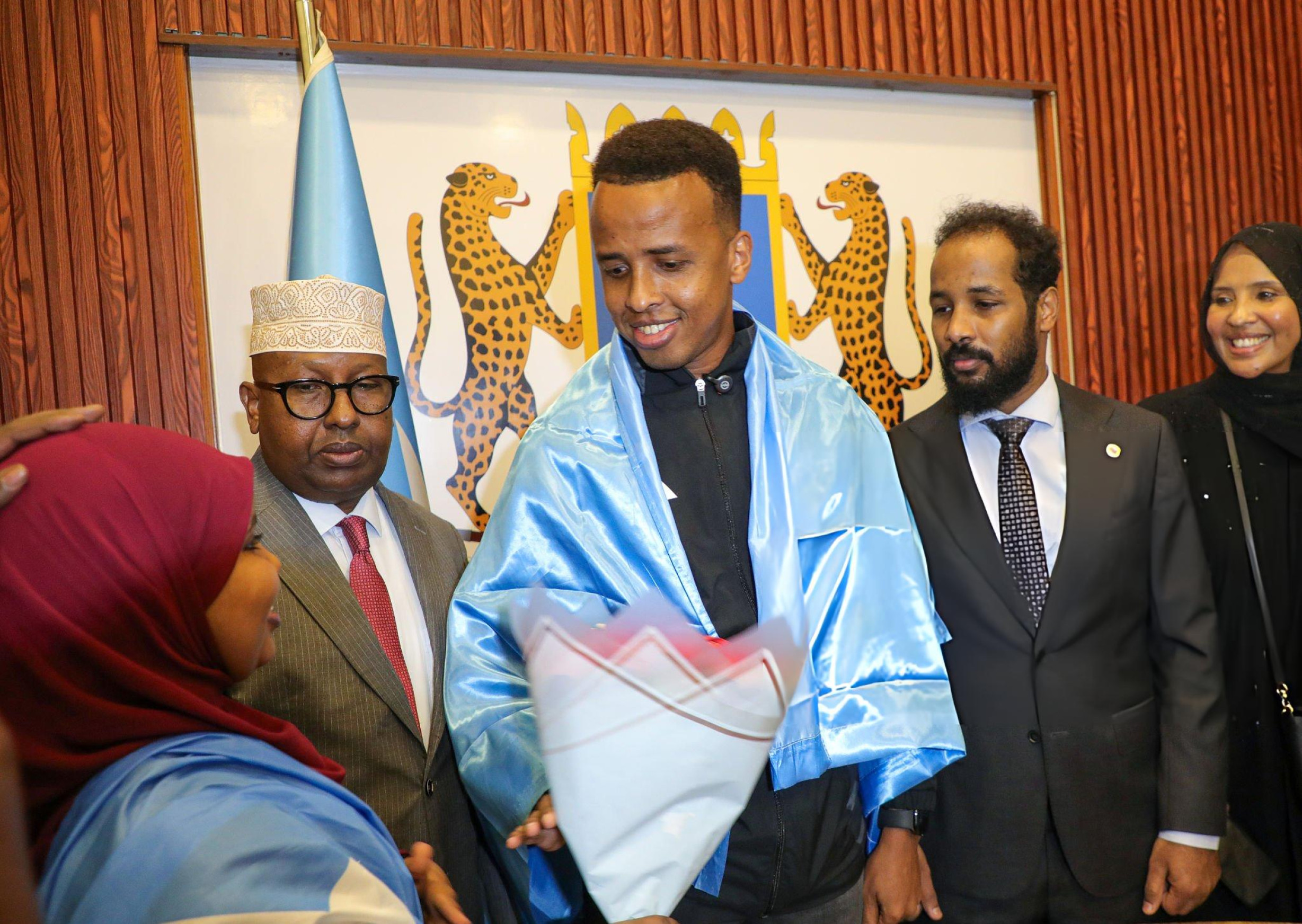
Omar Abdulkadir Altan, a Somali referee poised to make history as the first referee from Somalia to officiate at a FIFA World Cup, found his career milestone overshadowed by a significant immigration controversy. Despite holding a valid visa and official FIFA recognition, Altan was denied entry to the United States, sparking widespread questions about immigration policy and the treatment of international officials.
Upon Altan’s return to Somalia, he was greeted with a hero’s welcome, signaling strong local support amidst the growing criticism of how the situation reflects the confusion surrounding the co-hosted tournament in the United States, Canada, and Mexico.
Reasons Behind the Entry Ban
U.S. officials disclosed on Tuesday that Altan’s entry was blocked due to allegations concerning his ties to a person believed to be connected with a terrorist organization. The official, who requested anonymity due to visa privacy laws, stated that the matter was handled seriously. Andrew Giuliani, Executive Director of the White House FIFA Task Force, confirmed that Altan’s denial stemmed from “very good reasons,” without providing additional details.
Altan arrived at Miami International Airport on Saturday but was halted by U.S. Customs and Border Protection for further review. The Somali embassy in Kenya, which had processed his visa application, confirmed that he had obtained a valid visa shortly before his trip.
Intensive Interrogation at the Airport
Reports from the New York Times indicate that Altan faced an exhaustive, 11-hour interrogation at Miami Airport. The 34-year-old referee revealed that officials questioned him extensively about his travel intentions, the political landscape in Somalia, and the activities of the militant group al-Shabab. Despite presenting FIFA documentation and records highlighting his refereeing credentials, he was detained and eventually deported to Istanbul before returning to Somalia.
Historical First for African Football
Altan’s exclusion is particularly significant as he was recognized as Africa’s Best Male Referee in 2025 and was named in FIFA’s final roster of World Cup referees just two months prior. His selection marked a pivotal moment for Somali football, as it promised to spotlight the nation’s talent on a global stage. Yet, the denial of entry to FIFA-appointed officials raises critical questions about the governance of international competitions and the role of FIFA in addressing such incidents.
Return to Somalia Amid National Support
Although his World Cup aspirations were cut short, Altan returned to Somalia to a tumultuous reception. Hundreds gathered at Mogadishu’s Aden Adde International Airport, including government officials and football administrators, eager to celebrate his achievements. With the Somali flag draped around him, Altan expressed his commitment to pursuing his career despite the setback, promising to continue striving for opportunities in the future.
Support from the Somali Football Federation
Following Altan’s return, Somali Football Federation President Ali Abdi Mohamed publicly defended him, challenging the decision to prevent him from officiating at the World Cup. He emphasized that Altan had earned the right to officiate at this prestigious level of football. The Ministry of Youth and Sports in Somalia announced ongoing diplomatic efforts to address this troubling situation.
Pressures on FIFA and CAF
The Confederation of African Football (CAF) maintained communication with Altan during his ordeal, asserting that they are in close consultation with FIFA. Despite the mounting pressure to address the immigration issue, FIFA remains reticent to publicly criticize U.S. authorities, reiterating that immigration matters fall outside its jurisdiction. This scenario highlights ongoing tensions as both FIFA and CAF navigate the complexities of international football governance.
Growing Concerns Ahead of the World Cup
Altan’s experience raises flags about broader U.S. immigration policies, which continue to affect individuals from roughly 40 countries due to restrictions introduced during previous administrations. Although Altan possessed a valid visa for his FIFA assignment, his case has reignited fears that fans, players, and officials might encounter similar barriers during the World Cup. Without even a match having been played, the situation underscores a tumultuous start to the much-anticipated tournament, leaving many to ponder the future of football diplomacy.
