


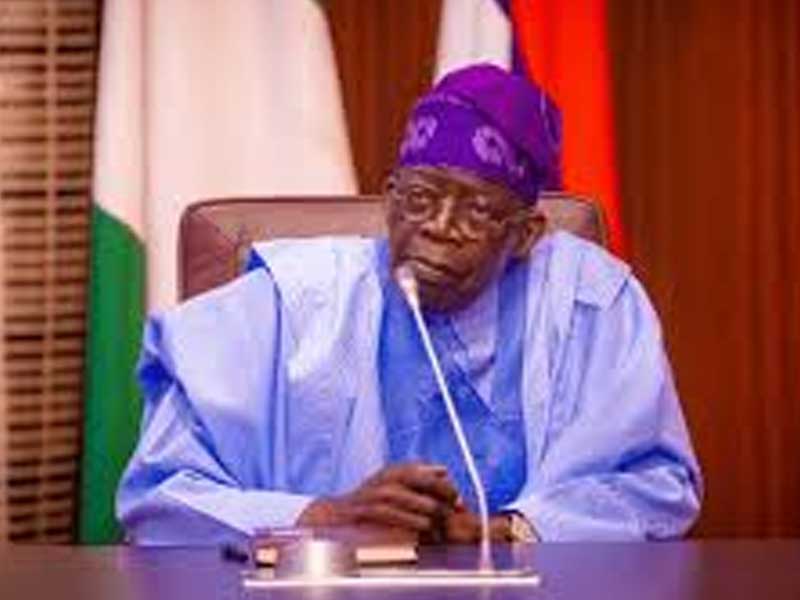
President Tinubu Commits to Enhancing Abuja’s Infrastructure
In a significant announcement, President Bola Tinubu has reinforced his administration’s dedication to developing infrastructure across the Federal Capital Territory (FCT). He emphasized that Abuja must evolve to reflect Nigeria’s growing population, economic ambitions, and national identity.
During the inauguration of the Obafemi Awolowo Way, an essential arterial road providing connectivity between Life Camp Junction and Ring Road III in Abuja, President Tinubu articulated the importance of infrastructure-led growth. He noted that improved transport connectivity is expected to lower logistics costs, attract investments, and ultimately generate jobs.
Represented by Vice President Kassim Shettima, Tinubu underscored that infrastructure serves as a critical indicator of a nation’s seriousness and capacity. He reaffirmed the government’s commitment to investing in strategic projects that enhance connectivity, stimulate economic activity, and restore public trust in governance.
Tinubu stated, “Infrastructure development is the measure by which every civilized nation expresses its seriousness. No capital can bear the weight of national ambitions if its arteries are obstructed by neglect and unfulfilled promises.” His administration aims to transform Abuja into a model for planned urban development that meets the aspirations of its citizens.
He acknowledged the existing road infrastructure challenges inherited by his administration, assuring that construction and rehabilitation efforts would continue without interruption. “There has been no pause or setback in the construction and repair of inherited roads, breaking the tradition of unfinished projects,” Tinubu asserted.
In particular, he highlighted the Dape section of the N5 highway, which was successfully bid to Julius Berger. The project was conceived and funded under his administration and completed within a 15-month implementation timeline, having begun construction in October 2024. This completion marks a departure from previous patterns of prolonged delays and budgetary setbacks.
Praising the FCT Minister Nyesom Wike for his role in promoting infrastructure development, Tinubu commended the contractors for meeting expectations. “The Minister has demonstrated how political will can lead to accountability. We fund projects to see results, not excuses,” he remarked. He emphasized that completed roadways are not merely transportation routes, but vital economic assets that enhance mobility and reduce productivity losses caused by congestion.
With the N5 corridor now in operation, the President noted that it will alleviate traffic congestion at Life Camp Junction—a longstanding bottleneck for local residents and businesses. The new infrastructure will facilitate better connectivity between Dape, Karmo, Gwarinpa I, Kado, Idu, and Mbola, enhancing access to the Idu Industrial Area.
Furthermore, the President called for a collective effort in sustaining infrastructure, urging residents and businesses to fulfill their tax and land-related obligations to empower the FCT administration in executing more projects. He appealed to traditional rulers, community leaders, and the public to safeguard public infrastructure and deter vandalism.
During the event, Minister Wike thanked President Tinubu for his support in advancing infrastructure development and governance closer to the populace, particularly in satellite cities. He highlighted the remarkable pace of development under the Tinubu administration and its alignment with the “New Hope” agenda.
Dr. Mariya Mahmud, Minister of State for the FCT, also expressed gratitude towards President Tinubu for his leadership and commitment to implementing crucial infrastructure projects over the past three years. She acknowledged Vice President Shettima’s unwavering support for people-centered initiatives. In a related note, Mr. Richard Unana Dauda, Director-General of the Federal Capital Development Authority, asserted that the completed road project significantly improves the region’s infrastructure and connectivity among neighboring towns and communities.
