


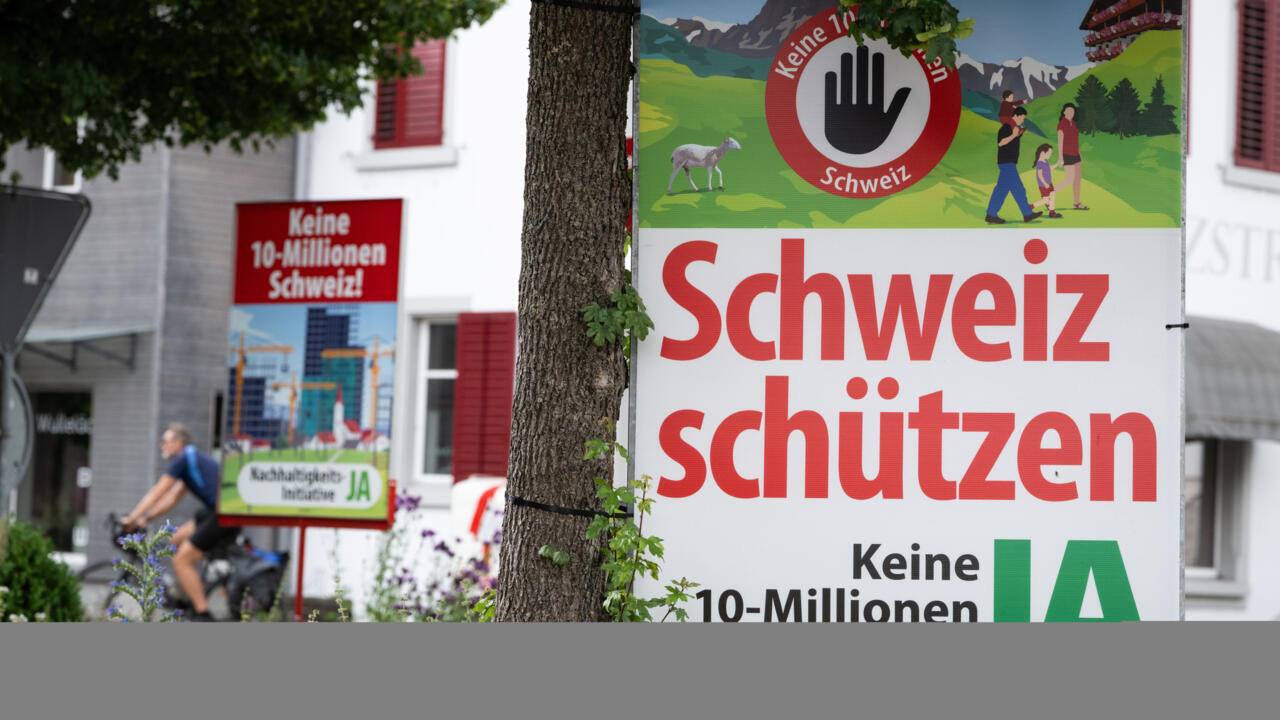
A proposal by the far-right Swiss People’s Party (SVP) seeks significant cuts to immigration, sparking concerns about potential repercussions for Switzerland’s economy and its relationship with the European Union, the country’s primary trading partner. The initiative, titled “No to 10 million Switzerland!”, aims to maintain the population of Switzerland, currently at 9.1 million, below 10 million by 2050.
If passed, this initiative would impose stricter immigration controls in a nation where foreigners constitute over a quarter of the population. Proponents argue that curbing immigration is essential for addressing issues such as housing shortages, rising rents, and overcrowded public transportation.
SVP senior vice president has stressed that what they term “mass immigration” contributes directly to the aforementioned challenges. Campaign materials emphasize messages like “9 out of 10 apartments are being built for immigrants” and plea to “save Switzerland”. Ivan Pahad, an SVP MP, has stated their intention to limit immigration, asserting that Switzerland is “a small country that cannot expand” and that they “do not want to welcome all of Europe.”
Close Vote Anticipated
The initiative is set to be voted on June 14 and faces considerable opposition from various sectors, including government, parliament, and the business community. However, recent polls indicate that the outcome may be more competitive than expected, with a recent survey showing a 52% opposition to the proposal.

Pollsters caution that events like the May 28 knife attack involving a Turkish-Swiss man may influence voter sentiment and drive higher turnout. Opponents characterize the proposal as divisive, warning of severe consequences for labor markets and international trade. Christina Gazzini from the Swiss Business Federation has voiced strong opposition from the business community, highlighting concerns over labor shortages and potential fallout in trade relations with the EU.
Impact on EU Relations
The SVP’s proposal outlines that Switzerland would need to start implementing immigration constraints should its population exceed 9.5 million—projected to occur within four years. If the population reaches 10 million by 2050, Switzerland would be compelled to withdraw from its EU agreement allowing free movement of people.

Since this agreement was established in 2002, Switzerland’s population has grown by approximately 1.7 million people. A “guillotine clause” implicates that withdrawing from this deal would also void other important agreements with Brussels, which are critical for Switzerland’s trade and market access. Justice Minister Beat Jans cautioned that the stakes are exceedingly high, suggesting that a favorable vote could virtually signify Switzerland’s “exit” from the European Union.
Public Sentiment and Reactions
The initiative has drawn criticism for its perceived xenophobic undercurrents. Brenda Tuost, a Socialist lawmaker, has dismissed claims of overcrowding as disingenuous, citing the dependence on foreign labor for vital sectors like healthcare and construction. Olivier Agassi, a senior vice president in the wine industry, emphasized that the proposed changes are not intended to exclude foreigners but reflect frustration among the Swiss populace.

“We are not asking anyone to leave. We are not racists,” Agassi declared, underscoring a sentiment of disillusionment among Swiss citizens. Echoing his views, dairy farmer Marlene Perlou argued that the SVP’s proposal is necessary to safeguard Swiss farmland from excessive urbanization, warning that the country could soon face challenges in sustaining its agricultural production.
