


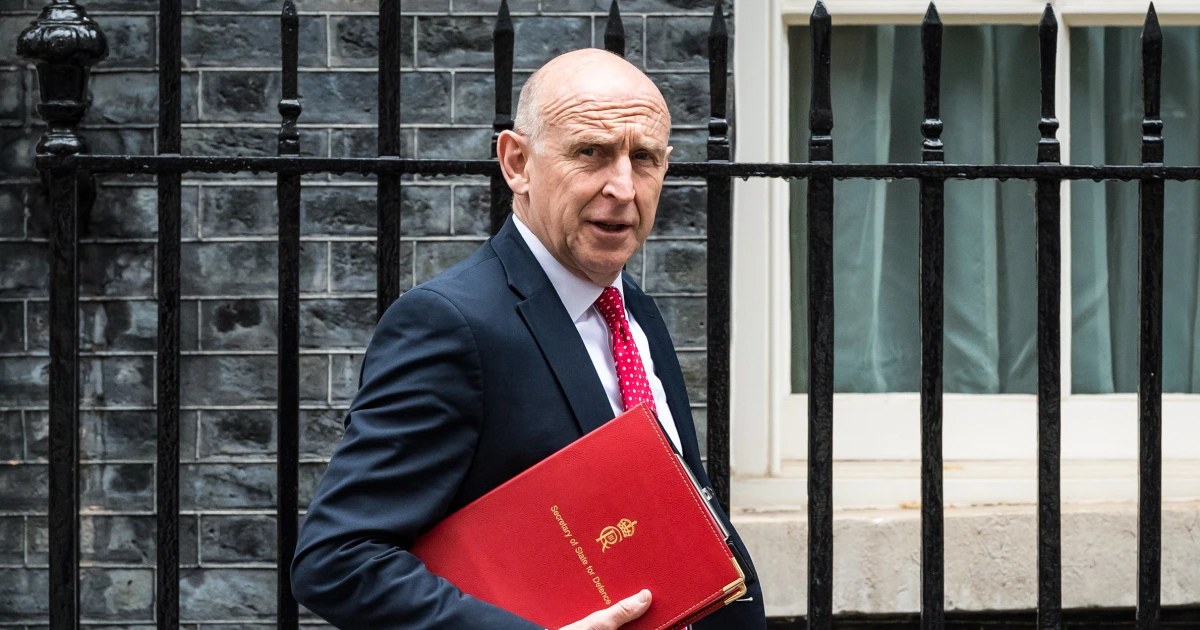
LONDON – British Defense Secretary John Healy announced his resignation on Thursday, citing the government’s failure to allocate adequate military funding amid rising global threats. This departure further complicates the situation for Prime Minister Keir Starmer, who is already under pressure from within the Labour Party to step down.
In a resignation letter addressed to Starmer, Healy expressed concern that the government’s defense investment plans “fall far short of what is needed at this dangerous time.” The release of these plans has faced delays due to ongoing disputes between the Ministry of Defense and the Treasury.
Shortly after Healy’s decision, Al Kearns, a decorated military veteran and secretary of defense, also resigned, stating he could not defend a level of investment that he deemed inadequate for the nation’s defense needs. Kearns has emerged as a potential candidate in the anticipated leadership contest against Starmer.
Responding to Healy’s resignation, Starmer expressed disappointment but reassured that the funding plan would provide “sustained and fair” increases in defense spending to ensure the safety of the UK. Later that evening, Starmer appointed former security minister Dan Jarvis as the new defense secretary.
Calls for Increased Defense Spending
Starmer has committed to raising UK defense spending to 2.5% of gross domestic product by 2027 and 3% by 2035. Despite this pledge, many military officials argue that these targets are inadequate given the current global security landscape.
In his resignation letter, Healy underscored that Treasury officials have been unwilling to allocate the necessary resources needed to safeguard the nation during this time of heightened threat, adding that under the current spending plan, defense funding is projected to only reach 2.68% by 2030.
Healy referenced key geopolitical events, including the ongoing war in Ukraine and threats from Russia, as critical factors demanding an urgent boost in defense spending. “I have no choice but to submit my resignation,” he stated.
General Richard Barrons, who was involved in the defense review that informed the investment strategy, criticized the government for “actively backtracking” on commitments it made in its own review. He warned that this would weaken the UK’s position within NATO and increase vulnerability in the face of contemporary conflicts.
The UK government maintains that it is implementing the largest sustained increase in defense expenditure since the Cold War, asserting that Starmer’s decisions have enhanced national security.
Healy’s Legacy and Political Implications
Having served as defense secretary since the Labour government took office in July 2024, Healy was regarded as a competent and serious minister. He played a pivotal role in rallying international support for Ukraine and led initiatives aimed at securing maritime routes in the Strait of Hormuz.
As the British military faces pressure to reverse years of decline in the wake of Russia’s aggressive actions, President Trump has urged NATO members, including the UK, to bolster their military budgets, questioning the value of military alliances.
NATO Secretary-General Mark Rutte acknowledged Healy’s contributions, emphasizing the increasing defense budgets across the alliance while recognizing the challenges countries face in balancing military investments with other financial obligations.
Healy’s resignation adds fuel to speculation regarding Starmer’s leadership. Despite a relatively solid record in defense and foreign policy, the Prime Minister faces internal dissent and struggles to reconcile differing views within his administration on defense funding.
Analysts suggest that the political ramifications of Healy’s exit may be significant, particularly if Greater Manchester Mayor Andy Burnham successfully challenges Starmer for the leadership upon his anticipated return to Parliament. Observers like Justin Crump, a former tank commander, argue that such resignations should not occur in a well-managed government, illuminating issues of control and clarity within Starmer’s administration.
