


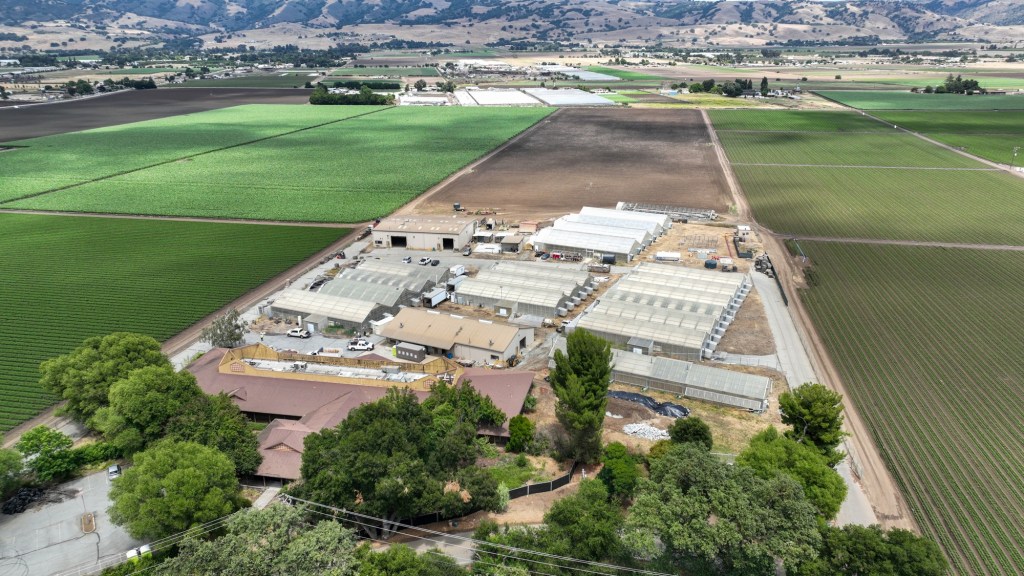
California and Santa Clara County Challenge Trump Administration Over ICE Detention Facility
The state of California, alongside Santa Clara County, has initiated legal proceedings against the Trump administration to prevent construction of an alleged covert Immigration and Customs Enforcement (ICE) detention facility located near Gilroy. The lawsuit contends that federal officials have neglected environmental regulations, overlooked local land-use laws, and failed to engage in necessary consultations with state and county representatives before commencing construction.
The suit, submitted to the U.S. District Court in San Jose, asserts that the facility contravenes federal environmental law due to the government’s omission of an environmental assessment or impact report prior to signing a lease and breaking ground. Furthermore, the plaintiffs argue that the project violates federal immigration law as it is situated close to habitats for several endangered species and is proposed on land designated for agricultural use.
Situated just east of Highway 101 and north of Highway 152, the facility is reportedly intended to hold up to 150 detainees, according to Tony Lopresti, Santa Clara County’s chief legal advisor. However, federal authorities have not officially confirmed the existence of the project, as media investigations into federal procurement documents suggest.
The lawsuit seeks a judicial order to permanently halt the development of the site as an ICE detention center. It remains uncertain how this lawsuit could influence plans that the federal government has not yet officially acknowledged.
The dispute may revolve around who operates the facility. Legal experts note that the Constitution’s Supremacy Clause grants the federal government significant power to manage facilities even in the face of state and local opposition. However, if the facility is privately operated, local authorities may have more grounds to contest the project through zoning and environmental regulations.
Moreover, the lawsuit highlights concerns regarding the perceived secrecy surrounding the project. State and county officials allege that the Trump administration has violated the Intergovernmental Cooperation Act by progressing with plans without affording states and localities a meaningful opportunity to provide input.
California Attorney General Rob Bonta emphasized at a San Jose press conference that the Trump administration’s aggressive detention and deportation policy has led to harsh, inhumane, and unacceptable conditions in immigrant detention centers across the state. Lopresti described the administration’s proposal as a reckless move to establish an ICE facility on sensitive, protected land without duly considering its environmental and community impacts, particularly on the detainees.
The White House has directed inquiries about the lawsuit and the claims made by California officials to the Department of Homeland Security (DHS), which oversees ICE. Notably, both ICE and DHS are named in the lawsuit. The DHS has stated that there are no plans for a new detention facility at the stated location, asserting that ICE continues to conduct law enforcement operations nationwide to ensure public safety.
However, Lopresti indicated concerns that the facility may serve as a temporary holding site for detainees awaiting transfer to larger detention centers, noting that similar facilities nationwide have been subject to numerous lawsuits for inhumane conditions. He expressed that should a facility be constructed, it would likely signify an uptick in detentions and comprehensive ICE activity.
Bonta criticized ICE’s practices, claiming the agency has transformed temporary detention facilities into de facto long-term detention centers that expose individuals to overcrowding and other inhumane conditions. Lopresti pointed out that county zoning laws prohibit establishing a detention center of any size on the proposed site, reinforcing further legal grounds for the challenge.
County and state officials have asserted that the project threatens protected farmland and could severely impact essential infrastructure, such as waste management and drinking water systems, while also risking the deterioration of critical roadways. Moreover, Lopresti warned of the potential detrimental effects on native steelhead fish populations in adjoining streams due to ongoing construction activities at potentially contaminated sites.
Bonta also highlighted the constitutional protection of states’ rights, emphasizing that federal authority is not without limits. He asserted that California has a track record of successfully challenging federal actions in court, with a success rate of approximately 80%. Meanwhile, Lopresti anticipates that the federal government may rely on the supremacy clause as its defense in pursuit of new detention facilities. He has requested access to the property for inspection, warning that a lack of cooperation could result in legal actions in state court.
The filing comes on the heels of a May report from Bonta’s office detailing a significant spike in California’s ICE detainee population, rising from 2,303 in 2023 to 6,028 the previous year. The report cited insufficient medical care, overcrowding, substandard food, and excessive use of force by detention officers as prevalent issues. Bonta stressed that most detainees should not be confined, noting that many possess strong community ties and no criminal records.
The Trump administration maintains that its deportation strategy prioritizes severe cases, yet legally, any undocumented person can be deported regardless of criminal history. Assembly Speaker Robert Rivas criticized the situation, asserting that communities should not be treated as repositories for ICE’s troubled policies. Both Bonta and Lopresti confirmed that they are deliberating on the type of court order, whether temporary restraining order or preliminary injunction, to pursue in order to suspend the project while litigation is underway.
Given the urgency of the matter, Lopresti emphasized the need for quick action, stating that they would seek the court’s intervention imminently.
