


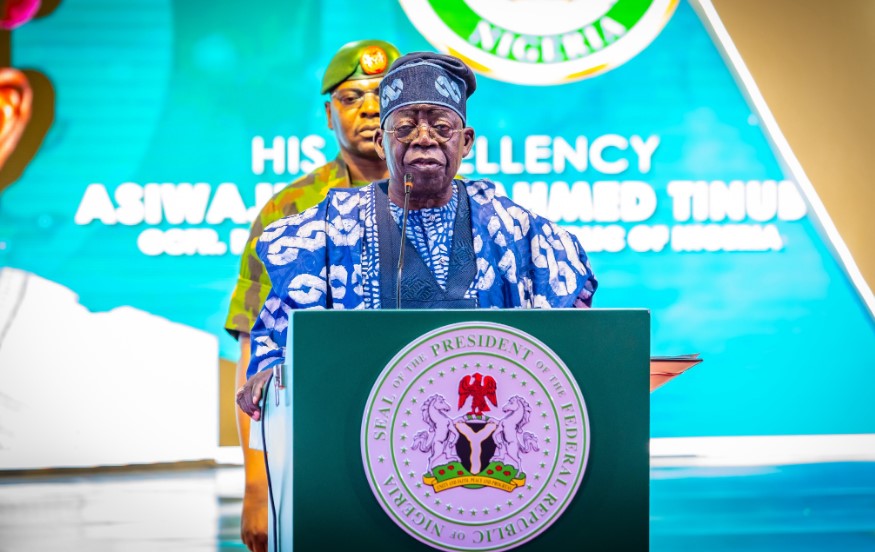
Tinubu Advocates for Electricity Access as a Democratic Dividend
President Bola Tinubu has firmly defended his administration’s economic and power sector reforms, asserting that reliable electricity access is a fundamental “democratic dividend” that every Nigerian deserves. In his recent Democracy Day address, Tinubu acknowledged the entrenched challenges facing the power sector but emphasized that current reforms aim to rectify years of neglect, infrastructure shortcomings, and fiscal instability.
“Electricity is a democratic dividend owed to all Nigerians. We will deliver it,” he proclaimed during his address. He noted that the administration inherited a power sector marked by chronic generation shortages, unstable gas supplies, inadequate transmission infrastructure, and significant distribution losses, affecting over four million customers who lack proper metering.
Tinubu pointed out the legacy debt burden that has afflicted the sector, creating a scenario where generation, transmission, distribution, and revenue collection are all operating below sustainable levels. “By 2023, when we entered, the electricity sector was characterized by chronic generation shortages, unstable gas supplies, and transmission infrastructure that was too weak to utilize the available power,” he explained.
The President noted that the sector is currently generating less than 13,500 megawatts of its installed capacity, which is further hampered by the inability to transmit, distribute, and collect sufficient revenue to sustain operations. Despite previous investments in power generation infrastructure, issues such as low plant availability, gas supply limitations, maintenance problems, and an aging grid continue to constrain effective electricity supply across Nigeria. The national power grid remains unreliable, prompting households and businesses to seek alternative energy solutions.
In the face of rising fuel prices linked to the ongoing US-Israel conflicts, many Nigerians are finding alternative energy sources increasingly unaffordable. To combat these challenges, Tinubu highlighted the introduction of the Electricity Act, which grants states authority to generate, transmit, and distribute electricity within their territories. He also mentioned that the Presidential Power Sector Select Committee has received approval to raise N4 trillion in bonds to address verified legacy debt across the electricity value chain.
Moreover, the President lauded the Rural Electrification Agency for its initiatives aimed at improving electricity access through off-grid and mini-grid projects in underserved areas, such as communities, universities, markets, and hospitals, supported by international partners like the World Bank and the African Development Bank.
Defense of Economic Reforms
In his Democracy Day speech, Tinubu extended his defense to the comprehensive economic reforms rolled out since he assumed office in May 2023. Acknowledging that these reforms may be challenging, he argued they are critical for restoring fiscal stability, enhancing public finance, and attracting investment.
“The reforms we are undertaking were not chosen for their ease; they were chosen for their necessity,” he stated. Since the onset of these reforms, he highlighted that the federation’s revenues have seen a significant increase, empowering state and local governments with additional resources for infrastructure, education, healthcare, and security enhancements.
Tinubu pointed out that improved fiscal transparency and a reduction in revenue leakages have contributed to a resurgence in investor confidence, which, in turn, has attracted investment across various sectors, including agriculture, manufacturing, technology, mining, transport, and energy. Additionally, he noted progress in domestic refining capabilities, which are crucial for enhancing Nigeria’s energy security and reducing reliance on imported petroleum products.
Addressing Economic Challenges
Despite touting progress in economic management, the President admitted that many Nigerians are still grappling with economic difficulties. He reiterated his administration’s commitment to controlling inflation, boosting food production, creating jobs, and ultimately improving living standards for the populace.
Tinubu also emphasized ongoing infrastructure projects aimed at linking producers with markets and promoting economic activity. He cited the National Agricultural Development Fund’s initiative to deploy 10,000 tractors over five years and noted that more than 1,000 small and medium enterprises have received export certification. Additionally, he reported a 21% increase in non-oil exports over the past year, highlighting a shift from uncertainty to stability.
“We are moving from uncertainty to stability. The next step is to accelerate growth and ensure its benefits are felt in every household, every community, and every region,” he concluded, reiterating his belief that democracy should be accessible to all.
