


Switzerland Faces Critical Referendum on Population Cap
On Sunday, Switzerland will hold a closely watched referendum regarding a proposal to limit its population to 10 million. This vote serves as a significant barometer of public sentiment towards immigration, national identity, and economic growth, positioning Switzerland at the forefront of a broader European dialogue on these pressing issues.
The initiative, championed by the right-wing Swiss People’s Party (SVP), requests that the government intervene if the nation’s population surpasses the 10 million threshold. Among potential measures is the possibility of dissolving Switzerland’s agreement with the European Union concerning free movement, a critical component of the nation’s economic framework.
Currently, Switzerland is witnessing the most rapid population growth in Europe. Data from the Swiss Federal Bureau of Statistics reveals that the population is projected to increase from 7.3 million in 2002—when restrictions on cross-border living and working were relaxed—to over 9 million by 2025. Advocates of the referendum argue that this surge is straining housing, transportation systems, and essential public services. Conversely, opponents maintain that the immigrant population is being unfairly blamed for what is a more intricate set of challenges.
This referendum unveils deeper questions about Switzerland’s future, a nation consistently hailed as one of the wealthiest globally, enjoying high standards of living, low crime rates, and robust public services. Despite its affluence, immigration and population concerns have recently emerged as pivotal topics in Swiss political discourse, raising questions about national identity and economic stability.
Polls indicate a tight race ahead of the vote, with implications that could resonate far beyond Switzerland’s borders. A favorable outcome for the population cap initiative could further ignite discussions throughout Europe regarding immigration, state sovereignty, and the delicate balance between economic openness and regulatory control.
Understanding the Voting Process
The population control proposal, initiated by the SVP, reflects the party’s long-standing commitment to immigration control. Under Switzerland’s direct democracy system, the initiative advanced to a national vote after proponents successfully gathered over 100,000 signatures, thereby mandating a referendum on capping the permanent resident population at 10 million by 2050.
The SVP’s vice president has articulated the necessity of the cap due to increasing population pressure largely attributed to immigration, arguing that such growth threatens housing, transport infrastructure, healthcare, and educational services. The party frames the discourse around national identity, suggesting an unchecked population increase may blur Switzerland’s cultural lines and disrupt long-held traditions.
This referendum is a continuation of the SVP’s broader agenda, which has previously included supporting the automatic deportation of foreign criminals and seeking to retract Switzerland’s free movement agreement with the EU through the 2020 Restrictions Initiative. Opponents of the cap—including various government bodies—argue that imposing such restrictions could destabilize the economy, exacerbate labor shortages, and undermine Switzerland’s diplomatic relations with the EU.
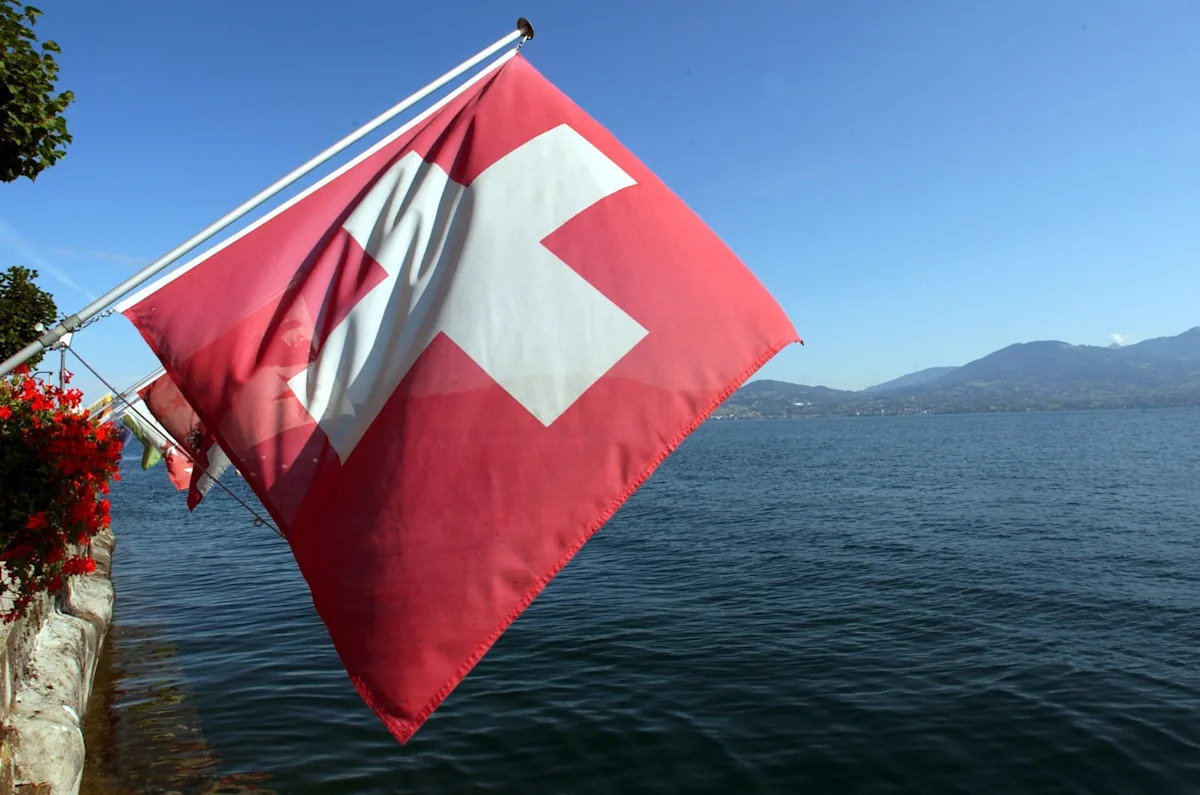
View of Lake Geneva, Switzerland.
Examining the Immigration Landscape in Switzerland
The Swiss National Migration Secretariat’s Migration Report 2025 reveals that 165,386 foreigners moved to Switzerland last year, with approximately two-thirds hailing from the European Free Trade Association (EFTA). The majority of these migrants came for work-related opportunities.
Last year also saw 25,781 asylum applications, marking a 15% decrease compared to 2023, and a significant decline from the 39,523 applications filed in 2015 amid heightened migration due to the refugee crisis in Europe.
Interestingly, net immigration appears to be on the decline, as the number of departures has increased while arrivals have decreased, leading to a projected net immigration figure of 74,675 individuals in 2025, a decrease of 10.5%. Despite this downturn, foreign nationals still constitute a significantly larger proportion of Switzerland’s population compared to the European average.
Current federal statistics indicate that foreigners comprised 27% of Switzerland’s permanent resident population in 2024, which starkly contrasts with the nearly 10% foreign population in EU member nations, as reported by Eurostat. Critics of the proposed cap argue that such demographics showcase Switzerland’s historical reliance on foreign labor rather than a recent surge in immigration.
The aging population of Switzerland further complicates this discussion. According to World Bank data, the country’s fertility rate is expected to drop to 1.3 in 2024, substantially below the replacement rate of about 2.1. Many economists contend that immigrant workers are essential in addressing labor shortages and sustaining the country’s tax base as the number of retirees rises.
Cultural Identity and Immigration: A Contentious Discourse
The SVP’s position on population control emphasizes the belief that immigrants are straining housing and infrastructure while simultaneously threatening Switzerland’s cultural integrity. Party leaders assert that without intervention, Swiss citizens may feel alienated in their own homeland, fearing a loss of national identity.
The party’s narrative includes references to “creeping Islamization” and concerns regarding “foreigners who predominantly speak English.” Such rhetoric has drawn criticism from various quarters. Political scientist Adrian Favero, writing in the London School of Economics, argues that the discussion, while framed as a debate over infrastructure, is fundamentally an effort to depict immigration as a cultural menace. He suggests that the initiative oversimplifies complex social and economic issues by scapegoating immigrants as the “dangerous other.”
Polls conducted by GFS Bern illustrate this contentious nature of the debate over immigration and identity in Switzerland. A survey of 18,275 individuals between April 20 and May 3 indicated an almost even split in public opinion, with 47% supporting the initiative, 47% against it, and 6% undecided. A subsequent poll conducted from May 19 to May 27 showed a slight shift, reporting 52% opposed and 45% in favor, with an unchanged number of undecided voters. Each poll had a margin of error of ±2.8 percentage points, underscoring the contentiousness of these issues in Swiss society.
Potential Implications for Switzerland and the European Union
The proposal calls for the Swiss government to take definitive actions once the population reaches 9.5 million, ensuring it does not surpass 10 million by 2050. Should other measures prove inadequate, Bern would be prompted to renegotiate or dismantle international agreements that contribute to population growth.
The most significant ramifications would likely affect Switzerland’s rapport with the European Union, potentially terminating the Swiss-EU free movement agreement. This pivotal agreement allows EU nationals to live and work in Switzerland, while also facilitating similar opportunities for Swiss nationals within EU member states.
Given that this agreement is interconnected with a broader set of bilateral arrangements, critics warn that its dissolution could destabilize other agreements governing Switzerland’s ties to the EU’s single market. The Swiss parliament has cautioned that such actions could threaten economic relations with its largest trading partner, carrying significant repercussions for businesses, employees, and cross-border collaboration.
