


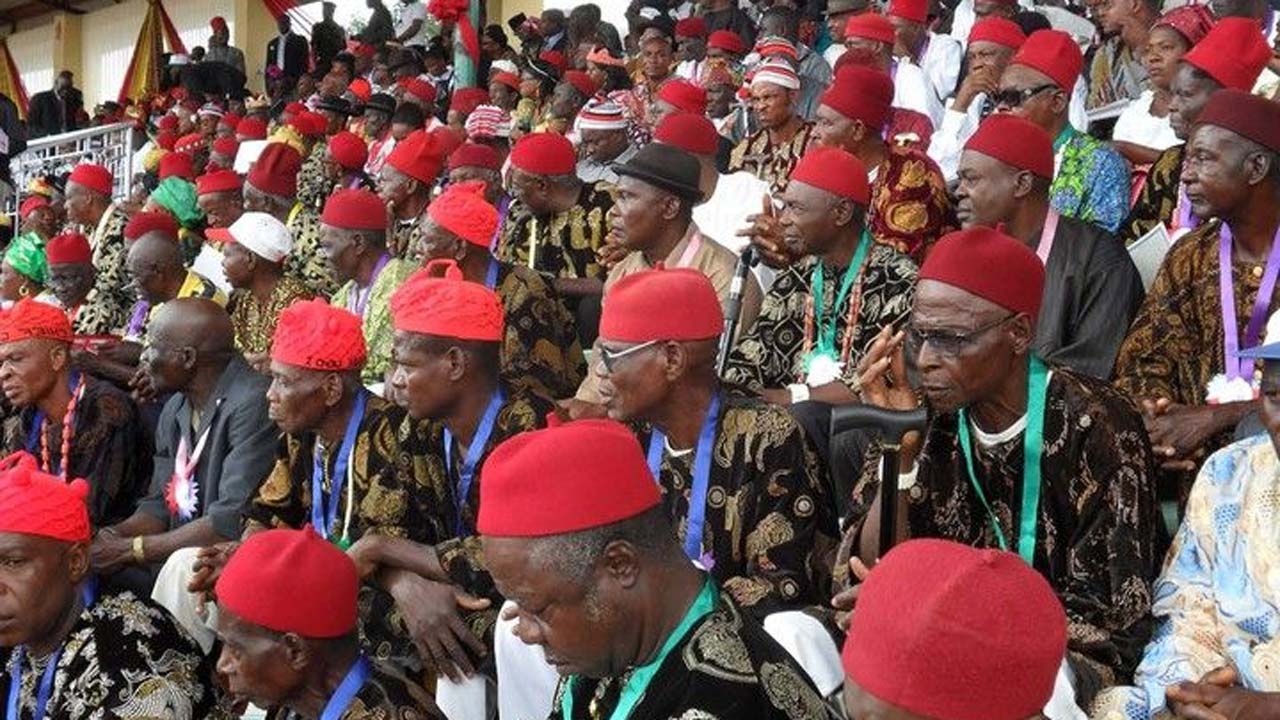
Igbo Leadership Gathers to Shape Nigeria’s Future
The Igbo community, comprising around 40 million people in Nigeria and beyond, is poised to draw global attention on May 21 as leaders from Ohaneze Ndigbo and the South East Governors Forum converge to discuss Nigeria’s potential for a more perfect union. This rally, hosted by Anambra State Governor Willie Obiano—often hailed as the “Star of the East”—marks a significant moment in the quest for political and social reform. Amid growing acknowledgment that Nigeria’s current structure requires reevaluation, the ruling All Progressives Congress (APC) has formed a committee led by Kaduna State Governor Nasir El-Rufai to develop a more effective constitutional framework. President Muhammadu Buhari has expressed readiness to consider restructuring the nation’s governance, and even former Vice President Atiku Abubakar, initially skeptical, is now advocating for change. The call for a revitalized Nigeria resonates widely, reflecting a collective yearning for progress.
Global Interest in the Igbo Perspective on Restructuring
The worldwide attention on the Igbo stance regarding restructuring stems from their historical capacity to envision a stable and just Nigeria. Over the decades, the Igbo have articulated a pragmatic approach to governance that emphasizes the need for a stable political economy. The concept of six geopolitical zones—though not legally codified in the 1999 constitution—has become the de facto framework guiding national discourse. This innovative arrangement was originally proposed by the Igbo and has since been pivotal during national conferences aimed at constitutional reform.
A Case for Fewer States and Enhanced Federalism
The Mukpoko Igbo conference in Enugu provided a platform for discussing the inefficiencies of Nigeria’s 30-state structure, which has become a drain on resources. Participants noted that states have become overly reliant on federal support, thereby undermining the essence of federalism, which mandates that both state and central governments should function independently yet equally. The continued fragmentation into states was deemed detrimental, as it reconfigured power dynamics to favor the federal government rather than empower local administrations.
The Historical Context of Nigeria’s Federal Structure
The current state of Nigeria’s federalism can be traced back to a legacy of military governance, where provincial governors were appointed by the federal military government. This led to a system where state leaders operated more like viceroys than independent governors, making genuine federalism difficult to achieve. The expansion of states—and the corresponding dilution of state power—was, in part, a reaction to the Biafran War, with military leaders believing that maintaining larger territories could prevent unrest. Despite the argument that state creation would accelerate local development, many observers argue that it has instead resulted in bureaucratic bottlenecks and underdevelopment across the country.
Lessons from Nigeria’s Golden Age
The consensus at the Mukpoko Igbo conference was that Nigeria’s most successful era occurred during the First Republic (1960-1966), when the nation was organized into three, later four, regions. Under this arrangement, the Eastern region emerged as one of the fastest-growing economies worldwide. However, following the division into multiple states, much of the revenue generated has gone toward recurring expenses, leaving little for infrastructure investment—an essential driver of economic growth. To revitalize Nigeria’s economy, the conference suggested limiting federal units to six, inspiring the current geopolitical arrangements.
Promoting Political Equitability Through Innovative Proposals
Beyond the six-zone proposal, the Igbo delegation advocated for rotating the presidency between geopolitical zones, a position that found favor during the 1994-1995 Constitutional Conference, emphasizing the need for national inclusivity. Their proposal also called for term limits for Presidents and Governors, striving for governance that prioritizes accountability and efficacy. Additionally, they championed increasing the distribution of national resources from 3% to 13%, responding to the longstanding grievances of resource-rich but underdeveloped regions, particularly in the Niger Delta.
Addressing Constitutional Challenges and Future Directions
Despite presenting innovative proposals at both the Mukpoko Igbo Conference and the 1994/5 Constitutional Conference, one notable proposal—creating six vice-presidents from each geopolitical zone—did not secure acceptance. However, in the wake of political turmoil following the death of President Umaru Musa Yar’Adua, the necessity of these foresighted debates became clear. The Igbo summit in Awka is an opportune moment to revisit these vital constitutional issues enshrined in the 1995 document, which was unfortunately revoked, denying Nigeria a chance at reform inspired by its own citizens.
As the Igbo Summit in Awka approaches, there lies an acute responsibility to propose viable solutions that address Nigeria’s multifaceted challenges, ensuring that the country can reclaim its position in the global arena. The outcomes of this summit will not only influence Nigeria’s future but could also provide a blueprint for governance that resonates on the international stage.
