


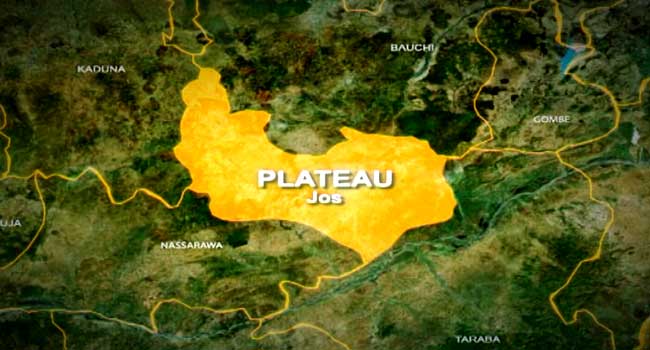
Construction of Modern Slaughterhouse Launched in Plateau State
Plateau State has officially commenced the construction of an advanced slaughterhouse within the Heipan Special Agro-Processing Zone (SAPZ) in Barkin Ladi. This project, which is set to have the capacity to process 500 cattle daily, was inaugurated by Governor Caleb Manasseh Mutofan. He described the initiative as a pivotal step toward redefining the economic landscape of Plateau State.
The inauguration ceremony attracted a variety of stakeholders, including federal officials, development partners, traditional leaders, and private sector representatives. Governor Mutofan emphasized that this endeavor represents a significant transition from conventional livestock farming to a modernized industrial value chain aimed at job creation. He stated that this is not merely a groundbreaking event for a slaughterhouse; it is a milestone in establishing a new economic foundation for Plateau State. The automated facility will be the largest of its kind in the region, set to replace outdated and unsanitary slaughter practices with a state-of-the-art system that adheres to international standards.
In his address, Governor Mutofan underscored the necessity for Plateau State to shift from exporting raw livestock products to local processing. He highlighted that the key difference between poverty and prosperity often lies in value addition through processing. This approach will not only enhance the local economy but also improve food safety standards.
The governor elaborated on a comprehensive livestock value chain strategy that extends beyond meat production. Opportunities in various sectors such as leather manufacturing, feed production, cold chain logistics, dairy development, and organic fertilizer processing were emphasized. He noted that each animal processed at the facility represents numerous economic opportunities, with potential income streams from meat, skin, bones, blood, waste-to-energy conversion, and export logistics.
Governor Mutofan reiterated his administration’s vision to ensure that all participants in the livestock value chain, from corn and soybean farmers to dairy producers, benefit economically. He specifically pointed out the billion-dollar potential of feed and fodder production in the global market, indicating a significant avenue for revenue generation.
The slaughterhouse will occupy a prime location within the 500-hectare Heipan SAPZ, which the state government aims to cultivate into a prominent agro-industrial hub catering to cold storage providers, tanners, feed manufacturers, and packaging companies.
The Minister of Livestock Development, Idi Mukhtar Maiha, commended Plateau State for advancing the modernization of Nigeria’s red meat sector. He asserted that this project lays the groundwork for a new livestock economy that prioritizes public health, rewards producers, and fosters job creation.
Maiha noted that Jos’s favorable climate, robust rural community, transport infrastructure, and proximity to the National Veterinary Research Institute (NVRI) Vomu make it an ideal location for livestock development. Dr. Sunday Akpa, the Commissioner for Livestock Development, highlighted that this slaughterhouse marks a crucial turning point in Nigeria’s transition to modern meat processing, emphasizing the need to convert waste into value and bolster food safety.
This ambitious project has garnered support from various entities, including the World Bank, the SAPZ National Office, and the Federal Ministry of Livestock Development. In his remarks, Governor Mutofan expressed gratitude for the technical and financial assistance provided by partner organizations and urged the local communities of Pomol and Heipan to take pride in and ownership of the facility.
