


Policy Changes and Their Impact on the U.S. Workforce
Under the Trump administration, significant policy shifts aimed at restricting immigration to the United States have been implemented. These include efforts to terminate the Temporary Protected Status (TPS) for numerous countries, combined with suspensions and limitations on new visa issuances and overall immigration controls. Such actions could adversely affect the U.S. workforce, particularly within sectors heavily reliant on immigrant labor, such as healthcare. The immigrant workforce encompasses not just naturalized citizens, but also non-citizens, including those who are undocumented yet reside legally in the country.
This report delves into the vital role of immigrants in the U.S. labor market, especially in healthcare and other essential industries. Based on an analysis of data from the Current Population Survey (CPS) and a segment of the American Community Survey (ACS), this brief highlights key findings regarding U.S. workers aged 18 and older divided by citizenship status.
From January 2025 to April 2026, the total number of immigrant workers in the U.S. remained relatively stable. However, non-national immigrant workers saw a decline of approximately 600,000, representing a 4% drop, decreasing from 15.4 million to 14.8 million. Conversely, the number of naturalized citizens increased from around 15.2 million to 16 million, a 6% gain of more than 800,000 individuals. Furthermore, U.S.-born workers increased by about 1% during the same period, rising from 125.6 million to 126.7 million. Within the healthcare sector, the overall workforce grew by 1%, or roughly 130,000 individuals, reaching 19.6 million. This growth indicates a rise in both U.S.-born workers and non-citizen immigrant workers, compensating for a decline in the naturalized citizen workforce.
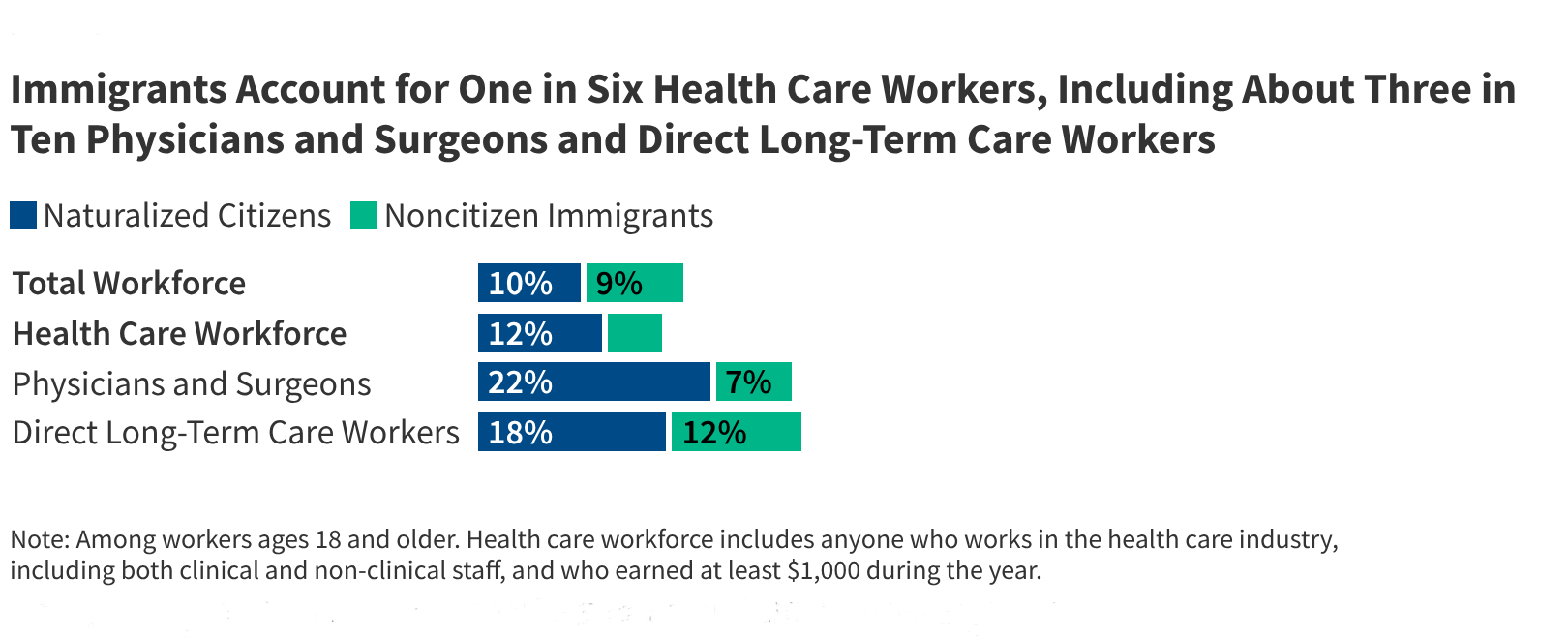
By 2024, immigrants are expected to constitute approximately 19% of the total U.S. workforce, translating to nearly 31 million individuals. Within the healthcare domain, immigrants composed 17% of all workers, with a particularly significant representation among doctors and surgeons (28%) and long-term direct care workers (30%). Immigrants also hold substantial positions in both clinical and non-clinical roles in hospitals, notably as physicians and surgeons. The primary countries of origin for immigrants in the healthcare field include the Philippines (12%), Mexico (11%), and India (7%). Additionally, immigrants fill numerous non-clinical roles such as building cleaners and maintenance workers, where they represent 29% of the workforce, and they comprise significant numbers in agriculture (33%), construction (26%), and food service-related positions (23%).
Current Trends in the Immigrant Workforce
The recent trends further illustrate the shifts within the immigrant workforce landscape. As mentioned, from January 2025 to April 2026, the overall count of immigrant workers remained stable, but the non-national immigrant workforce diminished by 4%. In contrast, naturalized citizen employment rose by 6% during the same timeframe. There was a noticeable decrease in naturalized citizen workers within the healthcare sector, aligning with broader trends observed across the economy.
Immigrants: A Cornerstone of the U.S. Healthcare System
The evolving dynamics of the immigrant workforce hold significant implications, particularly regarding the essential contributions of immigrants in healthcare. As of 2024, nearly one in five workforce participants in the United States—an estimated 19%—will be immigrants, numbering approximately 31 million people. Notably, the healthcare sector alone employs around 3.3 million immigrant workers, which represents about 17% of its total workforce.
In detail, immigrants account for a substantial proportion of healthcare professionals, including 30% of long-term direct care workers and nearly a third of physicians and surgeons. The data further reveals that a majority, including naturalized citizens and non-citizens alike, contribute vital skills and services to the healthcare ecosystem. The workforce is notably diverse, with a significant portion stemming from countries such as the Philippines, Mexico, and India, emphasizing the global reliance on immigrant labor in healthcare.
Within U.S. hospitals, immigrants are projected to represent 17% of the workforce by 2024, translating to around 1.4 million individuals. Their roles span both clinical and non-clinical areas, reflecting their importance in maintaining hospital operations. For instance, immigrants constitute 30% of physicians and a significant percentage of nursing assistants and registered nurses, further underscoring their integral role in healthcare delivery.
Methodology and Data Sources
This analysis is rooted in a comprehensive KFF assessment of federal survey data, utilizing both the standard monthly Current Population Survey (CPS) and the American Community Survey’s one-year public use microdata sample. Conducted by the U.S. Census Bureau, these surveys provide a nationally representative snapshot of household demographics. While CPS data is available monthly, the ACS data is compiled annually, allowing for a broad understanding of labor trends. It’s essential to note that the sample size for CPS data is smaller, which may introduce sensitivity to shifts in immigration-related participation rates due to fear and apprehension among immigrant respondents.
In terms of citizenship verification, the analysis differentiates between naturalized citizens—individuals who have attained citizenship—and non-citizen immigrants, who include both those legally in the country and undocumented individuals. Workers identified across various sectors, including healthcare and agriculture, include those aged 18 and up, employed full-time or part-time, with annual incomes exceeding $1,000, categorized by industry codes following the North American Industry Classification System (NAICS).
