


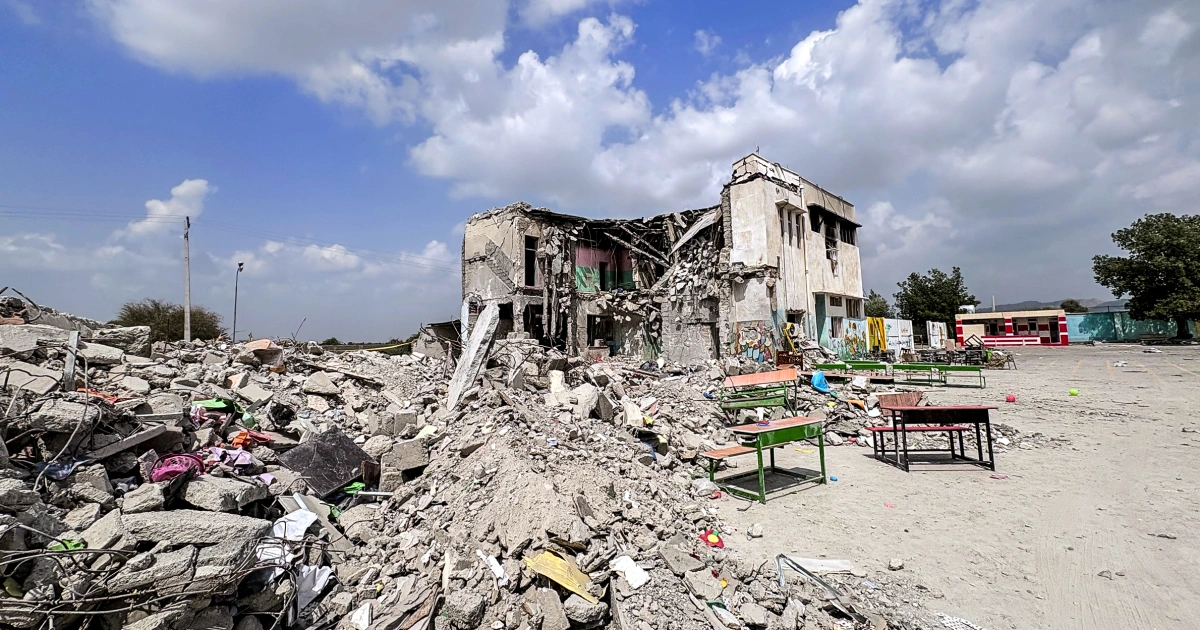
Military Investigation into Fatal Airstrike on Iranian School Approaches Conclusion
Senior U.S. military officials are nearing the end of an internal investigation into a deadly airstrike by Iran that targeted an elementary school, with plans to report findings to Congress, according to sources familiar with the case.
Concerns persist among lawmakers and Pentagon officials regarding the potential classification of the report by the Trump administration, which could inhibit public access to crucial information, according to four congressional officials and investigators.
The U.S. Central Command, which is overseeing the inquiry, has concluded its investigation. However, lawmakers responsible for overseeing the Department of Defense have yet to receive details or a timeline for when the findings will be disclosed, as reported by a knowledgeable insider.
In addressing accountability for the airstrike, President Donald Trump remarked that “mistakes happen and wars are messy.” He indicated that the investigation remained ongoing and that a report could be made public as early as Thursday, recommending that reporters direct inquiries to Defense Secretary Pete Hegseth, who is managing the process.
A Pentagon spokesperson confirmed that the investigation is still active. The classification of its findings would significantly hinder transparency surrounding civilian casualties during the ongoing conflict involving the U.S. and Iran. The airstrike against Shajare Tayebeh Primary School in Minab occurred on the first day of hostilities and resulted in the deaths of over 170 individuals, predominantly children.
Reports indicate that the U.S. military targeted an area near the school on February 28, with preliminary findings suggesting that U.S. munitions were likely responsible for the incident, according to NBC News, which cited a U.S. official and a source familiar with early results.
The investigation took almost four months to complete, during which lawmakers expressed concerns over the Pentagon’s reluctance to provide information about the conflict. There are fears that the administration might seek to conceal the findings from public scrutiny.
Concerns Over Potential Classification of Findings
Sources close to the investigation have voiced apprehension that Secretary Hegseth will classify the report, thwarting efforts for its public release. Democratic Senator Mark Kelly of Arizona, a member of multiple committees, remarked that he expects the administration to seek classification.
Another Democratic senator expressed disbelief upon learning that classification was even considered, saying that such a move would contradict the Pentagon’s commitment to transparency. Last month, Admiral Bradley Cooper, commander of CENTCOM, assured lawmakers of his dedication to openness upon the investigation’s completion.
The Pentagon has a track record of acknowledging its role in civilian casualties during military operations, such as special forces raids in Yemen and bombings in Iraq and Afghanistan. Preliminary reports from the Minab investigation suggest that outdated intelligence may have contributed to the unfortunate airstrike, citing NBC’s sources.
Potential Implications of Technology in Targeting Decisions
Experts have indicated that video footage obtained by NBC News appears to show an American Tomahawk missile striking an Iranian military compound adjacent to the school. One senator remarked that the video evidence has long demonstrated a Tomahawk missile’s direct involvement in the incident, raising concerns about potential obfuscation by the administration regarding its accountability.
Trump previously suggested, without substantiation, that Iran or “other countries” might be responsible for the strike, yet initial findings point toward U.S. culpability. Lawmakers have been pressing the Pentagon for details surrounding the incident for months, including a letter from 120 Democrats in March seeking clarification on the role of artificial intelligence in targeting decisions.
The inquiry includes critical questions about whether AI systems, like the Maven smart system, were utilized to identify Shajare Tayebeh School as a target, and whether human oversight was employed to validate such decisions. These queries underscore the broader implications of advanced technology in military operations.
