


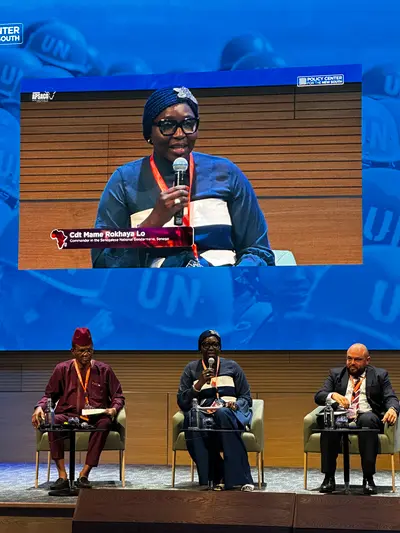
African Conference on Peace and Security Marks a Decade of Strategic Dialogue
Over the past ten years, the African Annual Conference on Peace and Security (APSACO) has positioned itself as a premier platform for discussing vital issues such as peace, security, governance, and geopolitical transformations on the continent. This gathering serves as an important forum for dialogue among a diverse group of stakeholders, including policymakers, diplomats, military leaders, security experts, academics, and researchers from Africa and around the world.
Celebrating a Milestone Edition in Morocco
Held in Rabat, Morocco, APSACO’s tenth edition was sponsored by the Center for New Southern Policy in collaboration with Mohammed VI University of Technology (UM6P). The theme for this year’s conference, “10 Years in Review: Africa’s Evolving Security Landscape,” emphasizes the significant shifts that have occurred over the past decade, particularly in the context of security challenges.
Dynamics of Conflicts in the Past Decade
Since its inception, UM6P has emerged as a crucial hub for research, innovation, and policy engagement across Africa. Over the past ten years, the continent has witnessed a series of persistent asymmetric conflicts, the rise of violent extremist groups, political instability, military coups, and a struggle for influence among international powers. These developments have been further complicated by technological advancements, information warfare, and new coercive tactics that redefine traditional concepts of conflict and security.
Analyzing Geopolitical Trends Through In-Depth Reports
A cornerstone of APSACO is the African Geopolitics Annual Report, a flagship publication of the New Southern Policy Center. Released prior to the conference, the latest report served as a foundational reference for discussions, illuminating the intricate interplay between global competition, regional ambitions, and the dynamics of conflict that continue to affect Africa’s geopolitical landscape.
Reflections on the Evolving Security Landscape
The opening panel addressed key shifts in Africa’s security environment. While terrorism, insurgencies, and coups often dominate headlines, panelists asserted that the core security challenges frequently stem from governance issues and the capacity of states to respond effectively. The speakers identified weak institutions and fragmented governance structures as underlying causes of instability, highlighting the necessity for future security dialogues to expand beyond military considerations to encompass national resilience, sovereignty, and institutional effectiveness.
Insights on Peacekeeping and Sustainability
In a subsequent discussion, the focus shifted to the development of peace operations across Africa. Participants reflected on missions in Burundi, Somalia, Darfur, and the Central African Republic, noting that Africa not only serves as a key arena for peacekeeping efforts but also as a testing ground for innovative approaches to conflict management. While acknowledging the critical role of peacekeeping operations in preventing state collapse and protecting civilians, the challenges posed by resource constraints and dependence on external funding were also emphasized. Participants concurred that achieving sustainable African-led peace operations requires greater involvement from civil society, youth, and traditional leaders.
Countering Terrorism and Evolving Governance Models
The complexities of countering terrorism were a focal point in another panel discussion, which explored the adaptability of extremist groups. Researchers noted that many groups are moving beyond traditional insurgent tactics to develop forms of local governance. The speakers underscored the importance of addressing underlying governance deficiencies and economic marginalization as part of an effective counterterrorism strategy. Discussions on governance and political transitions delved into the significance of storytelling in shaping Africa’s narrative and the need for a coherent continental story that reflects its economic growth and expanding global influence.
Technological Innovations Impacting Warfare
Emerging technologies transforming conflict dynamics were analyzed in a panel dedicated to this topic. Experts discussed the increasing utilization of drones, artificial intelligence, and cyber capabilities by both state and non-state actors. While acknowledging the transformative potential of these technologies, they emphasized that effective integration with existing military strategies, intelligence capabilities, and regulatory frameworks is crucial for success.
Future Strategic Trends and Environmental Implications
The final panel encouraged attendees to consider long-term strategic trends impacting security in Africa. Key topics included demographic changes, environmental pressures, urbanization, and geopolitical competition. Participants highlighted the necessity of addressing underlying issues such as land degradation and resource scarcity, which can exacerbate conflicts. By reaffirming the interconnected nature of peace, security, and development, APSACO emphasized that future solutions must be comprehensive and African-led, grounded in a strategic approach that integrates governance, development, technology, and environmental sustainability.
